Pressing cannot remove a comic's color breaks. A color break is ink that cracked away to expose the paper, and pressing does not put ink back. A professional press can relax the bend around a break so the line may look less obvious, but the white line stays, and graders still see and grade it. Pressing helps defects that never broke color: bends, dents, waves, folds and spine roll.
Why pressing cannot remove a color break
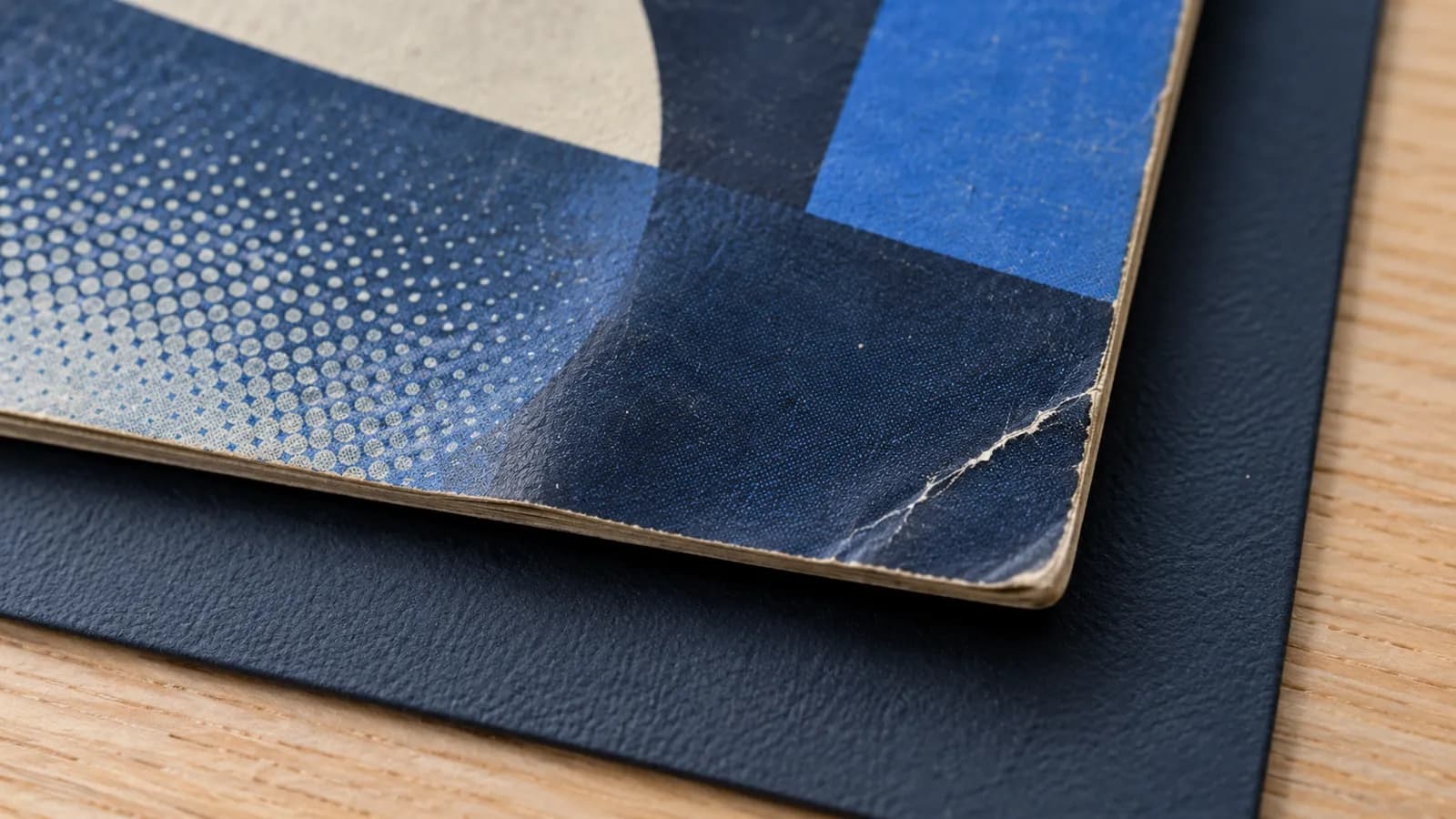
When a cover bends hard, two separate things can happen. The paper changes shape, which leaves a bend, a fold or a dent. Past a certain point, the ink on the surface also cracks along the line and exposes the paper underneath. That second change is a color break.
On a dark or red cover, a color break shows as a bright white line. On a white area of the cover, the same break can be nearly invisible.
Pressing works on shape. It flattens the book under controlled, sustained pressure, and some methods add humidity or heat to help the paper relax (CGC says its own process uses no heat and does not take the book apart). CGC's pressing page describes pressing as a process that "neither adds nor takes away from the book." That phrase is the whole limit: a press can take out a bend, but it cannot return ink that is gone or paper that is missing.
After a successful press, a color break changes in one way at most: the ridge around it can relax. With less ridge to catch the light, the line may look less obvious. The white line itself stays, and a grader who examines the book under a lamp still sees it and grades it as a color break.
The only way to make a color break disappear is to add color over it. That is color touch, and CGC classifies it as restoration, even light color touch in small areas such as spine stress.
Words matter here. In grading, a fold is a bend with no color break, and a crease usually means one that broke color, though people use "crease" loosely. CGC sorts defects for pressing by the same test: its list of what pressing can help is headed "good defects (do not break color)," and its list of what pressing cannot help starts with "creases that break color."
What pressing can do, and what stays
This article has no before-and-after photos, so the table describes typical outcomes in words. It follows CGC's published lists of pressable and non-pressable defects (as of October 2026) and NuGrade's grading methodology. Results vary by book, and no press guarantees a grade change.
| Defect | What pressing can do | What stays |
|---|---|---|
| Bend or fold, ink intact | Relax it until the cover lies flat | Little or nothing |
| Dent, dimple or cover impression | Ease the paper back toward flat | Any spot where the dent broke the ink |
| Crunched corner (bent, not worn) | Flatten the small bends | Blunting or rounding; worn-away paper does not return |
| Waves, ripples or warping | Flatten them when no stain is present | Any stain or tide line left by the moisture |
| Subscription fold | Relax the book-length fold | A subscription crease keeps its line |
| Spine roll, or spine stress without color break | Square the spine and relax the stress | Any ticks that did break color |
| Color-breaking tick or crease | Relax the ridge, so the line may look less obvious | The white line where the ink is gone |
| Tear, staple tear or missing piece | Nothing | The tear or the gap; mending it is restoration |
| Stain, foxing, rust, fading or fingerprints | Nothing | The discoloration or the mark |
| Tanned or brittle paper | Nothing, and the press can damage it | The page quality, plus any new damage |
| Writing | Nothing by itself; a dry-cleaning step can sometimes lift light pencil in white areas | Pen, marker and printer ink |
Two illustrative before-and-after descriptions (examples, not a specific book):
- A 1/2 inch bend at the top-right corner, ink intact. Before: a soft ridge that flashes as the light moves across it. After a successful press: the corner lies flat and the ridge is hard to find.
- A 1/4 inch spine tick that broke the black ink. Before: a white line with a small ridge along it. After: the ridge relaxes, and the white line is still there at the same length.
How graders treat a pressed book
As of October 2026, CGC's pressing page states: "CGC does not consider pressing to be restoration." Because pressing adds and removes nothing, CGC says it "will not make a book 'restored.'" Its restoration overview says the same of pressing, dry cleaning, tape removal and any other process that only removes a foreign substance.
Cleaning is a different matter. CGC's history of pressing notes that when it entered the market in 2000, it classified water and solvent cleaning as restoration, which left pressing as the one allowable process for unrestored books. Its restoration overview still lists cleaning among the restoration techniques, with dry cleaning the exception. Some water or solvent cleaning can instead count as conservation, which gets a separate Conserved label only when the work meets CGC's quality A and quantity 1 limits. So "cleaned and pressed" is two claims, and the cleaning half can matter more.
What pressing does not change is how a remaining defect is graded. A color break that survives a press is graded as a color break. CGC gives an example from the other side: a book graded 8.5 with a moderate non-color-breaking bend and fingerprints may still grade 8.5 after pressing, because of the fingerprints. The press removed one defect, and another one held the grade.
How to tell if your book is a press candidate
Start with one question: what limits the grade right now? A press can move the number only if the limiting defect is one it can remove. If you are not sure how one defect sets a grade, what VF, FN and NM actually mean explains the scale.
Good signs:
- bends, folds and light creases where the ink is unbroken
- dents, dimples and cover impressions with no color break
- waves, ripples or warping with no stain
- a crunched corner that is bent, not worn away
- spine roll, or spine stress that did not break color
- a subscription fold, not a subscription crease
Poor signs:
- color breaks, when they are what limits the grade
- tears, staple tears, or missing chips or pieces
- stains, heavy foxing, rust migration or fading
- tanned or brittle paper, a split spine, loose staples or barely attached pieces
- metal, chromium, acetate or embossed covers, which CGC rejects for pressing
To check a defect yourself, lay the book flat with one lamp low to one side, then move the lamp or your head slowly. A bend shows as a ridge, or as a reflection that warps while the light moves. A color break shows as a thin white line that stays visible when you look straight down at it. For the photo side of the same check, see how to photograph comics so the flaws actually show.
Two of NuGrade's public sample reports show the question in practice. In Marvel Presents: Guardians of the Galaxy #4, graded 7.5 VF-, the spine limits the grade: an accumulation of small stress ticks, several showing white color break against the black cover. In Green Lantern #59, graded 5.5 FN-, it is a row of short color-breaking stress ticks along most of the spine.
A press might relax the stress around those ticks, but the white breaks would still be there afterward. These reports are examples of the question to ask, not press recommendations.
CGC itself says scans are not a reliable way to judge press potential, and it offers in-hand screening for that question. A photo-based report, ours included, can show which defect limits the grade. Whether a press would move it is a call for someone with the book in hand.
Then do the math. A press costs money and time, and a one-step gain pays off only on some books. The boring math on whether a book is worth grading walks through that arithmetic.
The risks of pressing
Pressing is hands-on work on paper that can be decades old, and it can go wrong. CGC is direct about it: "because of the interactive nature of pressing, damage is always a possibility." It says damage usually happens to fragile books: tanned or brittle paper, spines with splits, loose paper at the staples, pieces that are barely attached. CGC also states it will not be held liable for split spines, covers or pages detached from staples, or detached pieces.
Heat and moisture help some methods relax paper, and both can also do harm. CGC's own defect list describes ripples as "often caused by exposure to moisture," the same ripples a press is meant to flatten. It also warns that, while correct repeat pressings do not hurt a comic, "one improper pressing can cause substantially more damage."
The grade can also stay put or drop. CGC says a press may not lead to any grade change, however successful it is, and that a book can, rarely, receive a lower grade after pressing.
This article does not describe home pressing methods. The damage listed above is the kind a press cannot undo.
Disclosure: say what you know
NuGrade's intake survey asks only what the camera cannot see, and professional pressing is on the list, next to cleaning or deacidification, tape removal or residue, color touch or piece fill, trimmed edges, and married pages or cover. Nothing is pre-selected. "Nothing that I know of" is an answer you choose, not a default.
We ask because a photo cannot reliably tell a book that was always flat from one that was pressed flat. If you bought the book raw and do not know its history, "Nothing that I know of" is the honest answer, and it is not the same as "never pressed."
When you sell, the same rule applies: disclose any press you know about. CGC's policy settles how a grade is labeled. It does not settle what a buyer wants to know.
A NuGrade report is a point-in-time snapshot, and reports never change. A report made before a press still describes the book before the press. A regrade creates a new report with a new ID, and a buyer can check either one at the report lookup.
NuGrade is independent of, and not endorsed by, CGC. CGC is a trademark of its owner, used here only to identify its services.
Frequently asked questions
Can pressing remove a color break on a comic?
No. Pressing changes the shape of the paper, not the ink on it, so the exposed white line of a color break survives any press. The bend around the break can relax, which may make the line less obvious, but graders still grade it.
Does CGC consider pressing to be restoration?
No. As of October 2026, CGC's pressing page says it does not consider pressing to be restoration, and its restoration overview lists pressing, dry cleaning and tape removal among processes that are not restoration. Water or solvent cleaning is different: CGC treats it as restoration unless the work qualifies as conservation, which must meet its quality A and quantity 1 limits and gets a separate Conserved label.
What defects can pressing fix?
Pressing can reduce defects that changed the book's shape without breaking the ink or removing paper: bends, folds, dents, dimples, waves and warping with no stain, crunched corners, subscription folds and spine roll. It does not fix tears, missing pieces, stains, foxing, rust, brittle paper or pen writing.
Can pressing make a comic worse?
Yes. CGC says damage is always possible, mostly on fragile books with tanned or brittle paper, split spines, loose paper at the staples or barely attached pieces. It also says a pressed book may not change grade at all and, rarely, can grade lower.
Should I disclose that a comic was pressed?
If you know it was, yes. CGC does not treat pressing as restoration, but a buyer may still want to know, and NuGrade's intake survey asks about professional pressing for the same reason.