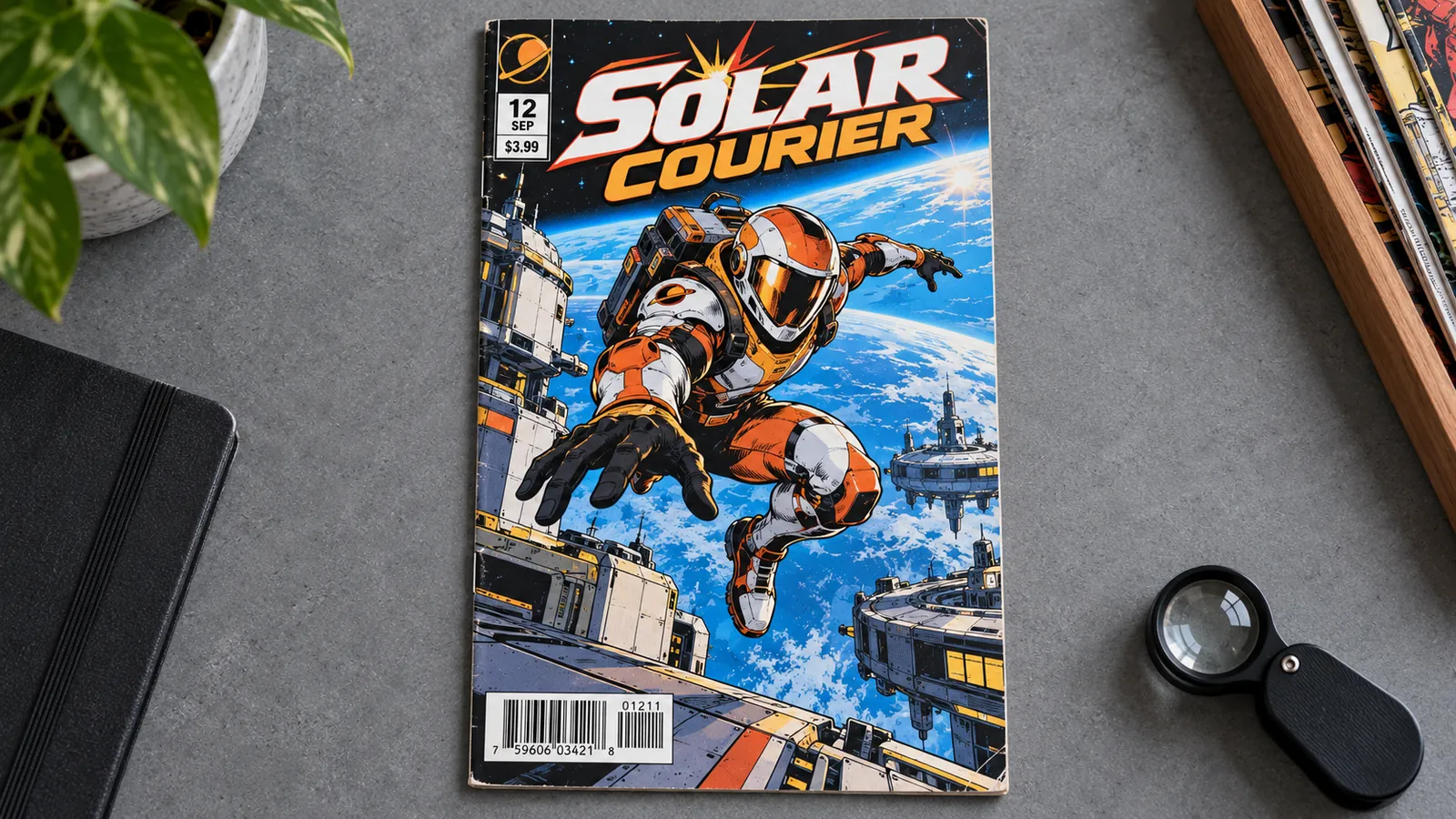
A comic book barcode has two parts. The main 12-digit UPC usually identifies the series, not the single issue. The five-digit add-on to its right identifies the issue: on many modern comics, the first three digits are the issue number, the fourth marks the cover and the fifth marks the printing. Publishers set these digits themselves, so treat them as a strong hint, not proof.
The barcode tells you which book you are holding. It cannot tell you what condition your copy is in, whether it was restored, whether a signature is genuine, or whether the cover started out on this book.
How a comic book barcode is built
A modern comic barcode is a 12-digit UPC with a shorter five-digit add-on printed to its right, 17 digits in all. The main code says which product this is, and the add-on says which issue of it.
A UPC, or Universal Product Code, is a 12-digit retail barcode. GS1, the not-for-profit body that maintains the barcode standards, calls the number it carries a GTIN-12. An add-on, sometimes called a supplement, is a second, shorter barcode of two or five digits placed just to the right of the main one. The 12 main digits are printed under the bars, with the first and last digits set smaller at the sides. The add-on's digits are printed above its bars.
| Part | Where it sits | What it usually means on a comic | Who sets it |
|---|---|---|---|
| Company prefix | The opening digits of the 12 (the length varies) | The company that licensed the number, usually the publisher | GS1 licenses it |
| Item reference | The digits after the prefix, up to the last one | The series or title | The publisher |
| Check digit | The last of the 12 | Nothing about the book | Calculated from the other 11 |
| Add-on | The short barcode to the right | Issue, cover and printing on many modern comics | The publisher |
A check digit is the last digit of the main code, calculated from the other 11 so a scanner can catch a misread. Because the item reference usually names the series, every issue in a run can carry the same 12 digits. The add-on is the part that changes from issue to issue.
GS1's rules say the add-on is not needed to identify the title, and checkout scanners may skip it. For magazines and newspapers, GS1 notes that the issue add-on is normally scanned when unsold copies go back to the distributor.
What the five add-on digits mean
On many modern comics, the five add-on digits split three, one and one: the issue number, the cover and the printing. Zeros fill the issue number out to three digits, so issue 7 reads 007.
- The issue digits are the first three: 001 for #1, 012 for #12, 150 for #150.
- The cover digit is the fourth. A 1 usually marks the standard cover, and a 2 or higher usually marks another cover for the same issue, often a variant.
- The printing digit is the fifth. A 1 usually marks the first printing, a 2 the second printing, and so on.
Here is a written example with made-up digits.
EXAMPLE (made-up digits, not a real book)

Main code   6 14141 12345 2
            6 14141 ............ company prefix (the publisher)
                    12345 ...... item reference (the series)
                          2 .... check digit

Add-on      00121
            001 ................ issue #1
               2 ............... cover 2, often a variant cover
                1 .............. first printing
Read the same way, other add-ons decode like this:
| Add-on | Issue | Cover | Printing | Plain reading |
|---|---|---|---|---|
| 00111 | 001 | 1 | 1 | #1, standard cover, first printing |
| 00112 | 001 | 1 | 2 | #1, standard cover, second printing |
| 00121 | 001 | 2 | 1 | #1, second cover, first printing |
| 01231 | 012 | 3 | 1 | #12, third cover, first printing |
| 15011 | 150 | 1 | 1 | #150, standard cover, first printing |
These are example readings under the common pattern. Your book's publisher may number its add-ons differently.
When the digits do not follow the pattern
The three-one-one pattern is a trade convention, not a standard, so expect exceptions. The GS1 General Specifications, the rulebook for these barcodes, leave the meaning of the add-on to each publisher (section 2.1.3.5): "it is the publisher's responsibility to define the numbering scheme."
Variants and later printings can share a code
Variant covers and later printings do not always get their own digits, and publishers sometimes release them with the standard add-on. In July 2007, ComicsPRO, the trade group for comic shop retailers, asked publishers to give every cover its own barcode.
Price variants can share a code too. Collector guides report that 1980s newsstand copies printed with a Canadian price carry the same barcode as the US copies, so only the printed price tells them apart.
Numbers the pattern cannot hold
Three digits stop at 999. A book numbered 1000 or higher cannot show its full issue number in that space, so the add-on and the cover will not match. A digit can also simply be wrong. When the add-on and the printed issue number disagree, trust the cover and the indicia, and write the mismatch down.
Older comics: two digits, or no barcode at all
Older barcoded comics often carry a two-digit add-on that gives the cover month, and the oldest comics carry no barcode at all.
Two-digit add-ons. Many 1980s comics carry two add-on digits instead of five. They usually give the cover month, 05 for a May cover, which matches the numbering GS1 recommends for monthly periodicals. The same two digits come back every year, so a monthly book can share its full barcode with the issue published 12 months earlier.
No add-on. A barcode with no add-on identifies only the product line. Take the issue number, the date and the printing from the cover and the indicia instead.
No barcode. Marvel and DC began printing UPC barcodes on their covers in 1976, and their earlier books have none. The Green Lantern #59 sample report (DC, 1968), for example, covers a book printed six years before the first UPC scan at a store checkout, in June 1974.
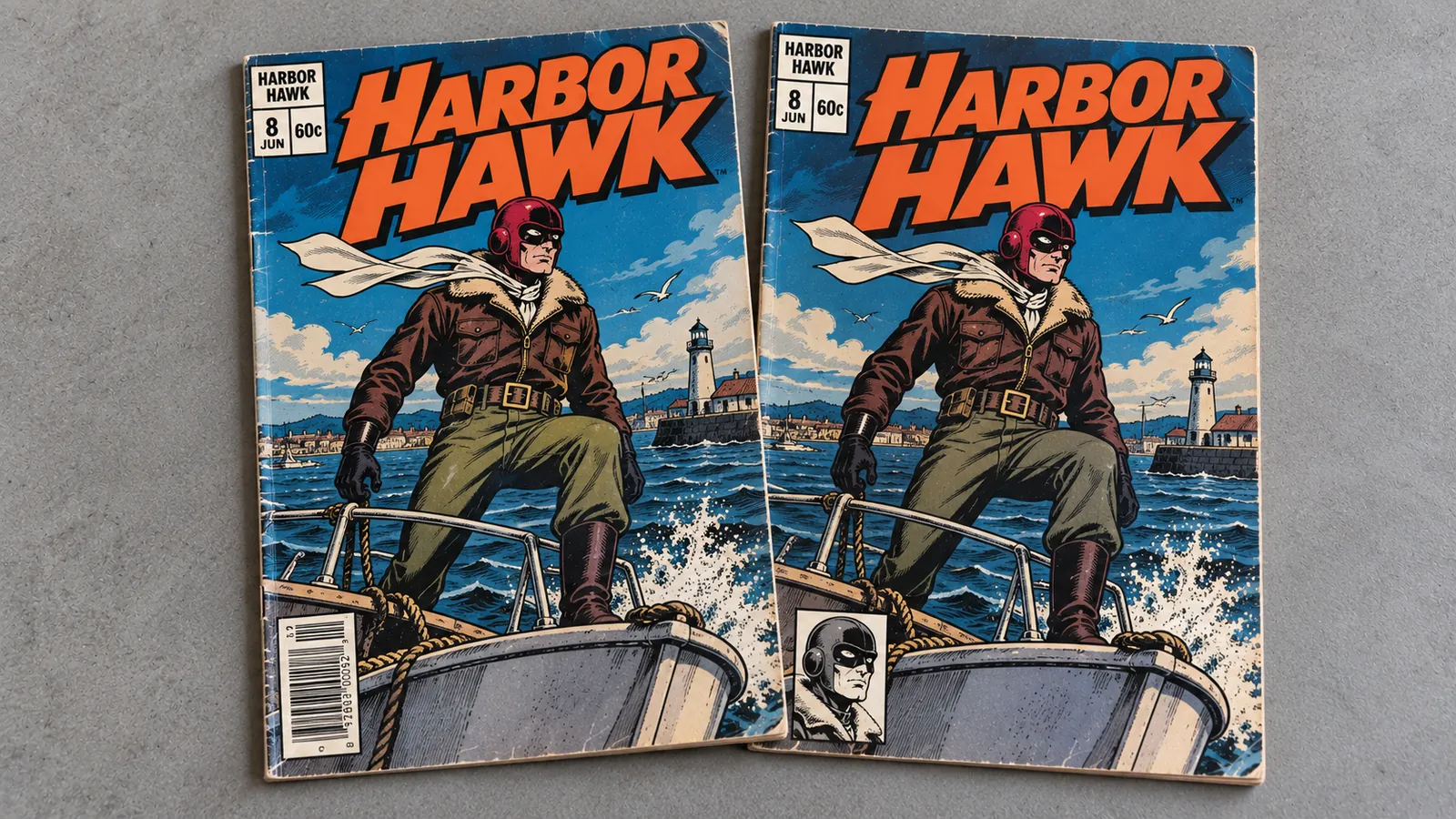
Art in the barcode box. From about 1980, many direct-edition copies, the copies sold to comic shops rather than newsstands, showed art or a logo in the barcode box instead of a scannable code. The companion guide Newsstand or direct: what are you holding? covers how to tell the two editions apart in each era.
What a comic barcode cannot tell you
A barcode identifies a product, not a copy, so it says nothing about the book in your hands beyond which product it is. GS1 classes the number as a class-level identifier: every item of the same product shares it, and only an added serial number would single out one item.
- Condition. A 9.4 NM copy and a 4.0 VG copy of the same printing carry the same digits. Creases, spine ticks, page color and missing pages belong to the copy, not the code.
- Restoration. Color touch, piece fill, trimming and re-glossing happen after printing and leave the code as it was. Even photos in ordinary light can miss competent restoration, as what a photo grade can miss explains.
- A signature. A signature goes on after printing. A signed copy and an unsigned one carry the same code, and the code says nothing about who signed or whether anyone saw it happen.
- Whether the cover is original. A married cover is a cover from another copy of the same issue, attached to this book's pages. Grading services flag it, and some count it as restoration. Taken from a copy of the same printing, it carries the same barcode as the cover it replaced. The clues are elsewhere: wear or paper tone that disagrees between the cover and the interior, and cover staple holes that miss the centerfold staples.
- Authenticity. A barcode is ink printed with the rest of the cover. A correct-looking code does not prove a copy is genuine, and an odd one does not prove it is fake, because publishers make barcode mistakes.
The barcode does not move the grade either. Damage in the barcode box, such as a crease through it or writing on it, counts the same as that damage anywhere else on the cover.
How to check a barcode against the book
Decode the barcode, then confirm each part against printed evidence elsewhere on the book. The indicia, the small print that gives the title, issue, date and publisher, usually sits on the first page or inside the front cover.
- Find both parts. The add-on is the shorter barcode to the right of the main one, with its digits printed above the bars.
- Write down all the digits exactly as printed, leading zeros included.
- Split a five-digit add-on into three, one and one: issue, cover, printing. If the main code has 13 digits, it follows other rules, explained in the next section.
- Compare the issue digits with the number on the cover and in the indicia.
- Compare the cover digit with the cover art. A 1 usually means the standard cover. For any other digit, check the art against a catalog listing that shows each cover for that issue.
- Compare the printing digit with any printing note in the indicia or on the cover.
- Check the printed price and the barcode box itself. A different price can mark a price variant with the same code, and art in the box marks a direct edition.
- Write down every disagreement as an open question. Do not settle it in favor of the barcode.
One of NuGrade's sample reports shows the idea. The Marvel Presents: Guardians of the Galaxy #4 report (Marvel, April 1976) reads its cover date and publisher from the front cover and from the indicia in a frame of the page-flip video.
Copy the block below into your notes, above the condition findings of a home condition record.
IDENTITY CHECK
Title and issue (from the cover):
Indicia (title, issue, date, publisher):
Cover price as printed:
Barcode box shows:   code / art or logo / nothing
Main code (12 digits):
Add-on as printed:                (write "none" if none)
Add-on reading:   issue ___   cover ___   printing ___
Agrees with the cover and indicia?   yes / no / partly
Open questions:
Before you compare sold copies to decide whether a book is worth professional grading, match the issue, cover and printing.
Other codes: 13-digit book and magazine barcodes
If the main code has 13 digits, it is not a comic UPC, and its add-on follows other rules. On a collected edition with an ISBN barcode, for example, the add-on gives the price instead of the issue.
| What you see | What it is | What the add-on usually means |
|---|---|---|
| 12 digits plus 5 | A UPC with a five-digit add-on, the modern comic pattern | Issue, cover and printing |
| 12 digits plus 2 | A UPC with a two-digit add-on, common on 1980s comics | The cover month |
| 13 digits starting 978 or 979, plus 5 | An ISBN, the number for books, such as a collected edition | The price: a leading 5 means US dollars, so 51999 is $19.99, and 90000 means no price is encoded |
| 13 digits starting 977 | An ISSN, the number for serial publications, used for example on UK magazines | Set by the publisher; GS1 recommends the week or month of issue |
The price rule comes from the Book Industry Study Group's barcoding guidelines for US books. For magazines and other periodicals, GS1's add-on guidance gives the month number for a monthly and the week number for a newspaper.
Frequently asked questions
What do the five small numbers next to a comic barcode mean?
They are the add-on, a second barcode that identifies the issue. On many modern comics, the first three digits are the issue number, the fourth is the cover (1 usually means the standard cover) and the fifth is the printing.
Does the barcode prove a comic is a first printing?
No. A final add-on digit of 1 usually means a first printing, but publishers set these digits themselves and do not always update them, so confirm the printing with the indicia and the cover.
Why do some comics show only two extra digits?
Many 1980s comics used a two-digit add-on that usually gave the cover month, such as 05 for May. Because the month numbers repeat every year, two digits do not identify an issue on their own.
Is a comic without a barcode fake?
No. Marvel and DC comics from before 1976 have no barcode, and many 1980s direct-edition copies show art or a logo in the barcode box instead. A barcode's presence or absence proves nothing about authenticity.
Does the barcode change a comic's grade?
No. A grade describes the condition of the copy, so the digits add or take away nothing. Damage in the barcode box counts the same as that damage anywhere else on the cover.