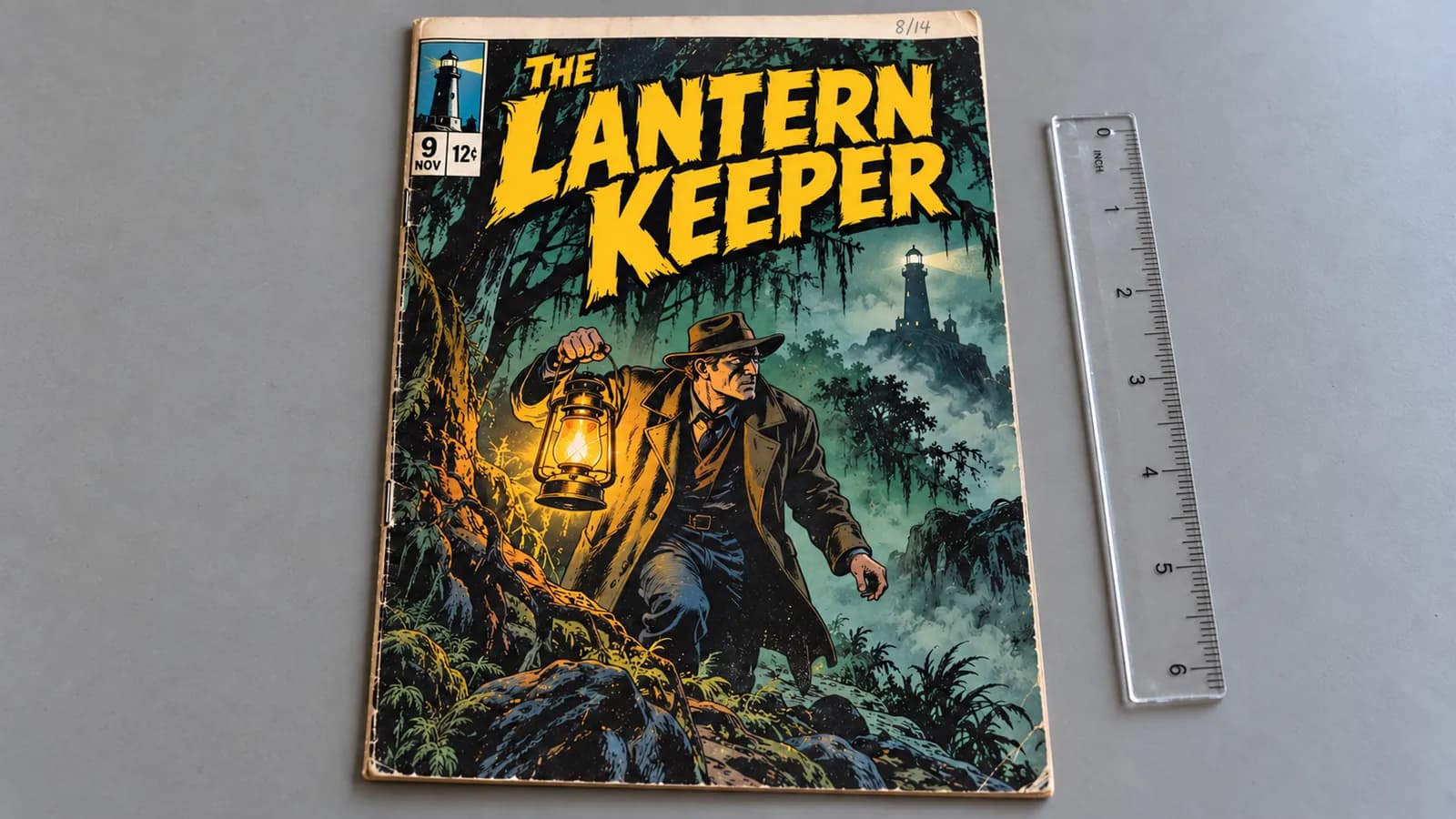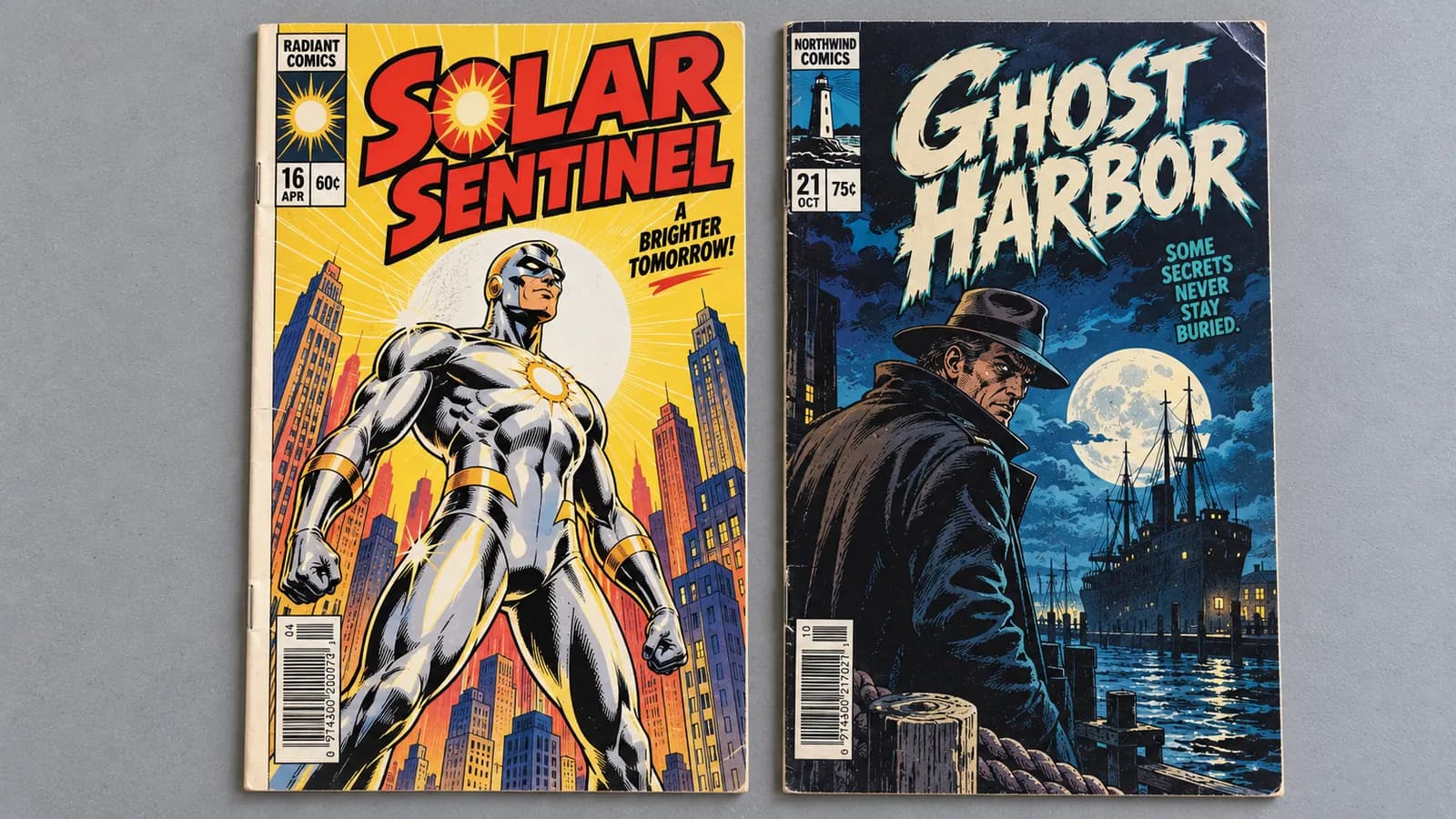
Few comic defects cost nothing, but several cost less than they look: a small arrival date in an unobtrusive spot, a slight miswrap or printing mark, a bindery tear under 1/16 inch, a bend that did not break the color, and page toning normal for the book's age. The costly ones often look small: color-breaking creases, missing paper, spine splits, rust stains around staples, brittle pages and restoration.
Why a scary flaw can cost less than a small one
A flaw costs grade for what it did to the book, such as broken ink or lost paper, more than for how it catches the eye. Two ideas from the standard 10-point scale explain why.
The worst defect sets the ceiling. A limiting flaw is the single worst defect on a book, and it caps the grade however clean the rest is. One short color break can outweigh a dozen marks that look worse.
Factory flaws get their own allowance, within limits. A production flaw is a defect made at the printing plant, such as a miswrap, a bindery tear or a printing mark. At 9.9 MT, the standard scale allows a very minor manufacturing defect but no handling defects at all. Lower grades allow more of them, but only a limited number, so they still count, just more gently.
Comic defects ranked by grade effect
Small marks and factory flaws cost the least; broken ink, lost paper, weak paper and restoration cost the most. Each grade below is the highest one the published grade descriptions allow with that defect, not a prediction for the book.
| Defect | Highest grade that allows it | Grading reason |
|---|---|---|
| Small, unobtrusive arrival date | 9.9 MT | No ink or paper lost |
| Subtle production flaw, such as a slight miswrap | 9.9 MT, if very minor | Made at the plant |
| Bindery tear under 1/16 inch, Silver Age or later | 9.4 NM | Factory tear; 9.6 NM+ allows none |
| Bend of 1/16 inch, color unbroken | 9.4 NM | Shape changed, ink whole |
| Cream to off-white pages | 9.4 NM | Normal aging of pulp paper |
| Crease or spine tick that breaks the color | 8.0 VF at best (minor, on the spine) | Ink gone for good |
| Rust stain spreading from a staple | 7.0 FN/VF, if slight | Stain in the paper itself |
| Slightly brittle pages | 6.5 FN+ (brittle: 3.5 VG-) | Strength, not color |
| Spine split of 1/4 inch | 6.0 FN | Cover separating at the fold |
| Missing 1/8-inch square or 1/4-inch triangle | 4.0 VG | Part of the book gone |
| Coupon cut from a page | Only 1.0 FR and 0.5 PR mention it | The copy is incomplete |
| Color touch over a tick or crease | Restored, at any amount | An alteration with its own scale |
For what each tier means, see what VF, FN and NM actually mean.
Defects that look worse than they are
Five common flaws catch the eye but cost little, because they came from the factory, left the ink whole, or are normal for the book's age. Each still has a limit.
A slight miswrap or a small printing mark
A miswrap is a cover folded off center at the bindery, so the spine fold sits to one side. It is a production flaw, and the 9.2 NM- and 9.0 VF/NM descriptions allow a limited number of minor bindery or printing flaws.
NuGrade, an AI-assisted grading app for raw comics, shows this in its sample report for E-Man #1 (Charlton, 1973). The only two findings are production flaws: a slight miswrap, where "a narrow unprinted strip runs along the front spine edge", and a small dark mark at the left edge of the back cover, likely from bindery or printing. Every other area reads Clean, restoration included, with the report's note that photos can miss skilled work. The grade is 9.2 NM-, with a range of 8.5 VF+ to 9.4 NM.
The report names those two flaws as the reason the grade is not higher, so they cost little, not nothing. One report is an example, not proof of accuracy.
A short bindery tear
A bindery tear is a small tear made while the book was bound at the plant, not by a reader. On Silver Age and later books, the 9.4 NM description allows one under 1/16 inch and 9.6 NM+ allows none; Golden Age books get more room. A tear from handling gets no such allowance, so the cause matters as much as the size.
A bend that did not break the color
A non-color-breaking bend is a fold or dent where the ink is still whole, so no paper shows along the line. The descriptions allow 1/16 inch at 9.4 NM, 1/8 inch at 9.0 VF/NM and an unnoticeable 1/4-inch crease at 8.0 VF, always with the color unbroken. Professional pressing can often relax such a bend, as what pressing can and cannot fix explains. The limit: 9.6 NM+ allows no bends at all.
Page toning that fits the book's age
Page toning is the slow darkening of interior paper with age. Older comics were printed on wood-pulp paper, which the Library of Congress comic book care guide calls chemically unstable. Most comics printed after 1990 have white pages because pulp paper went out of use.
Cream to off-white pages are common on books from the 1930s to the 1950s and on many Silver Age books, and the descriptions accept them from 9.4 NM down. The limit is darker paper: the published page-quality scale caps light tan to off-white pages at 8.5 VF+ and tan to off-white at 7.5 VF-.
A small arrival date
An arrival date is a date a wholesaler or newsstand penciled, stamped or inked on the cover. A small one in an unobtrusive spot fits every description from 9.9 MT down, and at 4.0 VG and below such marks have no effect at all. A large or obtrusive date loses that allowance. The guide to stamps, pencil prices and arrival dates covers each kind of mark.
Defects that look minor but cost a lot
Six small flaws cost far more than their size, because each one breaks ink, removes paper, stains or weakens the book, or alters it.
A short crease that breaks the color
A color break is a line or spot where the ink has cracked or worn away so the paper shows through. The first published description to mention one is 8.0 VF, which allows a possible minor break on the spine. Above it, every bend must leave the color unbroken, and 9.0 VF/NM allows no corner creases at all, so a short crease that breaks the color keeps a book out of the 9s. Pressing cannot put the ink back.
In the Marvel Presents: Guardians of the Galaxy #4 sample (Marvel, 1976), small ticks showing white color break against the black cover limit the book to 7.5 VF-. In Green Lantern #59 (DC, 1968), the report notes a possible mild bindery overhang, while short color-breaking ticks at both staples limit the grade to 5.5 FN-.
A tiny piece of missing paper
No published description above 4.0 VG mentions missing paper. At 4.0 VG, up to a 1/4-inch triangle from a corner or edge, or a 1/8-inch square (about 3 mm), is acceptable, so a chip smaller than a fingernail can pull a sharp book far down the scale. Factory bindery chips, common on Golden Age books, count as printing defects instead. A cut coupon is missing paper too, and only the 1.0 FR and 0.5 PR descriptions mention it.
A spine split
A spine split is a separation of the cover along the spine fold. The descriptions place a 1/4-inch split at 6.0 FN and a 1-inch split at 4.0 VG. Because it sits on the fold, a front-cover photo can miss it.
Rust spreading from a staple
Rust migration is rust from a staple that has stained the paper around it. Staple discoloration alone fits descriptions well into the 9s, but slight rust migration first appears at 7.0 FN/VF. A small orange stain at one staple can hold an otherwise near-mint book near 7.0, and pressing does not remove it.
Brittle pages
Brittleness is paper that cracks or flakes when it flexes; it is about strength, not color. The published page-quality scale caps slightly brittle pages at 6.5 FN+ and brittle pages at 3.5 VG-, even when the paper still looks off-white. Chipped page corners are a visible warning, but feel is in no photo, so NuGrade's survey asks the owner about a brittle or cracking feel. Never flex a page to test it.
Color touch and other restoration
Color touch is paint or ink added to hide a defect, such as a white tick on a dark spine. The published restoration scale counts even light color touch over spine stress or a corner crease as restoration, and restored copies are valued below unrestored ones that look the same. Competent work can be invisible in normal light, so NuGrade reports restoration as Unverified when the photos cannot establish it.
When a minor defect starts to matter
A minor flaw starts to matter at the top of the scale, when several pile up, when its place makes it obtrusive, and when it may hide restoration.
- At the top of the scale. From 9.6 to 9.9, small flaws decide the grade: 9.6 NM+ allows no bends and no bindery tears outside the Golden Age, and 9.9 MT allows no handling defects.
- When they pile up. At 8.0 VF and 7.5 VF-, the standard scale treats an accumulation of small defects like one moderate defect.
- When the place makes it obtrusive. A date stamped across the cover art loses its allowance, and the 9.0 VF/NM, 8.0 VF and 7.0 FN/VF descriptions all call for outstanding eye appeal.
- When it may hide restoration. A smooth, flat patch of color over a crease or a tick can be color touch.
How to tell a factory flaw from handling damage
Three things usually show the cause: where the flaw sits, whether the ink broke, and what surrounds it. Check them on a dark surface under one lamp, and handle the book by its edges.
- Find where the flaw sits. Production flaws follow how the book was made: a miswrap runs the full length of the spine edge, and a printing mark sits in the ink. Handling damage collects at the corners, the spine ends, the right edge and the staples.
- Lower the lamp so the light skims the surface, then move it slowly. White paper showing along a fold or in a short line across the spine is color break. A miswrap strip runs along the spine, not across it, and has no crack in it.
- Measure the flaw with a ruler beside the book, not on it: 1/16 inch is about 1.6 mm, 1/8 inch about 3 mm and 1/4 inch about 6 mm.
- Look at what surrounds it. A short, clean tear on an otherwise sharp edge points to the bindery; a tear with a crease, soiling or a blunted corner beside it points to handling. These are signs, not proof.
- Write "likely" when you cannot settle the cause, as the E-Man #1 report does for its back-cover mark.
Photos settle many of these calls and leave some open. A NuGrade report cites the photo or video frame behind each finding, so a buyer can check a production call against its image at the report lookup. Defects smaller than the photos can show may still exist, odor and brittleness come only from the owner's survey, and restoration can hide in normal light. The grade is an opinion limited to that evidence, and for a high-value book, professional grading is still the right choice. For the full inspection order, see how to grade a comic book at home.
Frequently asked questions
Which comic defects matter least for the grade?
A small, unobtrusive arrival date, a subtle production flaw such as a slight miswrap, a bindery tear under 1/16 inch, an unbroken bend, and page toning normal for the book's age cost the least. Each one still rules out the very top of the scale.
Does a miswrap lower a comic's grade?
A slight miswrap is a production flaw, which the published grade descriptions allow in limited numbers even at 9.2 NM-. It costs little but not nothing, and a severe miswrap that shifts the cover art hurts eye appeal.
Do toned pages lower a comic's grade?
Not when the toning fits the book's age: cream to off-white pages fit the descriptions from 9.4 NM down. Darker pages set caps, with light tan to off-white at 8.5 VF+ and tan to off-white at 7.5 VF-.
Why does a small color break cost more than a big bend?
A bend changes the shape of the paper, while a color break removes ink that does not come back. The published descriptions allow bends above 8.0 VF only when the color is unbroken.
Can photos tell a factory flaw from handling damage?
Often, from where the flaw sits, whether the ink broke and what surrounds it, but not always. An honest report says "likely" when the photos cannot settle the cause.