To sell a raw comic book, decide first whether it should be graded, then identify the exact issue and printing. Photograph both covers, the corners and the spine, and write condition notes that name each defect and the flaw that limits the grade. Price it from sold copies that match yours, list it where its buyers look, answer questions honestly, and ship it flat between stiff boards.
An online buyer cannot hold a raw book before paying, so the listing has to carry the condition. You can build that evidence yourself or with NuGrade, an AI-assisted grading app for raw comics.
Should you sell it raw or get it graded first?
Sell it raw when professional grading would cost more than it adds to the price. A raw comic is a comic book that has not been graded and sealed in a holder by a professional grading service.
Grading pays only when the gap between raw and graded sold prices beats the grading fee, shipping and insurance both ways, and the wait. For lower-value books it often does not. A valuable key or a high-grade copy is the strong case for grading, because the exact grade sets the price and restoration needs an in-hand check. Is my comic worth grading? runs the break-even math with example numbers.
How to identify the exact book and printing
Identify the book from its cover and its indicia, the small print with the publisher and date, usually on the first page or inside the front cover. Record the title, issue number, publisher, cover date and cover price, and check for a later printing, a variant cover, or a reprint or facsimile.
A price variant is a copy of an issue printed with a different cover price, for example for a price test or for sale in another country. Buyers and price records treat it as a separate book.
The sample in this guide, Marvel Presents: Guardians of the Galaxy #4, is cover-dated April 1976, and the report's front-cover photo shows the regular 25-cent price. Marvel also printed copies of this issue at 30 cents for a 1976 price test in some US markets, so a listing that says only "Marvel Presents #4" makes the buyer guess. Name the version in your title.
Then confirm the book is complete: count the pages, check that the centerfold is held at both staples, and look for cut coupons. The Guardians copy's page-flip video accounts for all 36 pages.
How to document the condition: your notes or a photo report
Document the condition with your own photos and a list of findings, each tied to a photo. You or a photo report can write the findings.
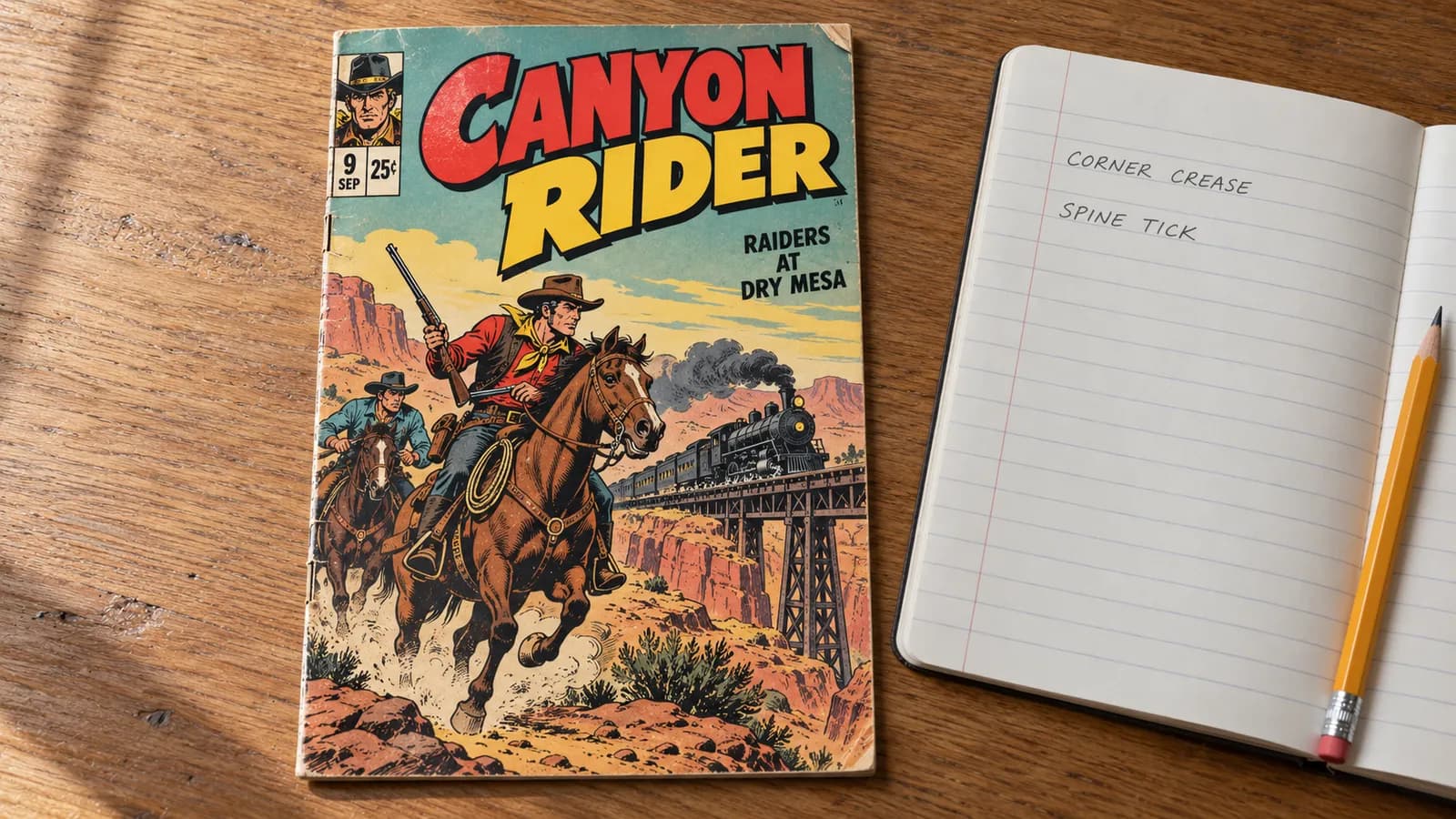
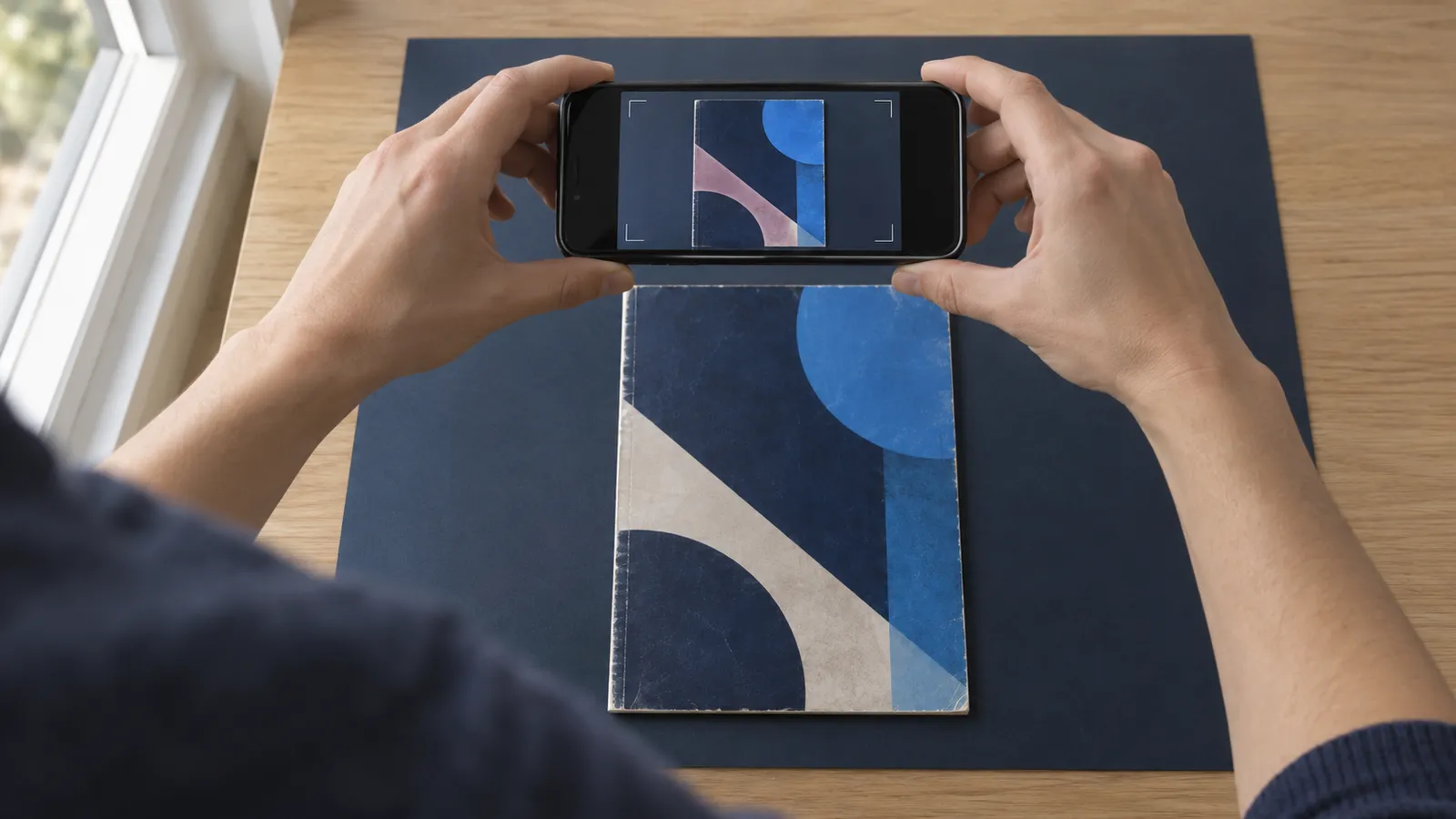
Inspect in a fixed order and photograph each stop with the flash off and the light low from one side. The at-home grading checklist gives the order, and how to photograph comics so the flaws show covers light and framing.
| Your own notes and photos | A NuGrade report | |
|---|---|---|
| What you capture | Covers, corners, spine, centerfold and each defect up close | Seven photos and two short videos, guided and checked by the app |
| Who writes the findings | You, against the published 10-point grade descriptions | The app, citing the photo or video frame for each finding |
| How the grade reads | Your grade and range, with the limiting flaw named | A grade with its tier, a plausible range and a "why not higher" line |
| How a buyer checks it | Your photos and your word | A public report by link, QR code or short ID, with no app or account |
| Cost | Your time | One credit per report |
| Limits | Only as strict as you are | An opinion bounded by the photos; restoration stays Unverified when photos cannot show it |
Either way, the listing needs its own photos.
How to write condition text a buyer can check
Write one line per defect: what, where, how big, and whether it breaks the color. Put the defect that sets the grade first, give the grade as a range with its tier name, and end with what you could not check.
A limiting flaw is the single worst defect on a book, the one that sets the highest grade it can reach however clean the rest is. A spine tick is a short crease across the spine fold; when it breaks the color, it shows as a white line on a dark cover.
Avoid a bare band such as "VF", which can mean any of three grades from 7.5 to 8.5 (what VF, FN and NM actually mean). Keep what you saw apart from what you infer: "faint marks, pencil or show-through" is honest, while "pencil" is a guess until you check. For a full template, see how to write condition notes that say more than near mint.
A complete example listing for a raw comic
The listing below uses the findings of the Guardians of the Galaxy #4 sample report, graded September 30, 2026. The findings and the owner's survey answer come from the report; the layout and photo numbers are an example to copy.
TITLE
Marvel Presents #4 Guardians of the Galaxy 1976, 25 cent, raw, 7.5 VF- report

BOOK
Marvel Presents #4, Marvel Comics Group, April 1976. Regular
25-cent cover, not the 30-cent test-price variant. Raw: not
professionally graded or sealed.

GRADE
7.5 VF- in a NuGrade photo report, range 7.0 FN/VF to 8.0 VF.
The spine sets the grade.

CONDITION, WORST FIRST
- Spine: small stress ticks along the upper and middle spine
  edge, several breaking the color, white against the black
  cover (photo 7).
- Spine: more small stress lines near the lower staple (photo 7).
- Corner: short crease at the top-right tip, color break
  exposing paper (photo 4).
- Corner: slight blunting, small white wear fleck at the
  bottom-left tip (photo 5).
- Edge: light edge wear, small white flecks along the top
  edge near the top-left corner (photo 3).
- Cover: scattered light abrasion flecks in the black field
  near the edges (photo 1).
- Interior: faint marks at the top margin of two ad pages,
  pencil or show-through, not confirmed (photos 9 and 10).

CHECKED
Pages cream to off-white. All 36 pages accounted for.
Staples: no findings.

NOT KNOWN
Restoration: unverified; skilled work can be invisible in
photos. Defects smaller than the photos show may exist.

SELLER STATEMENT
Nothing that I know of: no pressing, cleaning, tape,
restoration, trimming, signature, odor or brittleness.

REPORT
Every photo, both videos and each finding:
www.nugrade.app/r/NG-HM9D44HX-7VVS
Check the ID NG-HM9D44HX-7VVS at www.nugrade.app/lookup.

PHOTOS
1 front, 2 back, 3 to 6 corners (TL, TR, BL, BR), 7 spine,
8 centerfold, 9 and 10 ad-page margins. Ask for any other angle.

SHIPPING AND RETURNS
Bagged, boarded, boxed and tracked. Returns accepted if the
book does not match this description.
On a marketplace that bars typed web addresses, delete both address lines and keep the report ID.
Each finding points to a numbered photo, the grade comes with its reason, and the unknowns get their own heading. Without a report, keep the layout and change two blocks:
GRADE
My grade: 7.5 VF-, range 7.0 FN/VF to 8.0 VF, from my own
inspection against the published grade descriptions.
The spine sets the grade.

REPORT
None. Each finding points to a numbered photo. I will send
any other angle, unedited, before you buy.
How to price a raw comic from sold copies
Price a raw comic from recent sold listings of copies that match yours, never from asking prices. An asking price is what a seller hopes for; a sold price is what a buyer paid.
- Match the version. For the sample, use 25-cent copies only, with no 30-cent variants, reprints or facsimiles.
- Match the state. Use raw sales for a raw book; a graded copy's price includes the grading and the sealed holder.
- Match the condition from the photos. Ignore the grade each seller typed. For the sample, compare raw copies with color-breaking spine ticks, not copies with clean spines or cover creases.
Then take the middle of several recent sales, not the best one. If only one or two copies sold, treat the number as a guess. The worth-grading guide covers how to pick sales to compare.
Where to sell raw comic books
Sell where the buyers for that book look, and weigh reach against fees and your time.
| Route | Best for | What it costs you | How buyers judge condition |
|---|---|---|---|
| An online marketplace | Buyers who search for one issue | Selling and payment fees, supplies, shipping risk | Your photos and text, plus a report link or ID where allowed |
| A comic shop | A quick sale | The shop pays below its resale price | In hand |
| A convention table | Many books, sold in person | A table fee, travel and days of your time | In hand, plus a QR code or report ID on a card behind the backing board |
| Consignment | A valuable book, if you can wait | A commission and a wait | The dealer's or auction's listing; hand over your notes or the report PDF |
| Local buyers | Skipping shipping | Your time, and a meeting in a busy public place | In hand |
Consignment is an arrangement in which a dealer or an auction house sells your book for you and keeps a commission or fee.
Marketplace rules differ and change, so check your marketplace's own pages on three points:
- Condition terms. Use its condition terms as defined. Leave any professional-grader or certification-number field empty: a NuGrade report ID is not a certification number.
- Photos. Check the photo limit. As of October 2026, some marketplaces bar photos with added text or artwork, which can rule out a grade card image.
- Outside links. As of October 2026, some marketplaces bar links to other sites, even a web address typed as plain text. There, leave out the URL and the QR code, and give the short report ID, which buyers can enter on the report lookup page.
For volume sellers, NuGrade's page for comic shops and dealers covers bulk grading.
How to answer buyer questions
Answer from the evidence, keep every answer consistent with the listing, and say "I don't know" when you don't.
| Buyer question | An honest answer |
|---|---|
| Has it been pressed or restored? | Say what you know and how long you have owned it. "Not that I know of" is honest; "never restored" is a promise photos cannot back. |
| What would a grading service give it? | Do not predict one. Say the book is raw, and give the report's grade as what it is: "A photo report grades it 7.5, held there by color-breaking spine ticks. That is not a forecast of a professional grade." |
| Can you send more photos? | Yes: shot the same way, unedited, as original files. |
| Are the ad-page marks writing? | Check in hand under side light and say what you see, or say you cannot tell and send a close-up. |
| Is the report current? | Give its date. A NuGrade report never changes; if the book has changed, make a new report, which gets a new ID. |
If a question shows a defect you missed, add it to the listing before anyone buys.
How to pack and ship a raw comic
Ship a raw comic flat and rigid, with tracking, so the corners and spine cannot bend on the way.
- Photograph the front, back and spine just before you pack, as a dated record.
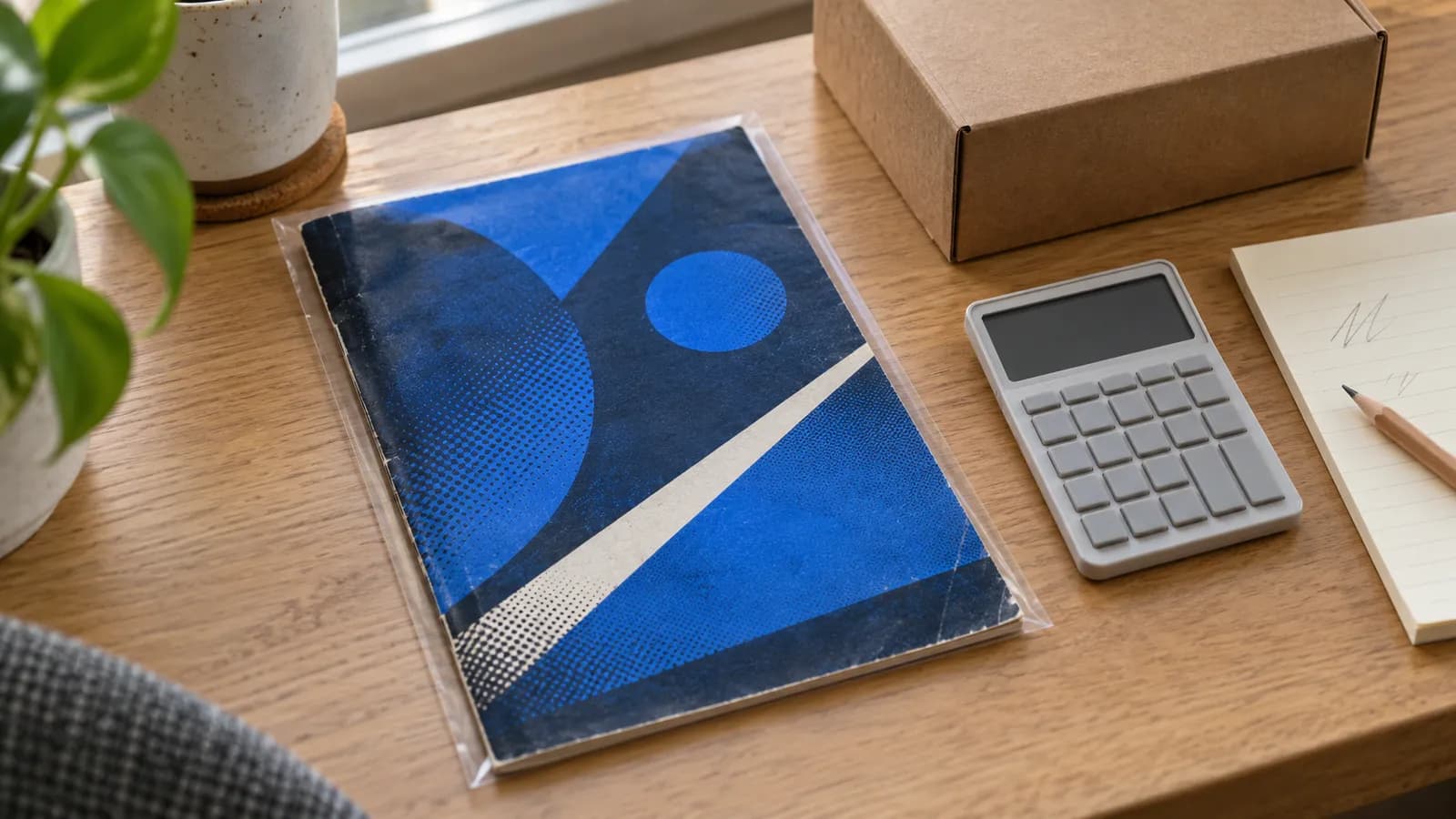
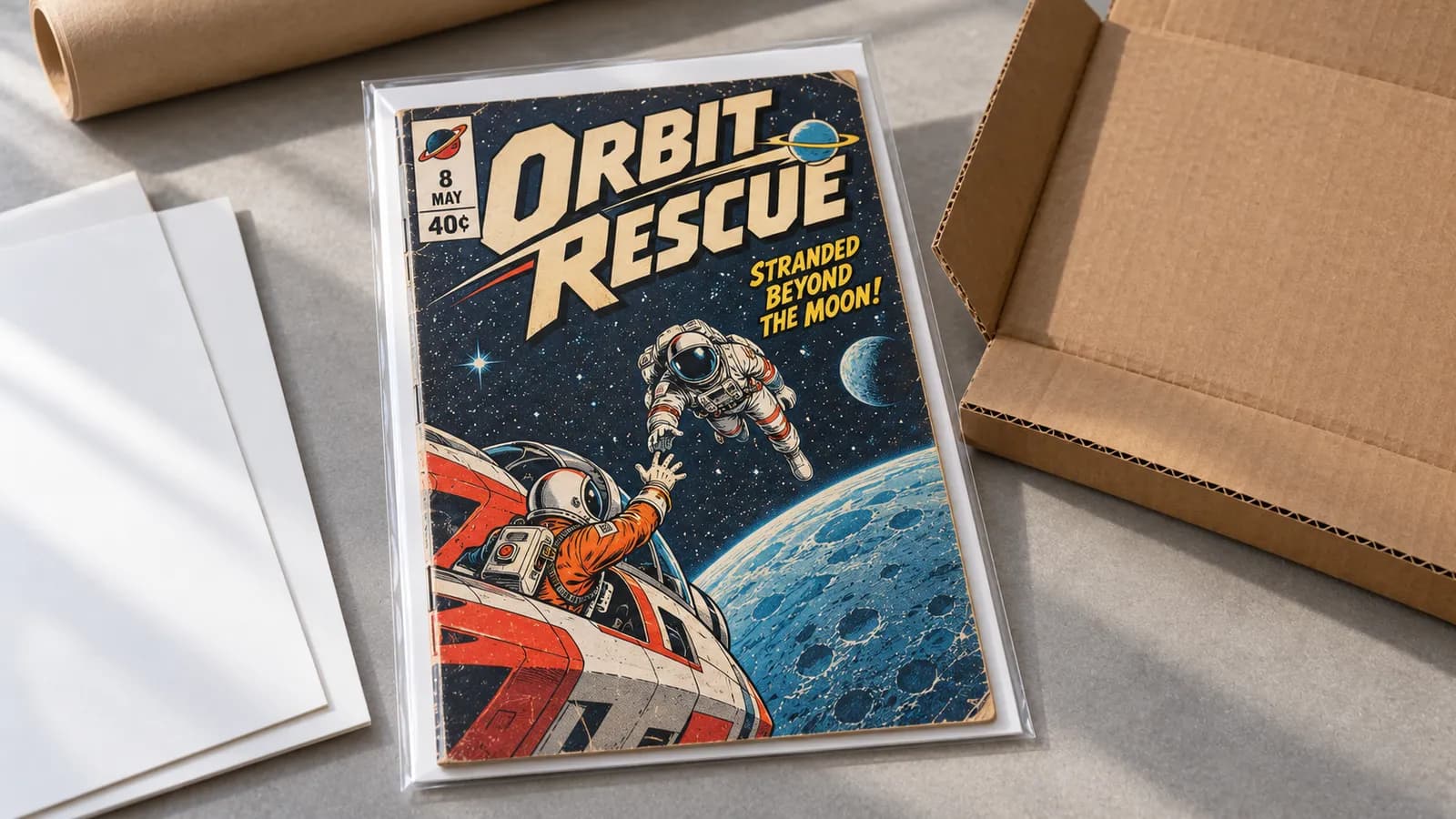
- Bag the book with a backing board. Fold the flap to the back of the bag; if you tape it, let the tape touch only the bag, so no adhesive can reach the book.
- Lay it between two stiff boards or pieces of corrugated cardboard a little larger than the bag. Tape the boards to each other, never to the bag.
- Pad it in a box or rigid mailer so it cannot slide or flex.
- Ship with tracking and insurance for the sale price, and send the buyer the tracking number.
In the US, do not ship comics by Media Mail. As of October 2026, the Postal Service's Media Mail rules exclude books that carry advertising, and its Media Mail notice says comic books do not meet that standard.
Frequently asked questions
Where is the best place to sell raw comic books?
It depends on the book and your time. An online marketplace usually reaches the most buyers for one issue but takes fees, a comic shop pays at once but below its resale price, and conventions and local buyers let people inspect the book in hand.
How do you price a raw comic book?
Use recent sold prices of the same issue and printing in similar condition, never asking prices, and take the middle of several sales. Judge condition from each copy's photos, not its seller's grade.
Should a raw comic listing include a grade?
Yes, as a range with the flaw that limits it, such as "7.5 VF-, range 7.0 to 8.0, color-breaking spine ticks." Say that the book is raw and whose grade it is: yours or a photo report's.
Can you ship comic books by Media Mail?
No. As of October 2026, US Postal Service rules exclude books that carry advertising from Media Mail, and the Postal Service says comic books do not meet that standard.
Does a NuGrade report make a raw comic a graded comic?
No. The book stays raw; the report is an evidence-bounded opinion from photos and video, which buyers can check by its ID at nugrade.app/lookup. It does not replace professional grading or encapsulation.