To tell if a comic is a first printing, read the indicia, the small print with the publisher and date, for a printing statement or a reprint note. Then check the cover for later-printing text or a reprint mark, compare the price with the date, read the last barcode digit on modern books, and check the size and paper. Last, rule out the known reprints of that issue.
No single check is proof, so treat each one as a clue. When the clues disagree, write "printing not established" rather than guess. For new covers on the same issue, see the companion guide on variant covers versus later printings.
First printing, later printing, reprint: what the words mean
These words describe where a copy came from, not its condition.
- A first printing is a copy from the publisher's first press run of an issue.
- A later printing, such as a second or third printing, is a copy from a new press run of the same issue. It keeps the issue number and the story, and it sometimes gets a new cover or a printing note.
- A reprint is a separate publication that reproduces an older issue, such as a facsimile, a giveaway or a collected edition. It has its own date and its own publication details.
- A facsimile edition is a reprint that copies an original issue as closely as it can, often with the original ads, at a modern price.
A reprint and an original of the same key issue sell as different books, so pin down the printing before you compare sold prices or work out whether a book is worth grading.
Where to look: the checks in order
Start with the indicia and the cover; they often settle it. The other checks confirm the answer or raise a doubt.
| Check | Where to look | Points to a first printing | Points to a later printing or a reprint |
|---|---|---|---|
| Indicia | Inside front cover or first page on older books; credits page or last pages on many newer ones | No later-printing statement, or "First printing" | "Second printing", a number line ending above 1, a reprint note, a modern copyright year |
| Cover marks | Top banner, bottom margin, near the price | Nothing added to the original design | "2nd printing", a new cover, an edition logo or foil seal |
| Price and date | Price box, barcode box, cover date | A price that fits the cover year | A price from a later year |
| Barcode add-on | Five small digits beside the barcode on modern books | Last digit 1 | Last digit 2 or higher |
| Size and paper | A ruler and the page edges | The size of other books from that era, paper aged to match | Oversize or undersize, paper too white for its age |
| Known reprints | A comic database or a library catalog | No listed reprint matches | A listed reprint whose marks match |
Work through them in this order:
- Read every line of the indicia, including small type under the copyright notice.
- Read the front cover edge to edge, bottom margin included, for added words, logos or seals.
- Compare the cover price with the cover date and the copyright year.
- On a modern book, read the five-digit add-on beside the barcode.
- Measure the book, and compare its paper with a book from the same year.
- Look up the issue, and compare each listed printing and reprint with your copy.
- Write down what each check showed, even the checks that settled nothing.
How to read the indicia for a printing
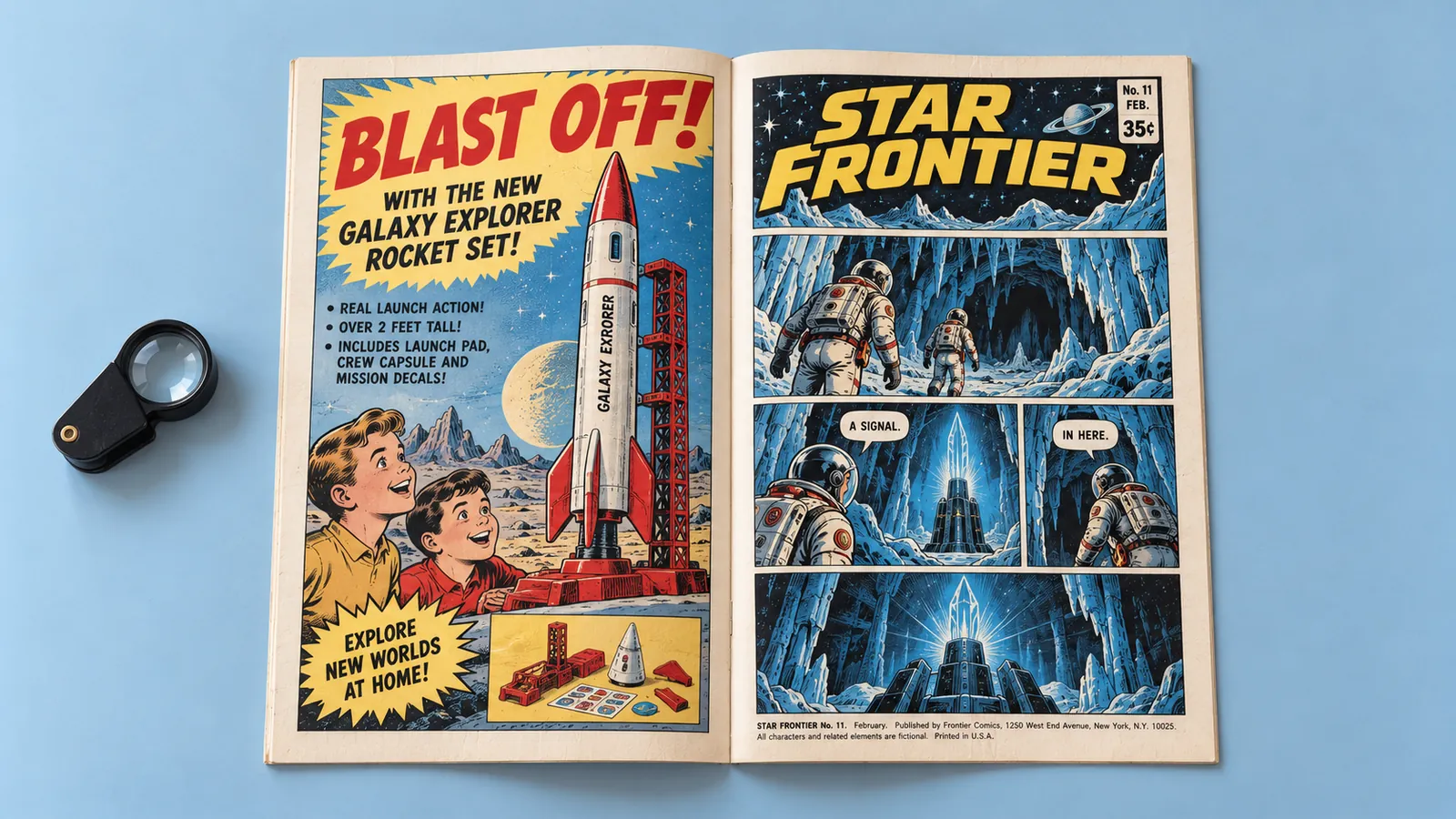
The indicia is the block of small print that gives a comic's official title, issue number, date, publisher and copyright notice. On books from the 1940s it often sits on the inside front cover, under the ads. From the early 1960s it usually sits at the bottom of the first page. On many recent books, look on the credits page or the last pages.
Catalogers trust the indicia over the cover. The comics section of the Beinecke Library cataloging manual at Yale takes the title, numbering and publisher from the indicia, and it tells catalogers to note when a comic says it is a second or later printing.
Look for three things:
- A printing statement. Some publishers state the printing outright, such as "First printing" or "Second printing", often with a month and a year.
- A number line. A number line is a row of digits such as 10 9 8 7 6 5 4 3 2 1, common in books and used in some comics collections. The lowest number left in the row is usually the printing, so a row that ends in 2 marks a second printing.
- A reprint note. A reprint usually names its source, in words such as "originally published in magazine form as". A copyright year far later than the cover date points the same way.
Read the whole line, not one word. "First printing 2022" in a facsimile or a collected edition means the first printing of that reprint, not of the original issue.
What the cover, price and date can tell you
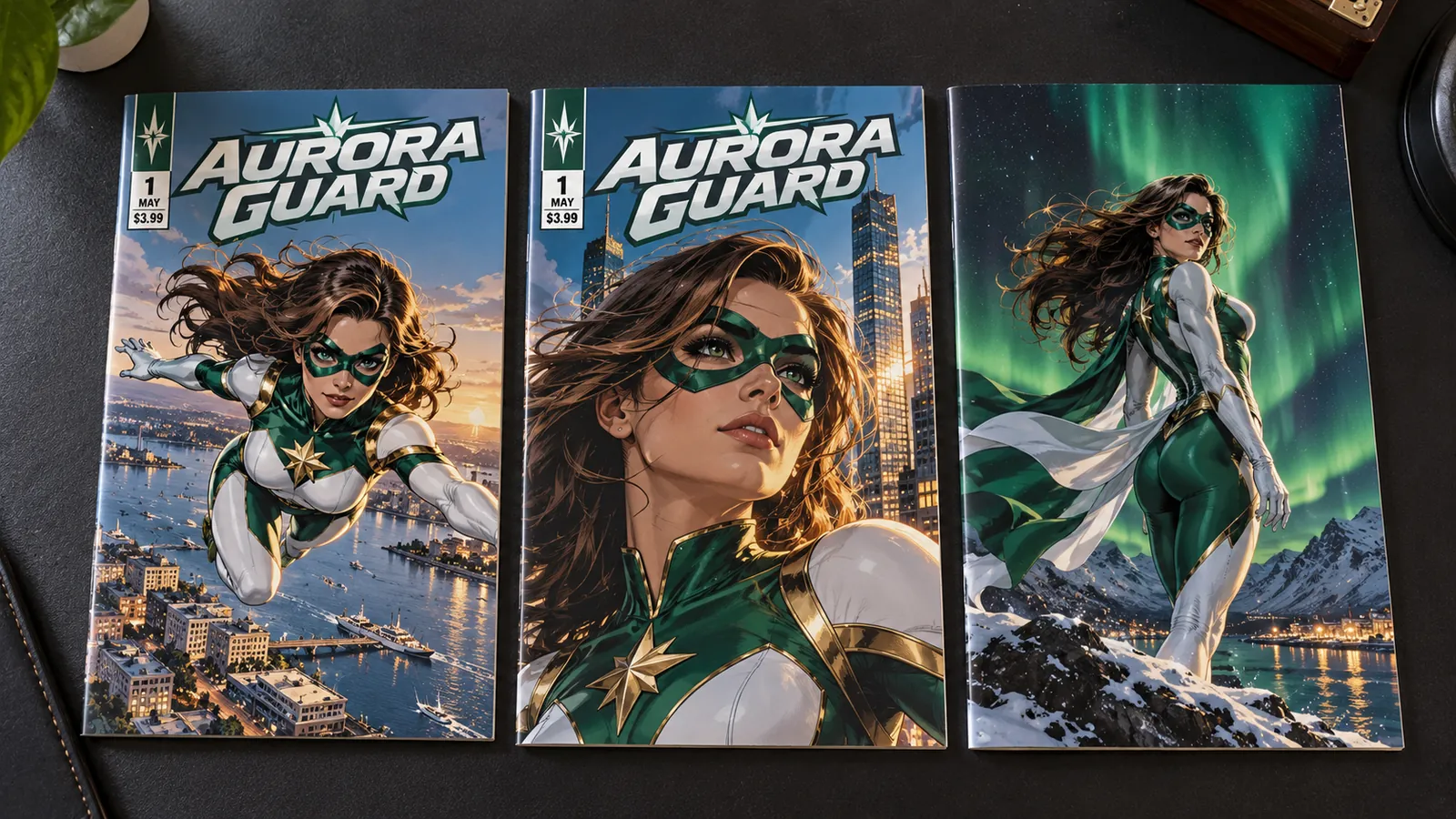
Publishers mark many later printings and reprints on the cover. A modern publisher often sends a sold-out issue back to press with "2nd printing" on the cover, or with a new or recolored cover. Reprint lines can carry their own marks, such as the gold foil logo stamped on DC's Millennium Edition reprints of 2000 and 2001.
Then compare the price with the date. A reprint is printed later, so it usually carries a price from its own year. Marvel's announcement of its 2025 facsimile editions of Fantastic Four #1 to #12 says each issue comes back "in its original form, ads and all." The interior can match, but the cover price cannot: a facsimile carries a modern dollar price with a barcode, and an original from the 1960s has a price in cents and no barcode.
Read the whole cover, not only the old price box: on a facsimile, the modern price often sits near the barcode.
What the barcode digits mean on modern books
Many modern comics carry a five-digit add-on beside the main barcode. In the common layout, the first three digits are the issue number, the fourth digit is the cover, and the fifth digit is often the printing. As an example (made-up digits), an add-on of 00112 would read as issue 1, cover 1, second printing.
Use the fifth digit as a clue, not as proof. Publishers do not always update the add-on when they go back to press, and a barcode says nothing about whether a copy is genuine. Marvel's own listings show the limit: its 2019 facsimile of Giant-Size X-Men #1 and the 2023 new printing of that facsimile both carry the add-on 00111.
The five-digit add-on is a modern feature: older barcodes lack it, and Golden Age and Silver Age books have no barcode at all. For the fourth digit, the cover, see the variant cover guide.
Reprint formats that get mistaken for originals
Most reprints announce themselves, but some lose their marks or copy the original closely. Action Comics #1 (DC, June 1938) shows the range. The original measures about 7 3/4 by 10 1/2 inches and sold for ten cents, and each of these reprints gives itself away in a different place.
| Reprint | What it is | What gives it away |
|---|---|---|
| Famous First Edition (1974) | An oversized reprint inside an outer card cover that called it a reprint | About 10 by 13 1/2 inches; with the outer cover removed, the size is the main tell |
| Soap premium (1976) | A giveaway, free with a soap purchase | It reprints only the Superman story, not the whole issue |
| Millennium Edition (2000) | One of DC's reprints of milestone issues | A gold foil logo on the cover |
| Facsimile Edition (2022) | A 64-page reprint with the original stories and ads | A $6.99 cover price |
| Facsimile Edition (2025) | A reprint at the original's larger Golden Age size | A $9.99 cover price; a ruler alone will not catch it |
The same types turn up for other publishers and eras:
- Facsimile editions copy a classic issue page for page.
- Oversized reprints in treasury format are much larger than the comics they reprint.
- Giveaway editions came with soap, drinks, toys or subscription boxes. Some reprint only one story or carry an advertiser's back cover.
- Collected reprints, such as reprint titles, annuals and trade paperbacks, usually say so in the indicia. Owning the story is not owning the first printing.
When the usual checks mislead
Each check has a known failure, so one clue never settles a valuable book.
| The clue | Why it can mislead | Check instead |
|---|---|---|
| No "second printing" anywhere | Older books seldom state a printing | The indicia date and the issue's known printings |
| The cover looks right | Some later printings change only the indicia or one barcode digit | The indicia and the add-on |
| An unusual cover price | Some first-run copies carry a different price, such as Marvel's 35-cent test-market copies of 1977 | The issue's listed price variants |
| A barcode digit of 1 | Publishers do not always update the add-on | The indicia and the cover marks |
| The right size | A reprint can match the original's size | The price, the indicia and the paper |
| "First printing" in the indicia | A reprint has its own first printing | The year and any reprint note beside it |
A famous Golden Age case shows how small the difference can be. Marvel Comics #1 (Timely, 1939) sold out and went back to press, and the second printing is nearly identical to the first. The main tell is the date: a black mark covers the October date in the indicia, and a November date is added.
Two other differences are not about the printing at all. Newsstand and direct-market copies of the same 1980s issue are parallel editions, and a price variant is a copy from the original run with a different cover price. The variant cover guide covers both.
A counterfeit is a copy made to pass as the original: if a copy has no reprint marks but its size, paper or printing looks wrong, have an expert examine it in hand.
Record the printing next to the condition
Record how you identified the printing, not only the answer. A buyer can check a photo of the indicia, but not the words "first print" in a listing title.
Do not confuse a printing with a printing defect. A printing is the run a copy came from; a printing defect is a flaw made at the plant, and it counts toward condition. The E-Man #1 sample report (Charlton, 1973) lists a slight miswrap with a narrow unprinted strip along the front spine edge. That finding tells you how this copy was made, not which run it came from.
Copy this record for each book:
PRINTING CHECK
Book (title, issue, publisher):
Cover date:                  Cover price:
Indicia location:
Indicia printing line:       (quote it exactly)
Number line:                 (lowest number, or none)
Reprint note or later copyright year:
Cover marks:                 (2nd printing, facsimile, logo, seal, none)
Barcode add-on:              (five digits, or none)
Size (inches):               Paper (aged, white, smooth):
Listing checked:             (source and date)
RESULT: first printing / later printing (which) / reprint (which) / not established
Reason:
Photograph the indicia and any cover marks with your condition photos, and follow the home grading checklist for the condition itself. A condition grade describes wear, not the printing, so a listing needs both. If you attach a report from NuGrade, an AI-assisted grading app for raw comics, the buyer can open it at /lookup with no app and no account. Like any photo grade, it is an opinion limited to what the photos and video show (see what a photo grade can miss).
Frequently asked questions
How can you tell if a comic is a first printing?
Read the indicia for a printing statement or a reprint note, check the cover for later-printing marks, and compare the price with the date. On modern books, read the last barcode digit. When the clues disagree, record the printing as not established.
Does the barcode prove a comic is a first printing?
No. On modern books the fifth digit of the add-on often shows the printing, but publishers do not always update it, and a barcode cannot show that a copy is genuine.
Do old comics have a printing number?
Most older single issues have no printing statement and no number line. Use the date in the indicia, the price, the size and a list of the issue's known reprints instead.
Is a facsimile edition a first printing?
No. A facsimile is a reprint, even when it copies every page and ad of the original. Its indicia can say "first printing", but that refers to the facsimile itself.
Is a second printing worth less than a first printing?
A first printing of a key issue often sells for more than a later printing, but not always, because some later printings with new covers have demand of their own. Compare recent sold prices for the exact printing, not for the issue in general.