The Marvel comics most likely to be worth money are documented keys, such as first appearances, in their original printing and in condition that holds up under a close look. Identify the exact volume first. Marvel has restarted The Amazing Spider-Man, Thor, Fantastic Four and other titles at #1, then returned them to their original count, so one title and number can name several books.
This guide gives no market prices, because a price only fits a known volume, printing and grade. Each key below is checked against Marvel's own listings on marvel.com, as of October 2026. For the same approach to the other big publisher, see DC comics worth checking.
Read the volume before the issue number
A volume is one unbroken run of issue numbers, and a new #1 starts a new volume even when the name and logo stay the same. Legacy numbering is the running total of a title's issues across all its volumes, and Marvel has brought it back several times.
Marvel's own site names each volume by the year it began, such as The Amazing Spider-Man (1963) or Thor (1966). Use the same labels in your records.
The Amazing Spider-Man shows how far this goes. Marvel's Spider-Man reading guide lists the 1963 series as #1 to #441, and the 1999 series as #1 to #58, then #500 to #700. Marvel's site also lists Amazing Spider-Man #1 issues from 2014, 2015, 2018, 2022 and 2025, so a #1 alone can point to at least seven books.
Marvel's numbering changes, 1966 to 2026
Most Marvel numbering questions trace back to one of these changes. Find your book's cover year, then check which count it belongs to.
| Cover year | What Marvel did | What it means for your book |
|---|---|---|
| 1966 | Journey into Mystery took Thor's name with #126 | Thor's own series has no 1960s #1 |
| 1968 | Tales to Astonish became The Incredible Hulk with #102 | A 1968 Hulk #102 continues the count of Tales to Astonish |
| 1996 to 1998 | Ended the first Fantastic Four series at #416 (1996), then restarted it at #1 in 1996 and again in 1998 | Three different Fantastic Four #1 issues by 1998 |
| 1999 to 2003 | Restarted The Amazing Spider-Man at #1 in 1999 after #441, then returned it to its original count at #500 in 2003; Fantastic Four went from #70 to #500 the same year | A #500 can follow a #58 or a #70 |
| 2007 to 2009 | Restarted Thor at #1 in 2007, then moved it to #600 in 2009 | One series can hold both counts |
| 2017 | Returned many titles to their original count under Marvel Legacy, such as Amazing Spider-Man #789 and Mighty Thor #700 | A number in the high hundreds can be recent |
| 2025 to 2026 | Restarted The Amazing Spider-Man at #1 in 2025; Marvel lists the 1000th issue as Amazing Spider-Man #36 (LGY #1000) | One book can carry two numbers, so record both |
How to place a Marvel book you have in hand
The book answers most volume questions itself. Work through it in this order.
- Read the indicia. The indicia is the small block of publishing text, on the first page or the inside front cover of older books and often on the credits page of newer ones. Copy the title, number and date exactly as printed.
- Match the date to a volume. Place the cover year in the table above, then name the volume by the year it began, as Marvel's site does.
- Look for a second number. Marvel's listings give some recent issues a legacy number beside the volume number. Record both.
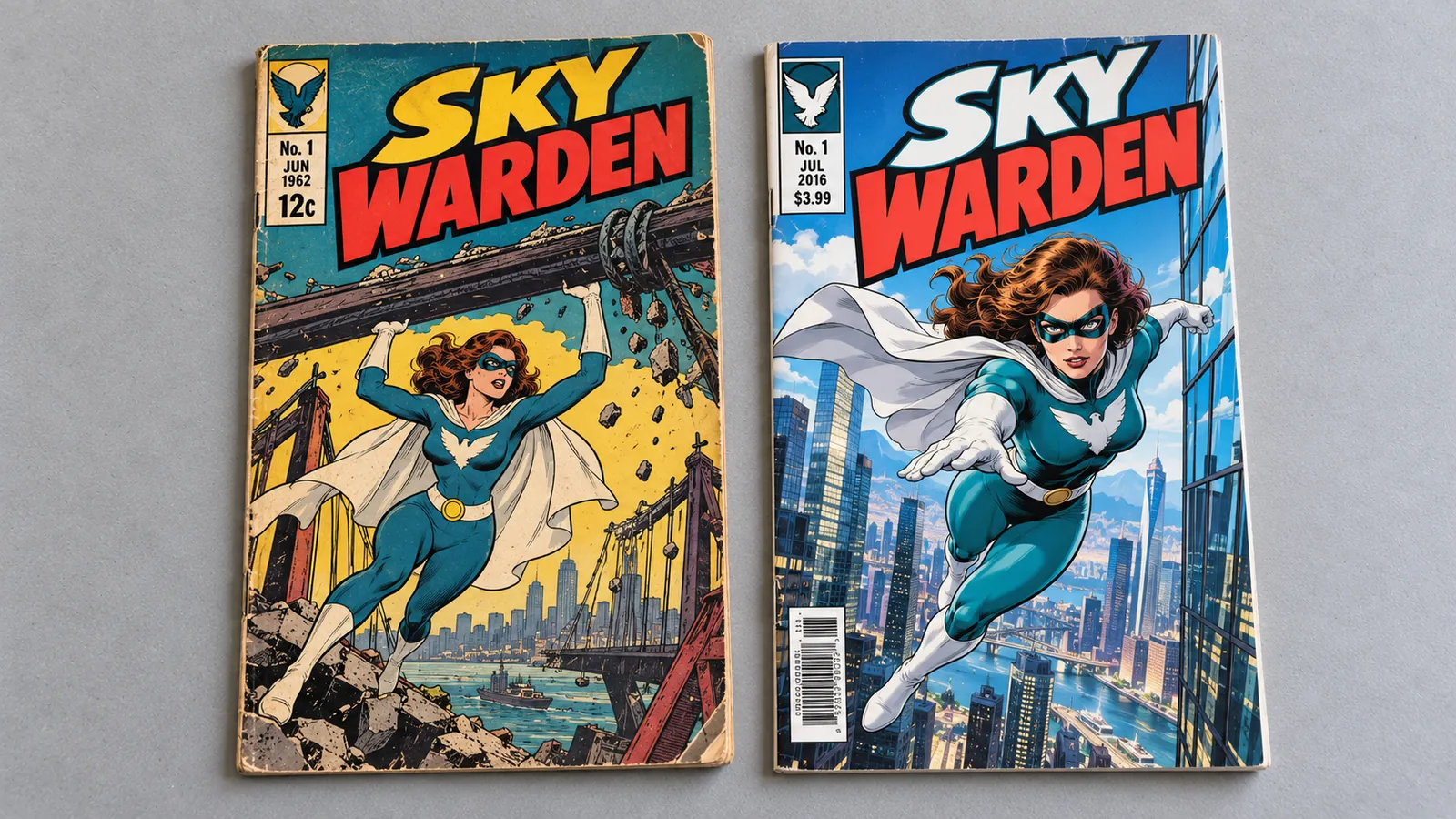
- Read the price box and the barcode box. A different cover price on the same issue can mark a price variant, and many 1980s and 1990s issues came as newsstand and direct editions, which differ in the barcode box.
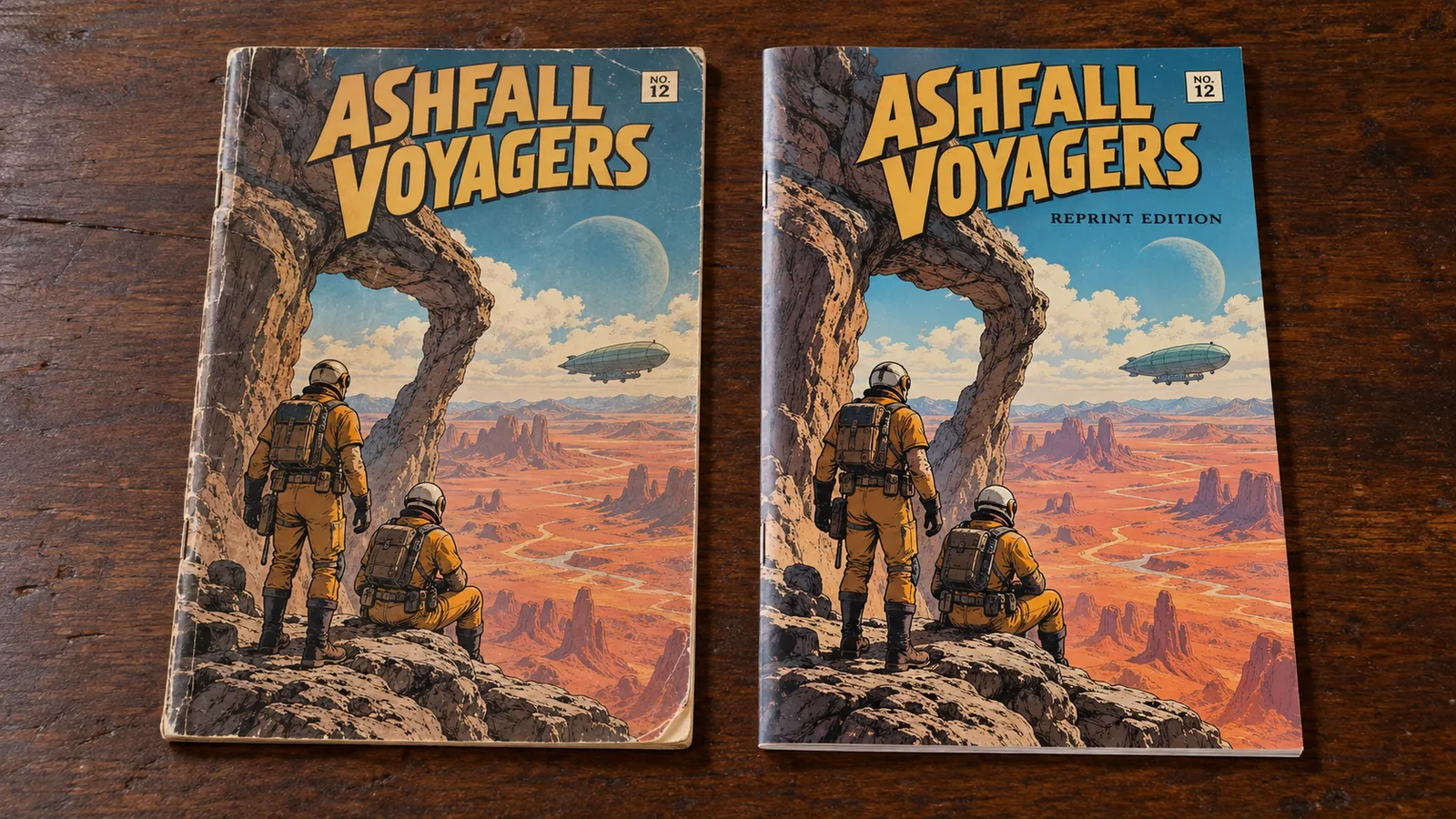
- Rule out a reprint. A Facsimile Edition copies an old issue, ads included, but carries a modern cover price and usually a later date in the indicia.
- Confirm the book is complete. Count the pages and check that the centerfold is attached at both staples.
Keep the answers in one record per book:
MARVEL BOOK RECORD
Title in the indicia:
Issue number:           Legacy number (if any):
Cover date:             Cover price:
Volume (year it began):
Barcode box: newsstand / direct / none
Reprint or facsimile note:
Pages counted:          Centerfold attached: Y / N
Key claim and its source:
Four Marvel runs and their documented keys
These four runs are among Marvel's longest. Marvel's own listings document each key below and its cover year.
The Amazing Spider-Man
Spider-Man's first appearance is not in this title. Marvel's listing for The Amazing Spider-Man #1, dated March 1963, calls it his first starring series, after his debut in Amazing Fantasy #15 (1962).
| Issue | Cover year | Why it is checked |
|---|---|---|
| The Amazing Spider-Man #1 | 1963 | First issue of his own series |
| The Amazing Spider-Man #14 | 1964 | First appearance of the Green Goblin |
| The Amazing Spider-Man #300 | 1988 | First full appearance of Venom |
The trap: Marvel published a Facsimile Edition of #300 in 2023 at $6.99. Check the cover date and the price before you treat a bright copy as the 1988 book.
Fantastic Four
Fantastic Four kept one count from 1961 until #416 in 1996, restarted at #1 twice, and returned to its original count at #500 in 2003. Marvel's starter guide points to #1 as the issue that introduces the team.
| Issue | Cover year | Why it is checked |
|---|---|---|
| Fantastic Four #1 | 1961 | First appearance of the team |
| Fantastic Four #5 | 1962 | First appearance of Doctor Doom |
| Fantastic Four #48 | 1966 | First appearances of the Silver Surfer and Galactus |
The trap: Marvel's 2025 Facsimile Editions copy the team's earliest issues. The Fantastic Four #5 facsimile came out in May 2025 at $4.99, while the 1962 original carries a price in cents and no barcode.
X-Men
Marvel's catalog files the original run as X-Men (1963), from #1 to #544 in 2011, although later covers and Marvel's own guides call it Uncanny X-Men. A second series, X-Men (1991), started at #1 while the first was still running.
| Issue | Cover year | Why it is checked |
|---|---|---|
| X-Men #4 | 1964 | First appearances of the Scarlet Witch and Quicksilver, as members of the Brotherhood of Evil Mutants |
| X-Men #101 | 1976 | First appearance of Phoenix |
| Uncanny X-Men #266 | 1990 | First appearance of Gambit, per Marvel's listing; some listings name Uncanny X-Men Annual #14 (1990) |
| X-Men (1991) #1 | 1991 | First issue of the second series; Marvel's listing shows a gatefold cover and variant covers |
The trap: an X-Men #1 from 1991 is a different book from the 1963 issue, and Marvel has issued Facsimile Editions of #4 (2020), #101 (2023) and the 1991 #1 (2023). On a 1990s issue, also note which cover you have.
Thor and Journey into Mystery
Thor first appeared in Journey into Mystery #83, dated August 1962, and the series took his name with #126 in 1966. Marvel's Thor reading guide lists later series that start at #1 in 1998, 2007, 2011, 2012, 2014 and 2015, some titled The Mighty Thor or Thor: God of Thunder.
| Issue | Cover year | Why it is checked |
|---|---|---|
| Journey into Mystery #83 | 1962 | First appearance of Thor |
| Thor #126 | 1966 | First issue under the Thor title |
| Thor #337 | 1983 | First appearance of Beta Ray Bill, per Marvel's Thor must-reads |
The trap: a Thor #600 dates from 2009 and a Mighty Thor #700 from 2017, and both continue the count that Journey into Mystery began. Check the cover year before you match a number to a 1960s book.
Reprints and variants that copy a Marvel key
Rule these out before you compare prices. A reprint of a key is a different book, even when every page matches.
| What it is | How to spot it |
|---|---|
| A Facsimile Edition: a new printing of a key, ads included, such as The Amazing Spider-Man #300 (2023), X-Men #101 (2023) or Fantastic Four #5 (2025) | A modern cover price, and usually a later date in the indicia |
| A price variant: the same issue printed with a different cover price, for a test market or for sale abroad | The price box; compare it only with sales at the same price |
| A newsstand or direct edition: parallel editions of many 1980s and 1990s issues | The barcode box |
| A later printing: a sold-out issue sent back to press | A printing note on the cover or in the indicia |
Why condition decides what a Marvel key is worth
Identity tells you which book you hold. Condition decides where that copy sits on the 10-point scale, and the published grade descriptions allow only so much of each defect at each grade, so one bad area can hold a copy down.
Spine stress shows how this works. A stress line is a short crease across the spine fold, and when it breaks the ink, it shows as a light line against the cover color. The published descriptions allow almost no stress lines at 9.2 NM-, a few almost insignificant ones at 8.0 VF, and a small accumulation of light ones, with a possible moderate color break, at 7.0 FN/VF.
The Marvel Presents: Guardians of the Galaxy #4 sample report from NuGrade, an AI-assisted grading app for raw comics, shows this on a Marvel book cover-dated April 1976. The report reads the cover date and publisher from the front cover and from the indicia in a frame of the page flip. It calls the copy bright and glossy, with supple cream to off-white pages, and accounts for all 36 pages.
The report then names the limit: an accumulation of small color-breaking stress ticks along the spine edge, several showing white against the black cover, holds the book to 7.5 VF-, with a plausible range of 7.0 FN/VF to 8.0 VF. Its other six findings include a short corner crease at the top-right tip with color break, and faint marks on two ad pages that "could be pencil writing or show-through."
Restoration reads "None detected", with the note "Photos can miss skilled work." Good restoration can be invisible in ordinary light, so that read is not a clearance. The grade is an opinion limited to the photos and video, so read the report as an example of what photo evidence shows, not as proof of how another copy would grade. For the tier names, see what VF, FN and NM actually mean, and to film a spine so ticks like these show, see how to film a comic spine without glare.
What to do once a Marvel book checks out
With the identity and the condition on paper, decide what the book needs.
- Photograph what you recorded. Shoot the indicia beside the cover, then work through the photo-first home grading checklist for the condition.
- Compare like with like. Use recent sold listings for the same volume, legacy number, edition and grade, not asking prices.
- Do the grading math. Run the break-even math for professional grading with your own numbers.
- Choose the route by value. For a high-value key, professional grading and encapsulation are still the right choice. A photo-based report records what the photos show before you ship.
- Share the evidence when you sell raw. A NuGrade report has a public link and a short report ID, and a buyer can open it on the report lookup page without an app or an account.
Frequently asked questions
Which Marvel comics are worth money?
The Marvel comics most likely to be worth money are documented keys of major runs, such as first appearances, in their original printing. The condition of a given copy then decides where its value falls.
How can I tell which volume my Marvel comic is from?
Read the indicia for the title, issue number and cover date, then match the date to the title's numbering history. Marvel's own site names each volume by the year it began, such as The Amazing Spider-Man (1963).
What is legacy numbering on a Marvel comic?
Legacy numbering is the running total of a title's issues across all its volumes. Marvel returned many titles to it in 2017, and its listings give some recent issues both numbers, such as Amazing Spider-Man #36 (LGY #1000).
Where did Thor first appear?
Thor first appeared in Journey into Mystery #83, dated August 1962. The series took his name with #126 in 1966, so his own series has no 1960s #1.
Is a Marvel Facsimile Edition worth as much as the original?
No. A Facsimile Edition is a new printing that copies the original issue, ads included, at a modern cover price, so it sells as a different book from the original.