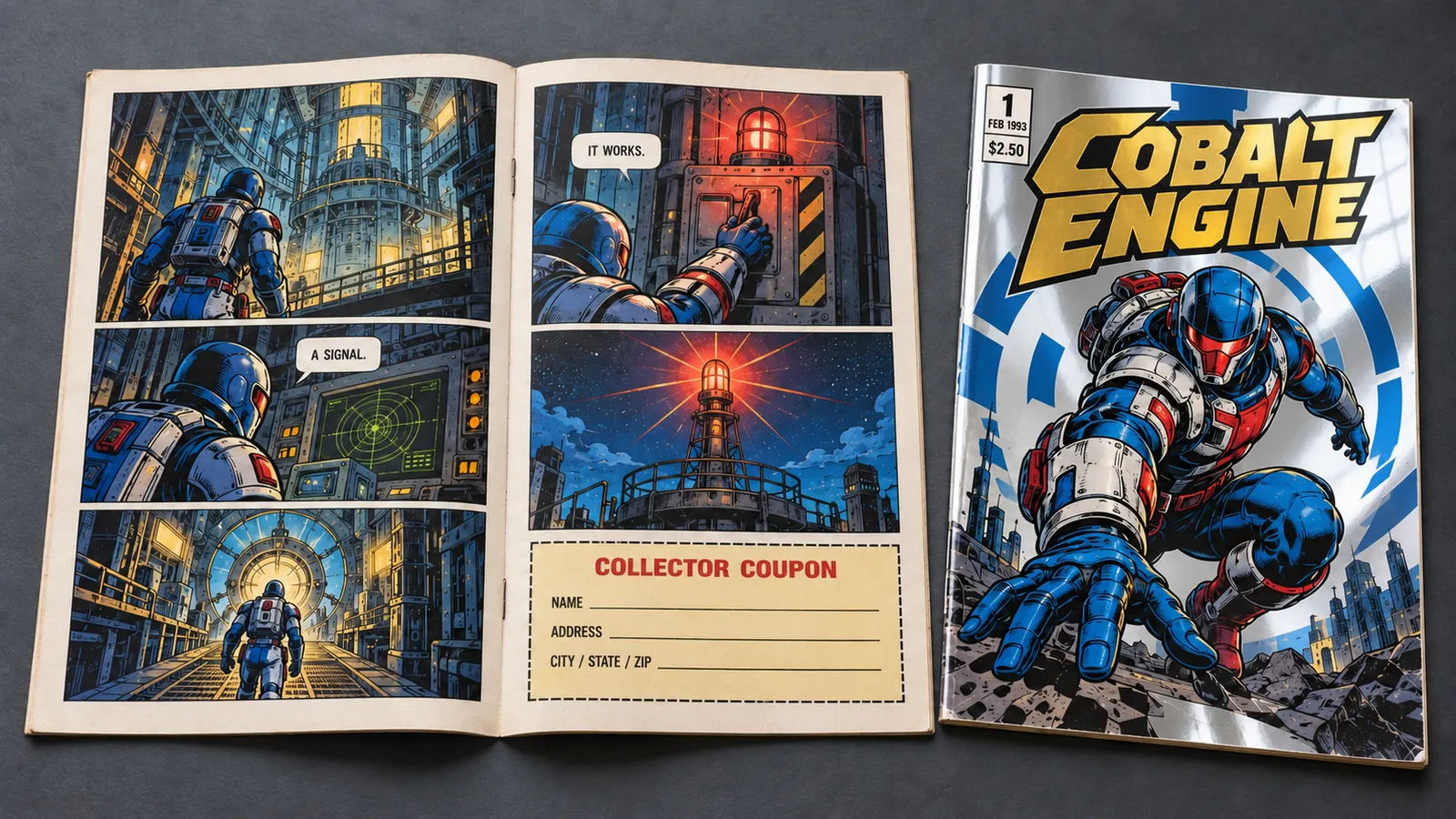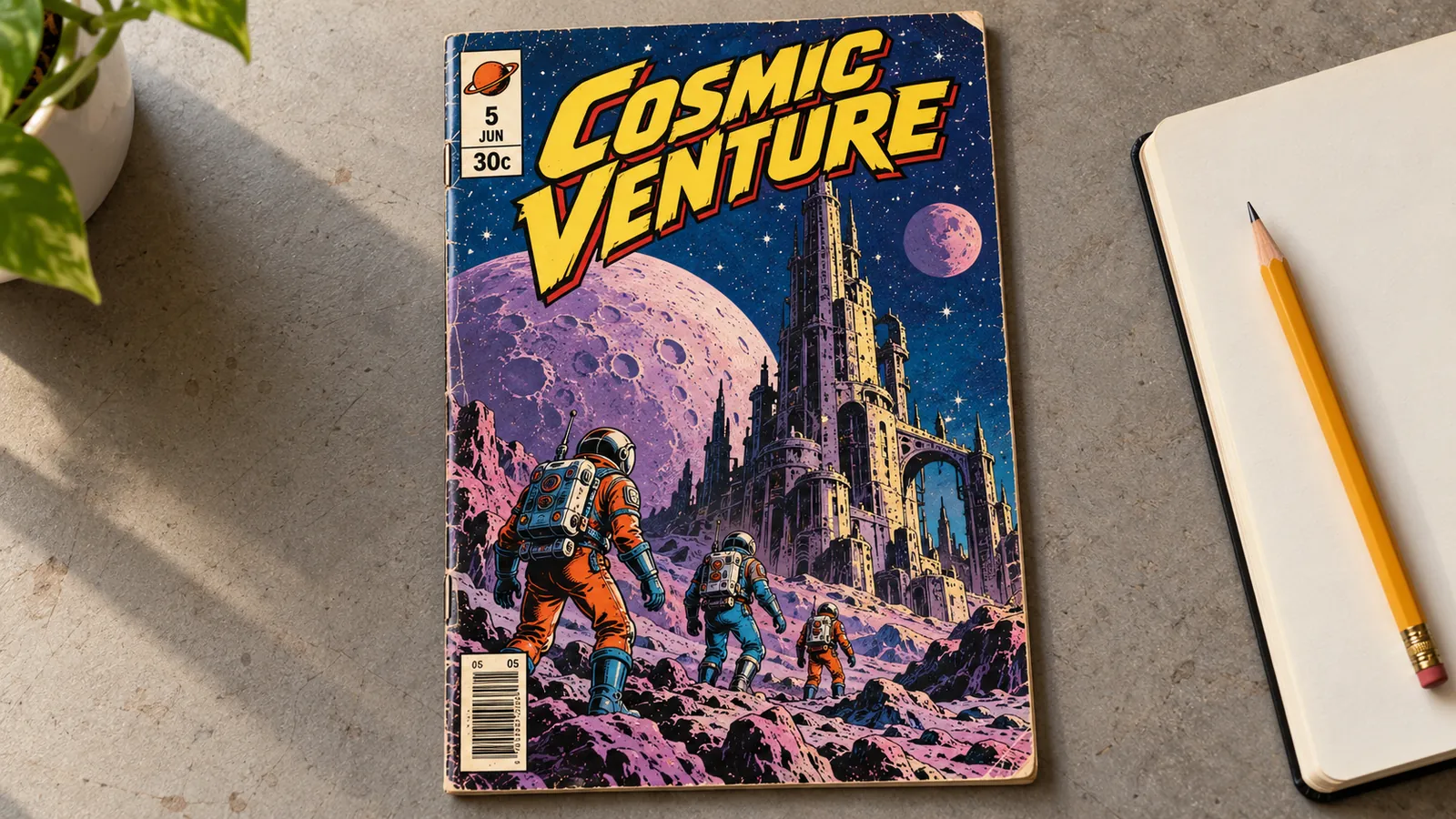
Bronze Age comics, published from about 1970 to the mid-1980s, are worth money mainly when three things line up: the issue is a recognized key, such as a first appearance; your copy is the exact edition you think it is, cover price included; and its condition holds up under close inspection. This guide covers all three, with verified issue numbers and dates but no price quotes.
Prices change too fast to print, so for comps use recent sold listings for the same issue, edition and grade, and run the break-even math for professional grading before you pay for a slab.
What counts as the Bronze Age of comics
The Bronze Age is a collector convention, not an official period. Most guides start it around 1970 and end it in the mid-1980s, often in 1985 or 1986.
The edges are still argued. Collectors usually place the start between about 1969 and 1971 and the end in the mid-1980s, and historians have proposed other boundaries. For a seller, the label matters less than three facts printed on or inside the book: the title and issue number, the cover date and the cover price.
Books of the period were printed on pulp paper, which tans with age, so page color is part of every condition call.
Which Bronze Age comics are keys
A key issue is an issue that collectors seek out for a lasting reason: most often the first appearance of a major character, a first issue or a landmark story. A first appearance is the first issue in which a character appears; a cameo is a brief earlier glimpse, and catalogs list the two separately.
The 12 issues below are widely documented keys from the period. Each issue number, cover date and first appearance was checked against two independent sources. The list is a sample, not a ranking.
| Issue | Publisher | Cover date | Why collectors seek it |
|---|---|---|---|
| House of Secrets #92 | DC | 1971 | First appearance of Swamp Thing |
| Batman #232 | DC | June 1971 | First appearance of Ra's al Ghul |
| Hero for Hire #1 | Marvel | June 1972 | First appearance of Luke Cage |
| Marvel Spotlight #5 | Marvel | August 1972 | First appearance of Ghost Rider (Johnny Blaze) |
| Iron Man #55 | Marvel | February 1973 | First appearance of Thanos |
| Tomb of Dracula #10 | Marvel | July 1973 | First appearance of Blade |
| The Amazing Spider-Man #129 | Marvel | February 1974 | First appearance of the Punisher |
| The Incredible Hulk #181 | Marvel | November 1974 | First full appearance of Wolverine, after a cameo in #180 |
| Giant-Size X-Men #1 | Marvel | 1975 | First appearances of Storm, Nightcrawler and Colossus |
| Werewolf by Night #32 | Marvel | August 1975 | First appearance of Moon Knight |
| Star Wars #1 | Marvel | July 1977 | First issue of the comic adaptation; 35-cent test copies exist |
| Iron Fist #14 | Marvel | August 1977 | First appearance of Sabretooth; 35-cent test copies exist |
Cover dates in this period ran ahead of the on-sale date, often by about three months: Star Wars #1 carries a July 1977 cover date but went on sale in April 1977. Giant-Size X-Men #1 is listed by year only, because published sources give it different months.
Later books raise the same version questions; see Valiant keys: check the version before getting excited.
Price variants of the 1970s
A price variant is a copy of an issue printed with a different cover price for a different market. The story and art match the regular copy, so the price box is where you see the difference.
Marvel ran two well-documented price tests in the 1970s, each in a small number of markets:
| Test | Cover dates | Regular price | Test price |
|---|---|---|---|
| First test | April to August 1976 | 25 cents | 30 cents |
| Second test | June to October 1977 | 30 cents | 35 cents |
Because the test copies reached only a few markets, they are far scarcer than the regular copies. Sources disagree on which cities got them, so this guide does not list them. Three cautions apply:
- Not every 30-cent 1976 book is a test copy. Inhumans #5 and Ka-Zar #16 have no known 25-cent copies, so 30 cents was their only price.
- A 35-cent price alone does not prove a test copy. Star Wars #1 was also reprinted, and a later printing carries 35 cents in a diamond-shaped price box. Match the whole cover, price box included, against a catalog record of each printing.
- Copies for other countries are their own edition. Marvel also distributed UK copies with British prices. After decimalization in 1971, pence prices use "p". Earlier prices can use "d" for pence or notation such as "1/-" for a shilling. Catalogs list them separately, so compare a pence copy only with sales of other pence copies.
Condition problems that limit Bronze Age books
On Bronze Age books, the defect that sets the grade is often a group of spine ticks that break the color, and dark covers show them most. This section also covers production flaws, edge chips and tanned pages.
Spine ticks that break the color
A spine tick is a short crease across the spine fold, made when the cover flexes. When it breaks the color, the ink cracks and white paper shows through, which stands out on a dark cover.
The published grade descriptions allow almost no stress lines at 9.4 NM and 9.2 NM-, and only a very minor, nearly invisible accumulation at 9.0 VF/NM. A few almost insignificant stress lines fit 8.0 VF, and a small accumulation of light ones with a possible moderate color break fits 7.0 FN/VF. The Marvel Presents: Guardians of the Galaxy #4 sample shows the pattern on a black cover. Pressing cannot put broken ink back; see what pressing can and cannot fix.
Miswraps and other production flaws
A miswrap is a cover folded off-center around the pages, so the spine fold sits to one side of where it belongs. It is a production flaw, not wear. The published descriptions allow a limited number of minor bindery or printing defects even at 9.2 NM-, so a slight miswrap on an otherwise clean book can still sit in the Near Mint range, as the E-Man #1 sample shows.
Chips and tears along the cut edges
On Silver Age and later books, the published descriptions allow a factory bindery tear under 1/16 inch even at 9.4 NM, while a chip from handling is graded as wear. The hobby term "Marvel chipping" usually refers to trimming chips on Marvel books of the late 1950s and early 1960s, so on a 1970s book, describe a chip by its size and position instead of borrowing the label.
Tanned pages
Tanning is the browning of pulp paper with age, and it starts at the page edges. On the published page-quality scale, many books from the mid-1970s to the late 1980s still show off-white to white pages, and tanning sets a ceiling: light tan to off-white pages cap a book at 8.5, and tan to off-white pages at 7.5. Brittleness caps it lower, at 6.5 for slightly brittle pages and 3.5 for brittle ones.
What two Bronze Age sample reports show
Two NuGrade sample reports, both graded September 30, 2026 from phone photos and two short videos, show how far apart two books from the same decade can land. Read them as examples of what photo evidence shows, not as proof of accuracy.
| E-Man #1 | Guardians of the Galaxy #4 | |
|---|---|---|
| Publisher, cover date | Charlton, 1973 | Marvel, April 1976 |
| Grade and range | 9.2 NM-, range 8.5 VF+ to 9.4 NM | 7.5 VF-, range 7.0 FN/VF to 8.0 VF |
| Findings | 2, both production flaws | 7 |
| Main findings | A slight miswrap with a narrow unprinted strip along the front spine edge, and a small dark mark at the left edge of the back cover, likely bindery or printing | An accumulation of small stress ticks through the upper and middle spine, several showing white color break against the black cover |
| Pages | Cream to Off-White | Cream to Off-White |
| Completeness | All 36 pages accounted for | All 36 pages accounted for |
| Restoration | None detected | None detected |
The difference is the spine. E-Man's two findings are the kind of production flaws the descriptions tolerate near the top of the scale. On the Guardians copy, the report names the color-breaking spine ticks as the reason the grade is not higher, ahead of its six other findings.
How to check a 1970s comic, step by step
Check identity and edition first, because they decide which book you hold. Then check condition, because it decides where that copy sits on the scale.
- Read the indicia, the small print usually on the first page or inside the front cover: title, issue number, cover date and publisher.
- Read the price box exactly. On a Marvel book cover-dated April to August 1976 or June to October 1977, note whether it shows the regular price or the test price.
- Check the currency. UK prices can use "p", predecimal "d", or a shilling mark such as "1/-".
- Rule out a later printing. Facsimile and other reprint editions copy famous covers, so compare the cover, the price box and the indicia with a catalog record of the original.
- Confirm the book is complete. Count the pages and check that no coupon or page piece is cut out. The published descriptions first allow a cut coupon at 1.0 FR.
- Inspect and photograph the condition. Light the spine from a low side angle, check the corners, edges, staples and page color, and photograph each finding with a ruler beside the book.
- Write down what no photo shows: odor, a brittle feel, and any pressing, cleaning or repair you know about.
For the full inspection order and a condition record to copy, see how to grade a comic book at home. For lighting and framing, see how to photograph a comic for grading.
NuGrade, an AI-assisted grading app for raw comics on iPhone and Android, supports steps 5 to 7 with a guided capture and a short survey. The capture takes seven stills (front cover, back cover, the centerfold staple seam and four corner close-ups) and two short videos, a slow spine pass and a page flip. The survey asks what the camera cannot see, from pressing to odor and brittleness. The report gives a grade with a range, ties each finding to its photo or frame, and confirms the page count when the flip shows every page. Buyers open it by QR code, or by report ID at nugrade.app/lookup, with no app and no account.
What makes a Bronze Age key worth more, or less
A key is worth the most when the issue, the edition and the condition all line up, and any one of them can pull a copy down on its own.
- Edition. A test-price copy of a key is a scarcer book than the regular copy, while a facsimile or a later reprint is a different book that shares the cover.
- Condition. One color-breaking crease or a group of spine ticks can move a copy several steps on the 25-step scale, and comps only count in the same grade.
- Restoration. A restored copy is graded and sold as restored. Photos in normal light can hide good restoration, which is why a NuGrade report marks restoration Unverified when the photos cannot establish it.
- Completeness. The published descriptions place cut coupons and missing interior pieces near the bottom of the scale.
For a high-value key, professional grading is still the right choice: it adds an in-hand inspection, restoration screening and a sealed holder that a photo report does not. A NuGrade report is an opinion limited to the evidence in the photos and video, and it can miss defects smaller than the photos can show. Use it to see where a copy stands before you decide to sell, submit or keep it.
Frequently asked questions
What years does the Bronze Age of comics cover?
Most guides place the Bronze Age from about 1970 to the mid-1980s. It is a collector convention with no official dates, so the end year varies by source, often 1985 or 1986.
Are 30-cent and 35-cent Marvel comics worth more?
Often, yes. Marvel printed them for a few test markets, with 30-cent copies of many issues cover-dated April to August 1976 and 35-cent copies of many issues cover-dated June to October 1977, so they are much scarcer than the regular copies.
What is a pence copy of a comic?
A pence copy is a US comic distributed in the UK with a British price printed on its cover. Decimal pence prices use "p"; earlier prices can use "d" or a shilling mark such as "1/-". Match the printed price when you compare copies from the same issue and edition.
Which defect usually limits the grade of a 1970s comic?
Often it is a group of stress ticks along the spine that break the color, especially on a dark cover. The published grade descriptions allow almost no stress lines at 9.2 NM- and above.
Can photos show whether a Bronze Age key is restored?
Not reliably. Competent restoration can be invisible in normal light, so a NuGrade report marks restoration Unverified when the photos cannot establish it, and a high-value key belongs with professional grading.