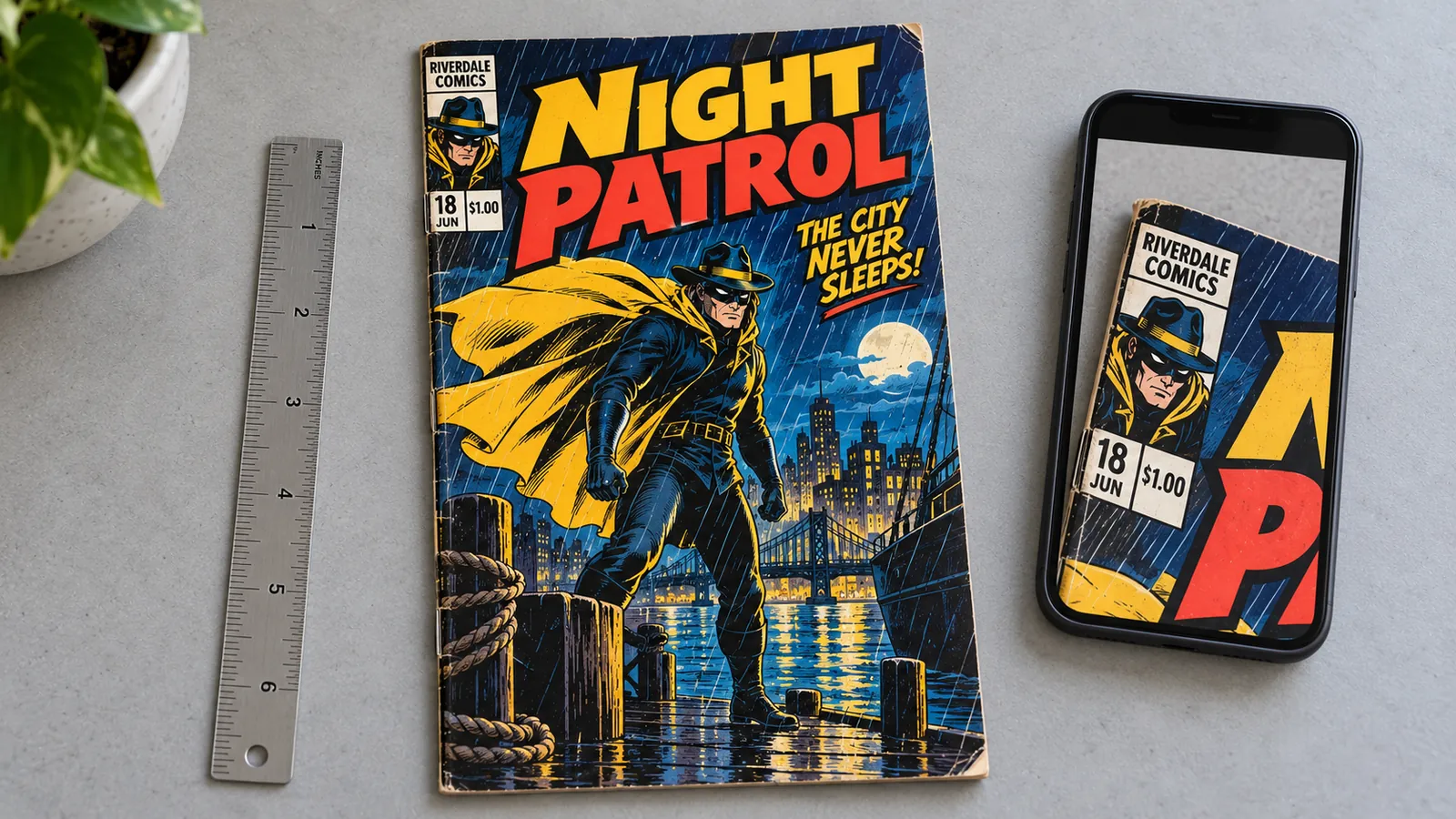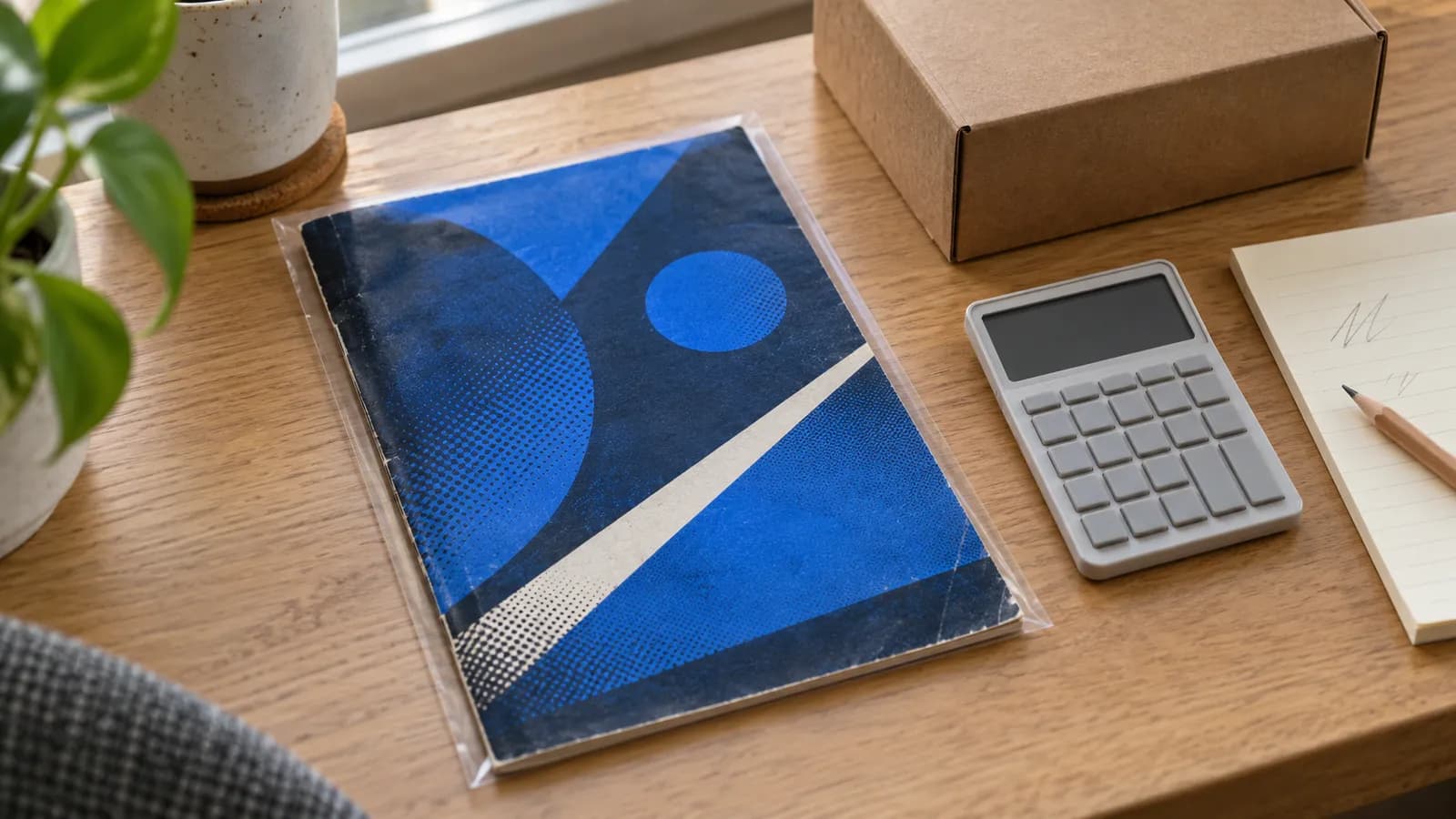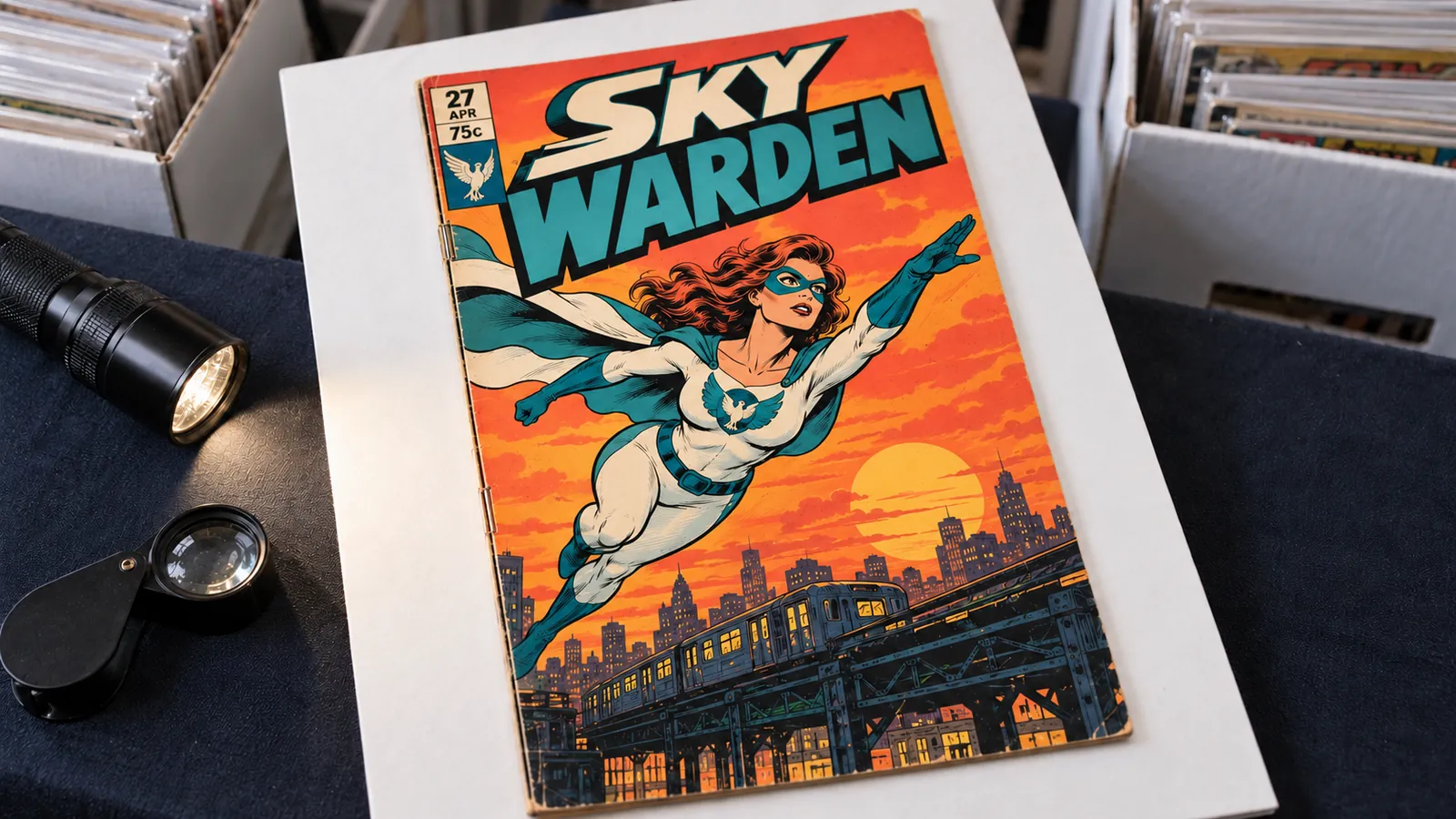
A comic convention buying checklist has three stages. Before the show, list the exact issues and printings you want, set a top price for each, check recent sold prices of matching copies, and plan how to pay. At the table, ask before you unbag a book, then check identity, covers, corners, spine, staples, centerfold and page color in good light. Afterward, photograph and record each purchase the same day.
A show lets you hold a raw book before you pay. For books you can only see in photos, use the companion checklist for buying raw comics online.
What to do before the show
Settle four things at home, where you have time and a phone signal: an exact want list, a top price for each book, recent sold prices and a way to pay.
- Write an exact want list. For each book, note the title, issue number, year, publisher, printing, cover variant, newsstand or direct edition, and the lowest grade you will accept. Flag key issues that have been reprinted. Marvel, for one, describes its facsimile editions as classic issues reprinted in their original form, ads included.
- Set a top price for each book. A top price is the most you will pay for a book at the grade you expect. Set it at home, so a busy table does not set it for you.
- Check recent sold prices of matching copies. Comps are recent sales of the same book at the same printing, variant, grade and label type, at sold prices, not asking prices. The guide to deciding whether a comic is worth grading explains how to clean them up. Save them on your phone, because a crowded hall can have a weak signal.
- Plan how you will pay. Bring cash in small bills, and ask before you count on a card, since a phone card reader usually needs a signal. Get a receipt, or note the dealer, table and price.
What to bring to a comic convention
Bring a light you can angle, a magnifier, a small ruler, a charged phone, supplies to protect what you buy and something rigid to carry it in.
| Item | What it is for |
|---|---|
| Small flashlight | Held low, it shows creases and dents that high, flat hall lights hide |
| Magnifier or loupe | Corner tips, spine ticks and suspect patches of color |
| Phone and battery pack | Want list, comps, notes, photos, QR codes and certification lookups |
| Small ruler | Sizing creases and splits, because grade descriptions use fractions of an inch |
| Spare bags and boards | Rebagging a book that comes in a torn or tight bag |
| Rigid carrier | A short comic box or hard-sided case keeps purchases flat |
How to inspect a raw comic at the dealer's table
Ask before you touch anything, then check each book in the same order under your own light. For the full order and what each defect means, see how to grade a raw comic at home.
- Ask first. Ask before you open a bag or slide a book off its board; some dealers prefer to do it themselves. Keep the book flat on its board. The Library of Congress comic care guidance adds two rules: keep food and drink away, and never open a comic past flat.
- Confirm identity. Match the title, issue number, cover price and variant to your want list. On a key issue, look for a reprint or facsimile notice, and check the paper: most comics printed after 1990 have white pages, which a decades-old original rarely has.
- Check the covers in angled light. Sweep the flashlight low across each cover and note every crease. A color break is a spot where a crease, tick or worn point has cracked the ink so the paper shows through.
- Check the four corners. Look at each tip under the magnifier for blunting, creases and missing pieces.
- Check the spine, hardest at the staples. A spine tick is a short crease across the spine fold where the cover has flexed. Look for spine roll and splits too.
- Check the staples and centerfold. Look for rust, rust stains in the paper and tears at the staple slits. If the dealer agrees, open the book gently to the middle to confirm the centerfold is held at both staples.
- Check the pages. Compare page color at the edges and in the middle, and look for brittleness: chipped page corners or flakes in the bag. Never bend a corner to test it.
The spine is the check a cover-first glance skips. One example comes from a photo-based sample report by NuGrade, an AI-assisted grading app for raw comics. On Green Lantern #59 (DC, March 1968), the cover keeps strong color and good gloss and sits flat, but a row of color-breaking stress ticks, concentrated at both staples, limits the book to 5.5 FN-.
Check the flaw against the grade on the price tag
The published grade descriptions cap the size of each flaw at each grade, so you can test a seller's grade before you pay.
| Grade on the tag | What the published description allows |
|---|---|
| 9.4 NM | A 1/16-inch bend with no color break; corners with only the slightest blunting |
| 9.0 VF/NM | A 1/8-inch bend with no color break; no creased corners |
| 8.0 VF | An unnoticeable 1/4-inch crease with no color break; a centerfold mostly secure |
| 6.0 FN | A 1/4-inch spine split; a loose centerfold |
| 4.0 VG | A 1-inch spine split; a centerfold detached at one staple; a missing 1/4-inch corner triangle |
Page quality sets its own ceiling: light tan to off-white pages cap a book at 8.5 VF+, tan to off-white at 7.5 VF-, slightly brittle pages at 6.5 FN+ and brittle pages at 3.5 VG-.
If a raw book comes with a report
If a sales card carries a NuGrade QR code, scan it with your phone camera or enter the short report ID at the report lookup; you need no app or account. Compare the report's photos with the book in your hand, and note the graded date: a report shows the book on that date, as far as photos and video can show it.
How to spot restoration and what to ask the seller
Restoration is work that improves how a book looks, such as color touch, piece fill, trimming or re-glossing. A cover married from another copy also counts toward restoration on the published scale when other work is present. Look for places where the book disagrees with itself, then ask the seller.
- Color touch: smooth, flat color where the ink around it has a fine printed grain, often over a crease, tick or corner. It may shine differently under the flashlight.
- Piece fill: paper of a different tone or texture, with an edge that follows the damage, not the artwork.
- Trimming: razor-sharp edges on a worn book, or a cover flush with or smaller than the pages.
- Married cover: wear or tone that does not match the pages, or staple holes that miss the staples.
Finding nothing is not proof, because competent restoration can be invisible in ordinary light. Write "no signs seen", never "unrestored". Buyers value a restored book below an unrestored copy that looks the same.
Then ask, and note each answer:
Has it been pressed?
Has it been cleaned? How?
Any restoration or repair you know of?
Any tape, now or removed?
Can I return it if I find restoration at home?
Pressing is a process that flattens bends and dents under controlled pressure without adding or removing material. Grading services generally do not count it as restoration, but it cannot fix a color break; see what pressing can and cannot fix. Ask about cleaning separately, because some cleaning methods count as restoration.
How to check a slabbed comic at a show
A slabbed comic is a book that a grading service has graded and sealed in a plastic holder with a label. Before you pay, check the label, the certification number and the holder, then judge the book itself.
- Match the label to the book. The title, issue, year, publisher, variant, grade and page quality should all match what you see through the plastic.
- Read the label type. A restored label, or one that qualifies the grade for a specific defect, sells differently from a standard label at the same number.
- Look up the certification number. Most grading services offer a lookup on their own website. Confirm that every detail matches, not just that the number exists, and compare any images it shows.
- Inspect the holder. Look for cracks and for pry or tool marks along the seams, and compare it with other holders from the same service nearby.
- Judge the book itself. Corners, spine ticks and color breaks still show through the plastic.
A matching lookup confirms the label, not the book inside. Holders have been opened and resealed with a lower-grade copy inside, so compare the book's own flaws with the label's grade and with any photos on record. For how the services differ today, see the grading services compared.
How to negotiate politely at a comic show
Make one fair offer based on your comps and the flaws you found, and take a no with thanks.
- Ask whether the price has room before you name a number.
- Ask for one price on several books together.
- Name flaws as facts, such as a color-breaking tick at the lower staple.
- Do not counter a price at or below your comps.
- Hand each book back the way you got it.
- If the answer is no, leave your top price. The book may still be there later, or it may sell.
After the show: photograph and record each purchase the same day
On the day you buy, photograph each book and write down what you paid, who sold it and what you saw. A same-day record shows the condition when the book came to you and lets you raise a problem while the dealer is easy to reach.
- Unpack each book flat, check it against your receipt, and inspect it again in good light.
- Photograph both covers, the four corners and the centerfold staple seam, then film a slow spine pass and a page flip, as in how to photograph a comic for grading.
- Write down the book, printing, price, date, show, dealer, the seller's answers and your grade band.
- Store each book bagged and boarded, upright in a box, away from light. The Library of Congress suggests room temperature or below and about 35 percent relative humidity, and warns against attics and basements.
That capture set, seven stills and two short videos, is the one NuGrade asks for. The report it returns gives a grade on the 10-point scale, a range, and findings that each cite the photo or frame behind them. A NuGrade grade is an opinion limited to the photos and video, and photos in normal light can hide good restoration. For a high-value book, professional grading is still the right choice.
A comic convention buying checklist you can copy
Copy it into a notes app or print it.
COMIC CONVENTION BUYING CHECKLIST

BEFORE
[ ] Want list: title, issue, printing, variant
[ ] Lowest grade and top price for each book
[ ] Sold prices of matching copies, saved offline
[ ] Cash in small bills

BRING
[ ] Flashlight, magnifier, ruler, charged phone
[ ] Spare bags and boards, rigid carrier

RAW BOOK
[ ] Ask before opening the bag
[ ] Identity and printing; no reprint notice
[ ] Covers in angled light; corners; spine at staples
[ ] Staples, centerfold, page color, brittleness
[ ] Restoration clues; pressing and cleaning asked
[ ] Flaws checked against the grade on the tag

SLABBED BOOK
[ ] Label matches the book; label type read
[ ] Certification number looked up
[ ] Holder: no cracks or pry marks

PAY AND AFTER
[ ] One fair offer; return policy asked
[ ] Receipt, or dealer, table and price noted
[ ] Same day: photos, videos, written record
Frequently asked questions
What should you bring to a comic convention to buy comics?
Bring a small flashlight, a magnifier, a small ruler and a charged phone with your want list and recent sold prices. Add spare bags and boards, a rigid carrier and cash in small bills.
Is it rude to take a comic out of its bag at a dealer's table?
Not if you ask first and handle the book with care. Keep it on its board, flat on the table, and hand it back the way you got it.
How can you spot restoration at a comic convention?
Look for smooth, flat color over a crease or tick, paper that does not match, razor-sharp edges on a worn book, or a cover whose wear does not match the pages. Finding nothing is not proof, because competent restoration can be invisible in ordinary light.
How do you check a slabbed comic before you buy it at a show?
Match the label to the book, look up the certification number on the grading service's own website, and inspect the holder for cracks or pry marks. A matching lookup confirms the label, not the book inside.