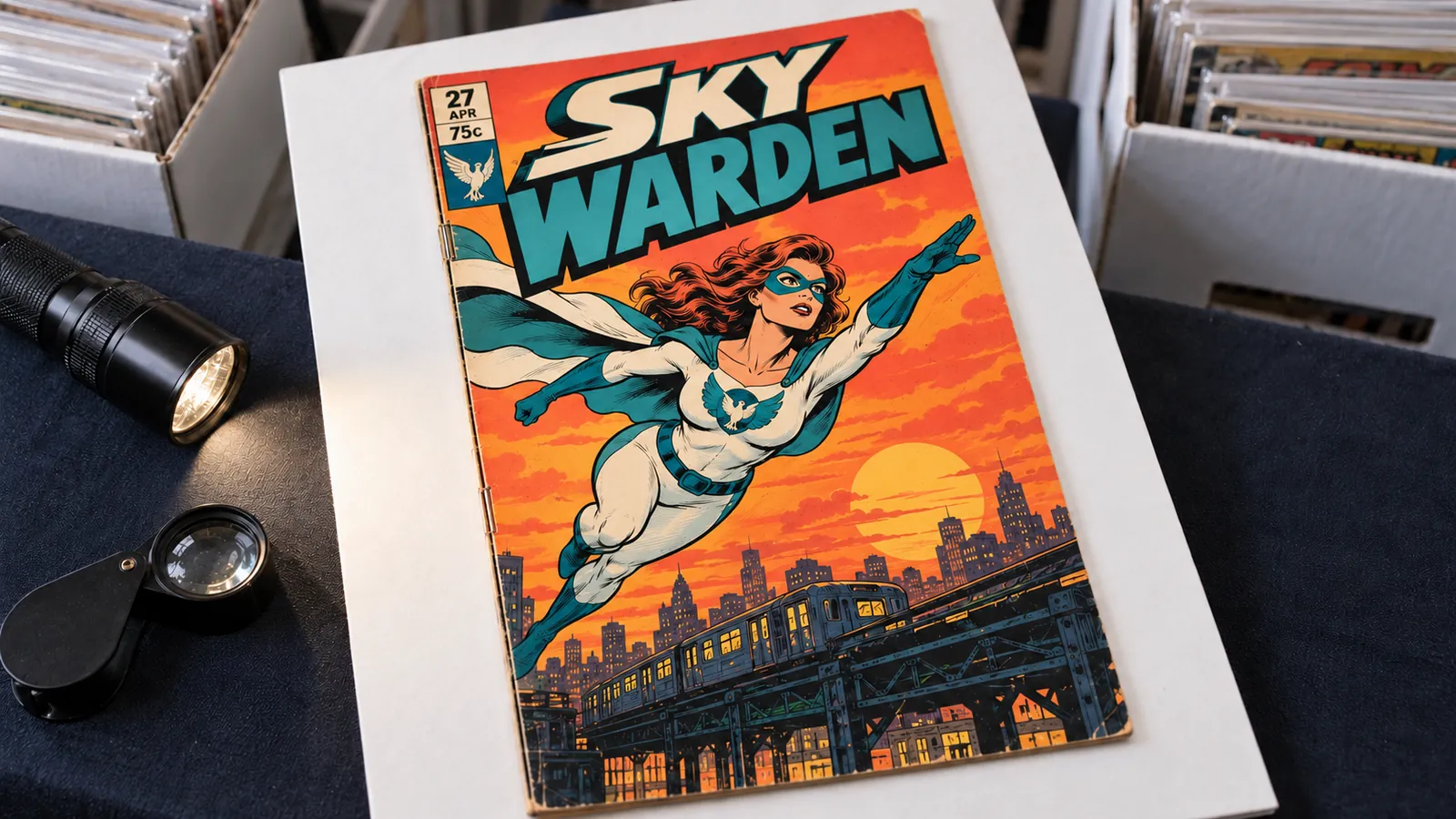
Before you buy a raw comic online, ask the seller for the evidence most listings leave out: both covers straight on, the spine in low side light, all four corners, the edges, the centerfold and staples, the interior pages, the indicia, and a close-up of every defect. Then ask about restoration, pressing, cleaning, odor, storage, completeness and returns, and confirm the printing before you pay.
A key issue is a comic that collectors value for a story event, such as a first appearance or an origin. A raw key is one sold without a grading holder, so the listing photos and the seller's answers are all the evidence you get before you pay. This checklist will not find you a bargain; it shows what you are paying for and what stays unknown.
The photos to ask for, and what each one shows
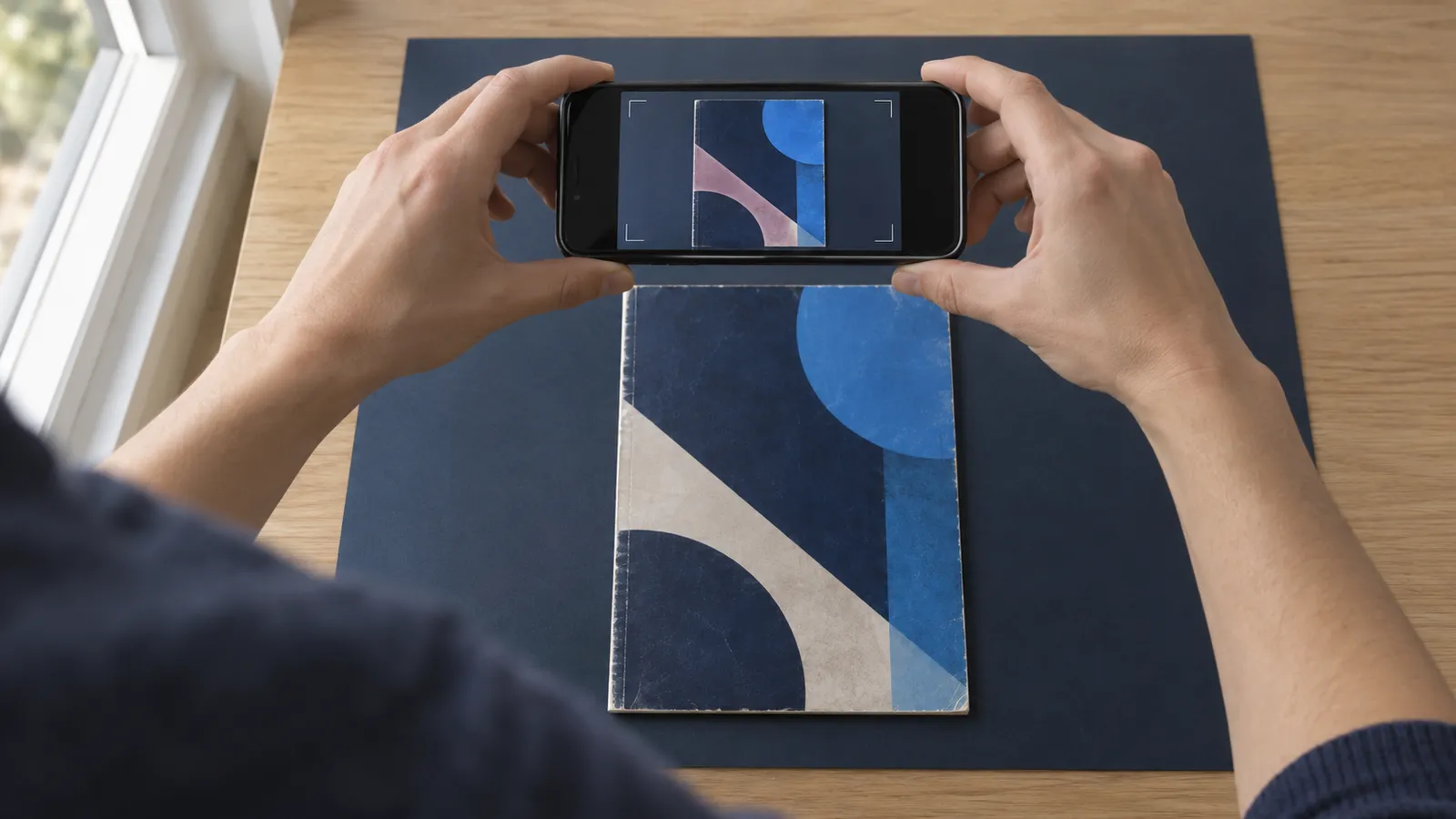
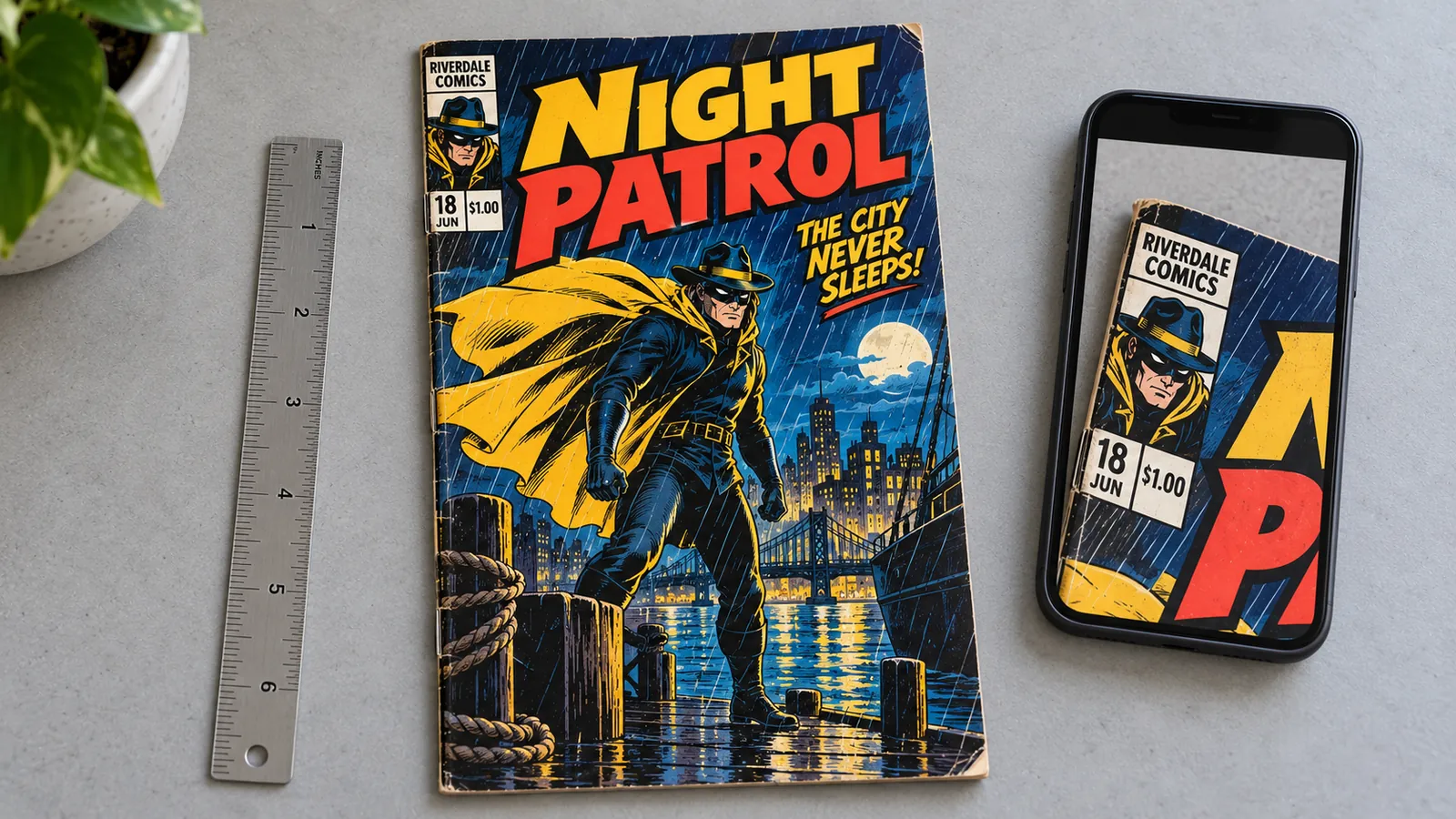
Ask for photos of the actual copy, taken straight on, in focus, without flash, with a ruler beside the book. Each view answers a different question, and a book grades no higher than its worst defect allows, wherever that defect sits.
| Ask for | What it shows |
|---|---|
| Front cover, straight on | Color, gloss, creases, the cover price and the barcode box |
| Back cover, straight on | Creases, stains, writing and edge wear that the front never shows |
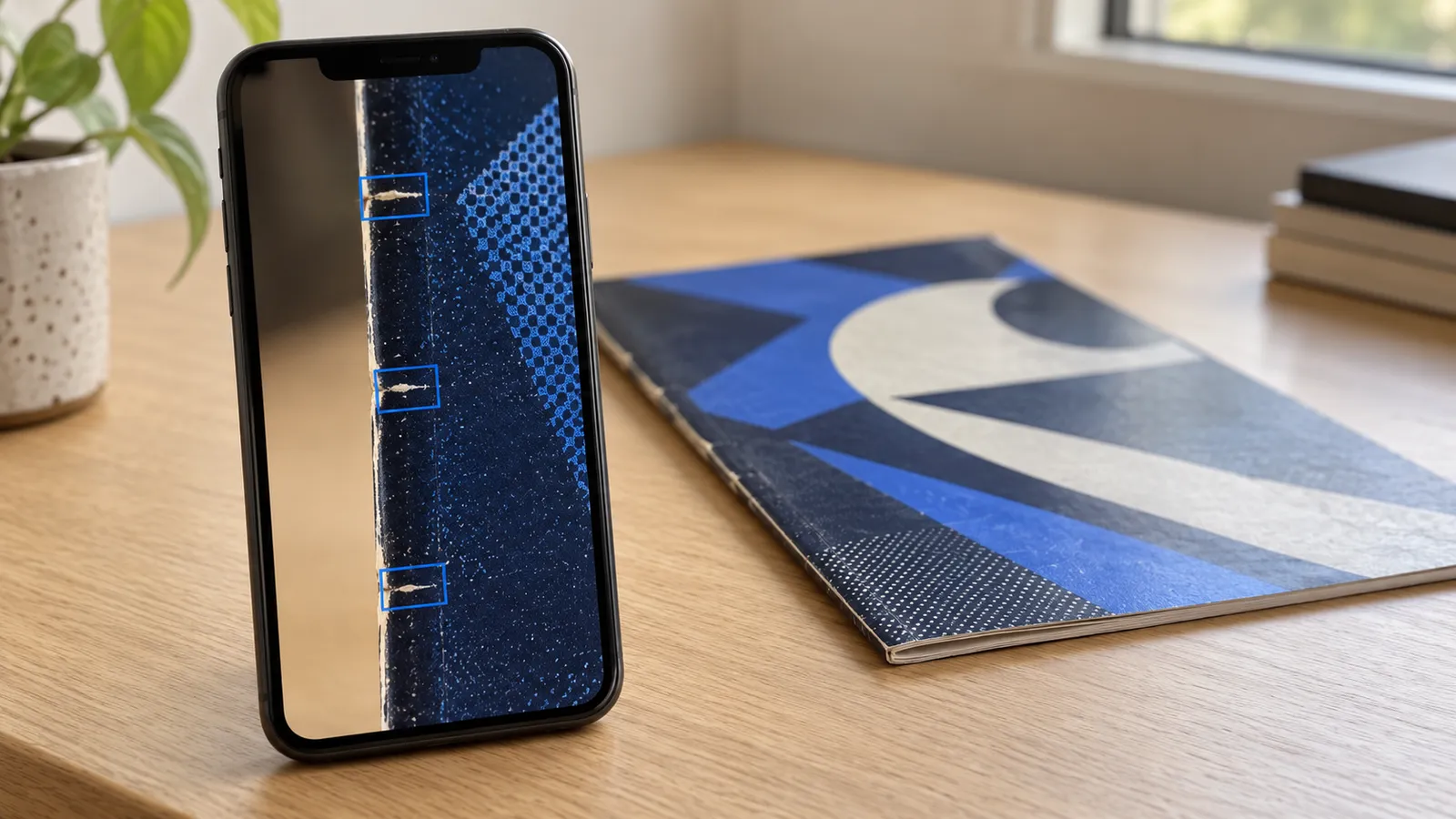
| The spine in low side light, or a slow spine video | Stress ticks, color breaks, splits and spine roll |
| All four corners, close up | Blunting, corner creases and white flecks where ink has worn through |
| The top, bottom and right edges | Chips, small tears, and edges too sharp for the wear elsewhere |
| The centerfold, with both staples in frame | Whether the centerfold is attached, staple rust and staple tears |
| The interior pages, or a slow page-flip video | Missing pages, cut coupons, writing, tears and page color |
| The indicia | The title, issue, publisher and date that identify the printing |
| Each stated defect, close up with the ruler | Its size, and whether it breaks the color |
In two of the three sample reports from NuGrade, an AI-assisted grading app for raw comics, findings sit on the back cover: a small dark mark at its left edge on E-Man #1, and small nicks along two back-cover edges on Green Lantern #59. The Green Lantern report notes strong cover color and good gloss, yet color-breaking stress ticks along the spine, concentrated at both staples, limit the book to 5.5 FN-. A listing that shows only the front cover can look clean while the spine sets the grade.
Low side light makes ticks, creases and dents cast small shadows that flat light and flash hide. Ask for the photos out of the bag if the seller is willing, and share this guide to photographing a comic so the flaws show.
The questions to ask the seller before you pay
Ask about what the camera cannot see, in the marketplace's own messages so the answers stay on record. "Not known" is an honest answer.
| Question | Why it matters |
|---|---|
| Has it been restored or altered: color touch, piece fill, trimming, or a married cover or pages from another copy? | A restored book sells as restored, below an unrestored copy that looks the same, and competent work can be invisible in photos. |
| Has it been pressed? | Pressing flattens bends and can leave no trace in a photo. |
| Has it been cleaned, and how? | The method matters: the published restoration scale lists some water or solvent cleaning as conservation work. |
| Is there a musty or sharp, acidic odor? Do the pages feel brittle? | No photo shows either, and both bear on page quality. |
| How has it been stored, and for how long? | Damp or hot storage is a reason to ask again about odor and page tone. |
| Did you count the pages? Is the centerfold attached? Is any coupon cut? | Slight corner blunting fits even the 9.4 NM description, while a cut coupon or a missing centerfold first appears in the 1.0 FR description. |
| What is your return policy if the book does not match the photos? | Get the return window, who pays return shipping and the refund terms in writing. |
Ask about any unclear spot by name. On the Marvel Presents: Guardians of the Galaxy #4 sample, faint marks on two ad pages could be pencil writing or show-through. For how grading treats pressing and cleaning, see what pressing can and cannot fix.
How to check the identity and the printing
Confirm that the copy is the issue and printing the listing claims before you judge its condition. A later printing or a reprint can carry the same cover art as the key.
- Match the cover to a catalog entry. Check the title, issue number, cover date and cover price against a reference catalog entry, variant covers included.
- Read the indicia. The indicia is the block of small print, usually on the first page or inside the front cover, that names the title, issue, publisher and publication date. It should agree with the cover and should not mention a later printing.
- Look for reprint marks. A facsimile edition is a modern reprint that copies an original issue, cover art included; Marvel's Facsimile Edition line is one example. Look on the cover, near the barcode and in the indicia for a facsimile or reprint notice and a modern price. Bright white, smooth paper in a book that claims to be from the 1960s is a reason to ask.
- Check the cover price. Some issues exist at more than one price; Marvel test-marketed higher prices on many issues dated 1976 and 1977, for example. Confirm that the photo shows the price the listing describes.
- Check newsstand or direct. On many Marvel and DC books from the late 1970s into the 1990s, the barcode box shows the edition. A newsstand copy has a barcode, while a direct edition, sold to comic shops, can have a line through the barcode or a logo or art in its place.
If the listing cites a condition report, check it yourself
Open the report yourself, read its date, and match its findings to the listing photos. A report describes one copy on one day, so confirm that it is this copy and that nothing has changed since.
- Open it from the source. Scan the QR code or type the report ID at nugrade.app/lookup, with no app and no account. A screenshot or a pasted grade is not a report.
- Read the date and the version. Each NuGrade report shows its graded date and method version, such as "Graded September 30, 2026" and v1.12 on the samples. A regrade creates a new report with a new ID and does not overwrite the old report. Either report remains available unless the owner deletes it. Ask whether this is the latest report and whether the book has changed since.
- Match the findings to the listing photos. Each finding cites the photo or video frame it came from, so look for the same marks in the same places in the seller's photos. On the E-Man #1 sample, that means a narrow unprinted strip along the front spine edge and a small dark mark at the left edge of the back cover. If a cited mark is missing, or a new one appears, ask why.
- Read the range and the unknowns. E-Man #1 is 9.2 NM- with a range of 8.5 VF+ to 9.4 NM. All three samples read "None detected" for restoration, with the note "Photos can miss skilled work." That means the photos showed no sign of it, not that the book is unrestored. A report reads "Unverified" when the photos cannot establish it either way.
- Read what the owner disclosed. The report lists the owner's survey answers on signatures, pressing, cleaning, restoration, odor and brittleness; they should agree with what the seller tells you.
A line such as "All 36 pages accounted for" means the page count from the page-flip video matched what the issue was printed with. It is a count, not a close inspection of every page, and a report without that line has not established the count. A NuGrade grade is an opinion bounded by its photos and video; see what a photo-based grade can miss.
Red flags in a raw comic listing
Five patterns in a listing should slow you down. None proves a problem alone, but each one takes away evidence you need.
- Only angled or glare-heavy photos. An angle hides the true shape of the book, and glare can hide a crease, a tick or a patch of color touch.
- No back cover photo. The back cover carried findings in two of the three sample reports above.
- Stock or catalog images. A database scan shows the issue, not the copy. Ask for a photo of the actual book with a handwritten note beside it that shows today's date and your username.
- A refusal to send more photos. A seller who will not show the spine or the back cover of a key is asking you to pay for what you cannot see.
- Pressure to pay outside the marketplace. Paying by payment app, wire transfer or gift card can take your money outside the marketplace's buyer protection, so read those terms first. As of October 2026, the Federal Trade Commission's advice on avoiding scams warns that scammers push people to act fast and to pay in specific ways.
What no photo set can settle before you pay
Even a full photo set leaves some things open: competent restoration can be invisible in normal light; odor, brittleness and pressing history rest on the seller's word; and defects smaller than the photos can resolve can still exist. Decide before you pay whether you can accept those unknowns.
A raw key priced below graded copies is not a discount if it turns out restored, incomplete or a reprint. The gap pays for the unknowns, and after you pay, they are yours. For a high-value key, professional third-party grading is still the right choice, because it adds an in-hand inspection and restoration screening.
When the book arrives, check it against the listing photos and any report on the same day, inside the return window, and keep the packaging until you finish. The home grading checklist gives an inspection order to follow. If you buy in person, the comic show buying checklist adapts these checks for a book in your hands.
A copyable checklist for buying a raw comic online
Copy it into a notes app, one list per listing.
RAW COMIC BUYING CHECKLIST
Listing:                   Price:

PHOTOS (actual copy, straight on, no flash, ruler)
[ ] Front cover          [ ] Back cover
[ ] Spine in low side light, or a spine video
[ ] Four corners         [ ] Top, bottom, right edges
[ ] Centerfold and both staples
[ ] Interior pages or a page-flip video
[ ] Indicia              [ ] Each defect, close up

QUESTIONS (answers in writing, in the marketplace)
[ ] Restored or altered? Color touch, piece fill,
    trimming, married cover or pages
[ ] Pressed?             [ ] Cleaned? How?
[ ] Odor?                [ ] Brittle feel?
[ ] Storage, and for how long?
[ ] Pages counted? Centerfold attached? Coupons?
[ ] Signed? Witnessed by whom?
[ ] Return window, return shipping, refund terms

IDENTITY AND PRINTING
[ ] Title, issue, date, price match a catalog entry
[ ] Indicia agrees; no later-printing line
[ ] No facsimile notice or modern price
[ ] Edition: newsstand / direct / not applicable

IF A REPORT IS CITED
[ ] Opened at nugrade.app/lookup. Graded date:
[ ] Same marks, same places as the listing photos
[ ] Latest report for this copy? Changes since?

RED FLAGS
[ ] Angled or glare-heavy photos [ ] No back cover
[ ] Stock images                 [ ] Refused photos
[ ] Pressure to pay outside the marketplace

STILL UNKNOWN WHEN I PAY:

ON ARRIVAL (same day)
[ ] Matches the photos   [ ] Matches any report
[ ] Packaging kept until checked
Frequently asked questions
What photos should you ask for before buying a raw comic online?
Ask for both covers straight on, the spine in low side light, all four corners, the edges, the centerfold and staples, the interior pages, the indicia, and a close-up of every defect with a ruler. Every photo should show the actual copy, not a stock image.
How can you tell if a raw comic is a reprint?
Read the indicia for a later-printing or reprint line, and look on the cover and near the barcode for a facsimile notice or a modern price. Then compare the cover price and date with a catalog entry for the first printing.
How do you check a NuGrade report cited in a listing?
Scan its QR code or enter the report ID at nugrade.app/lookup, with no app and no account. Check the graded date, then find the cited marks in the same places in the listing photos.
Does a condition report prove that a comic is unrestored?
No. Competent restoration can be invisible in normal-light photos, so a NuGrade report never calls a book unrestored: a clean check reads "None detected", with the note "Photos can miss skilled work.", and the read is "Unverified" when the photos cannot establish it. For a high-value key, professional grading is still the right choice.