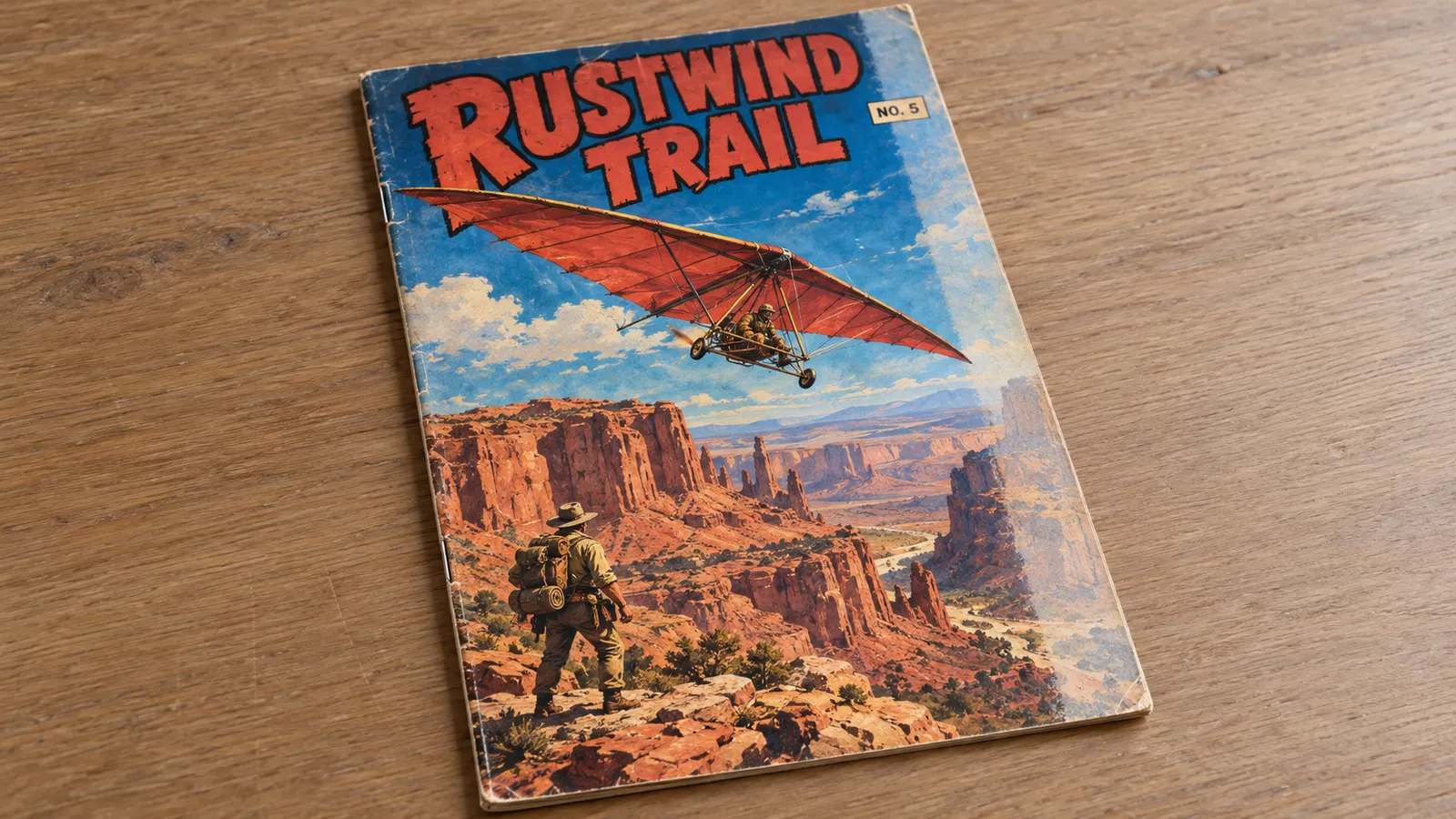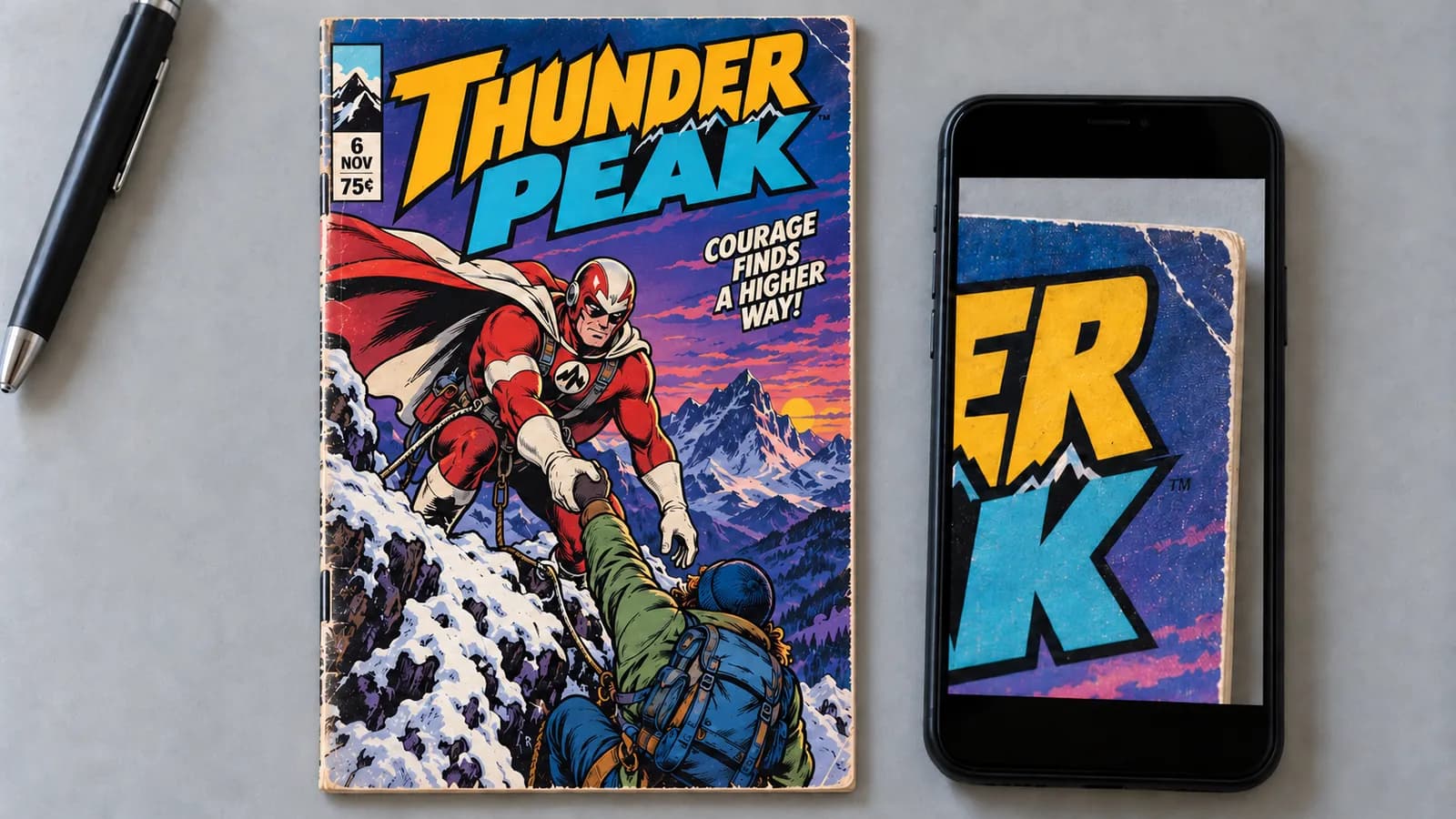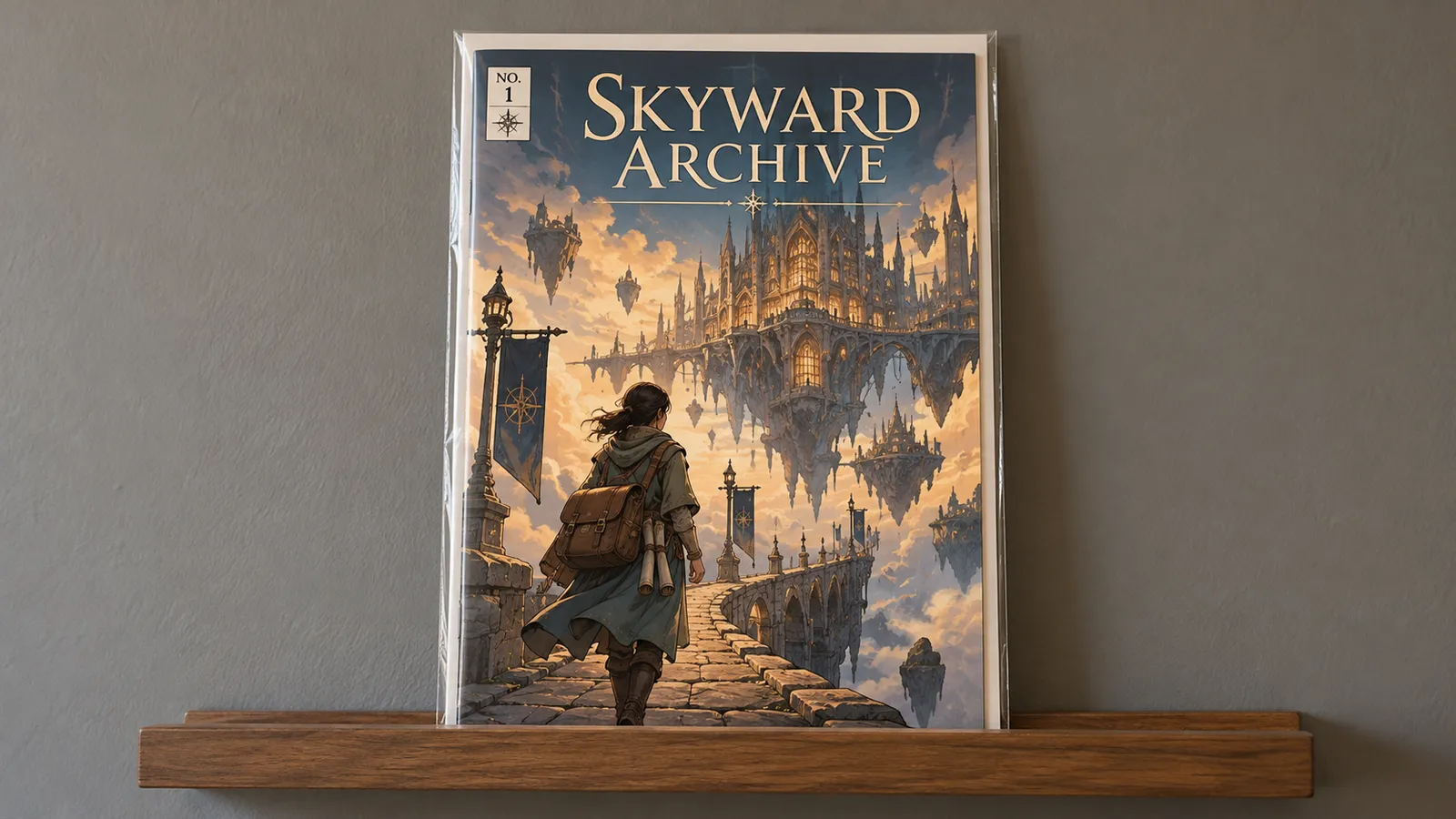
To display comic books without damaging them, show each book bagged and boarded on a stand or in a frame with UV-filtering glazing and acid-free backing. Keep the display on an interior wall, away from windows and heat, and rotate books back into dark storage after a few months. Never tape, glue, pin or laminate a comic, and never let direct sun reach it.
Display always costs a book something, because light damage adds up and does not reverse. The aim is to keep that cost small and to know what it was: a dated record before the book goes up and another when it comes down.
How display ages a comic
Five things work on a comic on display. Light is the hardest to notice, because it acts slowly and its changes are permanent.
| Cause | What it does to a comic | What the guidance says |
|---|---|---|
| Light, ultraviolet and visible | Fades inks; yellows, darkens and weakens paper; the damage adds up | No exposure to direct or intense light |
| Heat | Speeds the browning and brittleness of acidic paper | Keep displays away from fireplaces, radiators and vents |
| Humidity | Damp air invites mold and makes paper cockle; swings can distort it | Room temperature or below, about 35 percent relative humidity, few swings |
| Pressure | Dents, bends and rubbing where glazing, a clip or a ledge lip touches the book | A spacer or a mat between the item and the glazing |
| Adhesives | Tape and glue stain the paper and stay; graders treat tape as amateur repair | No self-adhesive tape or glue on comic books |
The guidance comes from the Library of Congress comic book care guide and matting and framing guidelines, and the effects of heat and damp from the Canadian Conservation Institute's pages on temperature and humidity, as of October 2026. The Institute calls direct sunlight "the single most damaging source of incorrect temperature", and warns that surfaces enclosed by glass, "as in display cases and picture frames", can get hotter still.
How much light a comic can take
Very little, by museum standards. In its guide to limiting light damage, the Library of Congress puts newsprint and other poor-quality, high-lignin paper in its very light-sensitive group, along with any print with colored dyes or non-earth pigments. Comics are not named, but most comics printed before about 1990 are color prints on that kind of pulp paper.
For that group, the Library advises (as of October 2026):
- Avoid display and limit use whenever possible.
- On display, keep the light at 3 foot-candles (about 32 lux) or less, and only while someone is looking.
- Display for 3 to 5 months at most, then store the item in the dark for at least 3 years before the next display.
- Watch it closely while it is up, with photographs as the basis for comparison.
Those are museum limits for irreplaceable items, and you can accept more risk for a book you want to see every day. Still, a year on the wall is more than double the longest display period, before you count how bright the wall is.
Two principles explain why dim light and short displays work. Light damage "is cumulative and follows the reciprocity principle", in the Library's words, and the Canadian Conservation Institute defines the dose as light intensity multiplied by time. Halve either one and you halve the dose.
UV-filtering glazing helps, but it is not a sun shield. The National Archives calls ultraviolet more damaging than visible light, yet the Library warns that visible light, even with all UV removed, still damages collections. For colors that fade in light, the Canadian Conservation Institute says UV usually causes less than half of the fading, and often only a tenth. A clear sleeve passes visible light by design; that is why you can see the cover.
Ways to display a comic, compared
Each option trades some protection for the view. From most to least protective:
| Option | Protects against | Leaves exposed | Suits |
|---|---|---|---|
| A framed reproduction, with the original boxed | Everything, for the original | Nothing; the copy takes the light | Permanent displays and key issues |
| A frame with UV-filtering glazing, a spacer and acid-free backing | Dust, fingers, pressure, much of the UV | Visible light; heat at the wall | Displays of a few months |
| A bagged and boarded book on a stand or a ledge | Dust, fingers, bending | All light, heat and humidity swings | Short turns in a dim spot |
A framed reproduction, with the original in its box
The Library of Congress does not recommend long-term or permanent display of paper, and suggests framing a well-made reproduction instead. The National Archives agrees, noting that color scans and color photocopies make good display copies. For a comic, that means a print of your own cover scan on the wall and the book in its box.
A frame with UV-filtering glazing and archival backing
If the original goes up, follow what the Library of Congress and the National Archives advise for framing paper:
- UV-filtering glazing. Acrylic or glass that filters ultraviolet. Acrylic can build up static, which the National Archives warns against for flaking material, so keep a book that sheds paper flakes off display.
- A gap. A spacer or a window mat, so the glazing never touches the cover.
- Acid-free backing. Acid-free, lignin-free board behind the book, and any mat of cotton rag or chemically purified pulp.
- No adhesive. Corners of paper or inert plastic film hold an item without adhesive, and some frames made for comics hold the book in its sleeve on its board.
Make sure the book comes out without bending, because you will take it out to rotate it.
A bagged and boarded book on a stand or a ledge
The simplest display is the book in its sleeve and board on a small stand or a picture ledge. The sleeve keeps off dust and fingers and the board keeps the book flat, but neither stops light.
- Use a stand that supports the whole board, not one that clips onto the book.
- Keep the angle shallow enough that the book does not slump inside the sleeve.
- Make sure a ledge's lip holds the board, not the book's bottom edge.
Record the condition before a book goes on display
Light works too slowly to watch, so a dated record is how you see what display did. The Library of Congress pairs its display limits with close monitoring, using photographs as the basis for comparison.
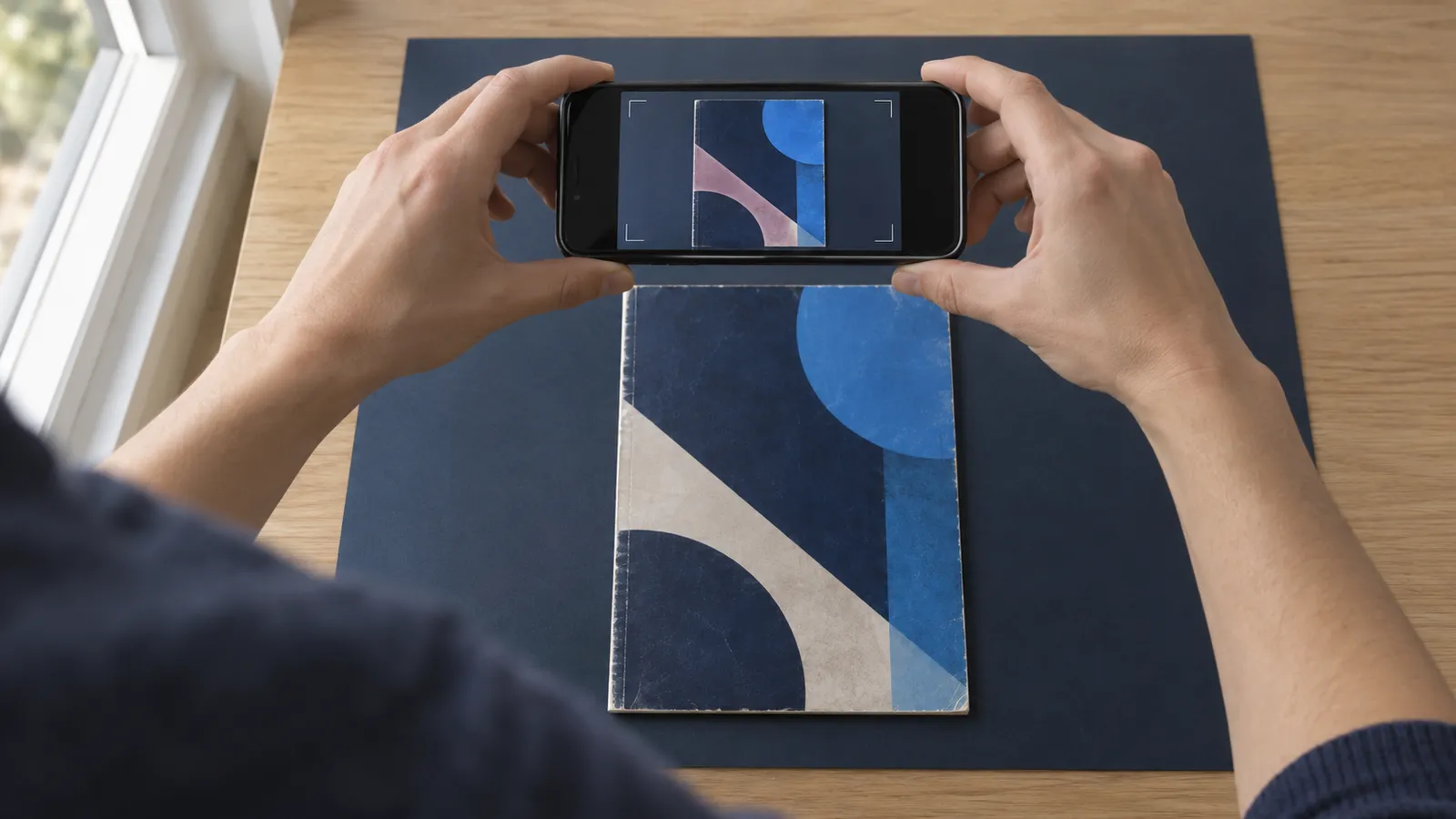
- Photograph the book out of its sleeve: both covers, the four corners, the spine and the centerfold, plus a page flip. The guide to photographing comics so the flaws show covers the set.
- Shoot the covers for color too, with one daylight-colored light, a white card beside the book and no filters, as the guide to dust shadows and sun fading explains.
- Note the date, the spot, the frame or stand, the glazing and the light, and keep the originals unedited.
- When the book comes down, repeat the photos under the same light and compare them side by side, color first.
A NuGrade report can serve as the dated baseline. NuGrade, an AI-assisted grading app for raw comics, turns a guided capture of seven photos and two short videos into a report with a grade on the 10-point scale, a range and findings that each cite a photo or video frame. Each report is a fixed snapshot with its date and a public URL. If the book changes, a regrade makes a new report with a new ID while the first stays live, and anyone can open either at the report lookup without an app or an account.
The two reports do not refer to each other, so the comparison is yours. A report is an opinion limited to what the photos and video show: a slight, even fade can be too subtle for any photo, and a report does not replace professional grading for a valuable book.
Where to put a display in your home
The Library of Congress and the National Archives agree on the basics:
- An interior wall. Interior walls do not reach the temperature extremes or carry the moisture of exterior walls.
- Out of the sun's path. Watch the wall through a day and again as the seasons change. Shades on nearby windows help.
- Away from heat and moving air. Not above a working fireplace or radiator, and not near a vent.
- Off the floor, and out of attics and basements, which are prone to extremes.
- Steady air. For comics the Library recommends room temperature or below and about 35 percent relative humidity, held stable, so skip the bathroom and the kitchen.
- Low, cool light. Use lower-intensity lights and switch them off when no one is looking. The National Archives advises against daylight and fluorescent light, which carry more ultraviolet. Keep any lamp that gives off heat outside the frame or case.
- A cloth over the frame when no one is looking, as the Library suggests.
What never to do with a displayed comic
Some mistakes damage a book in a minute, and others take a season:
- Tape, glue or spray adhesive on the book. The Library of Congress tells owners not to use self-adhesive tape or glue on comic books. The published grade descriptions treat tape as amateur repair, first allowed at 4.0 VG and then only as minor, unobtrusive tape on an otherwise high grade copy.
- Dry mounting. It bonds a print to a board with heat and an adhesive sheet, and it is meant to be permanent. On a comic, that puts adhesive across the whole back cover.
- Lamination. The published grade descriptions name laminated covers as an extensive amateur repair at 0.5 PR, the bottom of the scale.
- Pins, tacks and clips. A pin leaves a hole through the cover and pages, and a clip can dent or crease the edge it grips.
- Direct sun. The Library of Congress asks for no exposure to direct or intense light, and sun heats a frame too.
- Glazing against the cover. Both the Library of Congress and the National Archives call for a spacer or a mat.
- Lights left on for an empty room. Light damage adds up.
- Ink over a fade. Ink or marker added to hide fading is color touch, which the published restoration scale counts as restoration.
A rotation plan and a display log
Rotation shares the light among several books, so each one takes a fraction of the dose.
- Choose a display period and a rest period before the first book goes up. The Library's limits for very light-sensitive items, 3 to 5 months up and at least 3 years in the dark, are the strictest reference point.
- Keep a group of books to rotate, so the wall is never empty while a book rests.
- Give your most valuable books the shortest turns, or show them only as reproductions.
- Take a book down early if anything changes.
Keep one log entry per book for each display:
DISPLAY LOG
Book:
Record or report ID before display:
Up: YYYY-MM-DD          Down: YYYY-MM-DD
Spot (room, wall, distance to nearest window):
Holder: frame / stand / ledge
Glazing: UV-filtering acrylic / UV-filtering glass / plain / none
Light: lamp type, hours on per day, any direct sun? Y/N
Record or report ID after display:
Change seen: none / faded band / overall fade / dent / other
Next display no earlier than: YYYY-MM-DD
When you sell a book that spent time on a wall, say so, with the dates and the setup, and offer the before and after photos or reports. For the listing itself, see how to sell raw comic books, and for what a buyer checks, how to read a comic condition report.
Frequently asked questions
Can you display comic books without damaging them?
Not without any change, because light damage adds up and does not reverse. You can keep the change small with a UV-filtering frame, a spacer and acid-free backing, an interior wall out of the sun, short display periods and a dated record before and after.
Do UV-filtering frames stop comics from fading?
No. They cut much of the ultraviolet, but visible light also fades inks, so a framed book still needs dim light, no direct sun and time off the wall.
How long can you display a comic book?
For very light-sensitive paper, a group that includes newsprint, the Library of Congress recommends at most 3 to 5 months on display, followed by at least 3 years in dark storage. Shorter, dimmer displays mean less fading.
Is it safe to display a comic in its bag and board?
For short periods in a dim spot, yes. The sleeve keeps off dust and fingers and the board keeps the book flat, but a clear sleeve passes light, so it does nothing against fading.
Should you frame the original comic or a copy?
For a cover you want on the wall all the time, frame a good reproduction and keep the original boxed, as the Library of Congress and the National Archives advise for paper. Frame the original only for short, planned displays.