A pre-grade is a condition check you run before you pay to submit a comic to CGC or another grading company. Done by you, by a dealer with the book in hand, or by a photo-based app, it can show the likely grade band, the defect that limits it, and the red flags worth stopping for. It cannot promise an exact grade or rule out hidden restoration.
What a pre-grade is, and who can do one
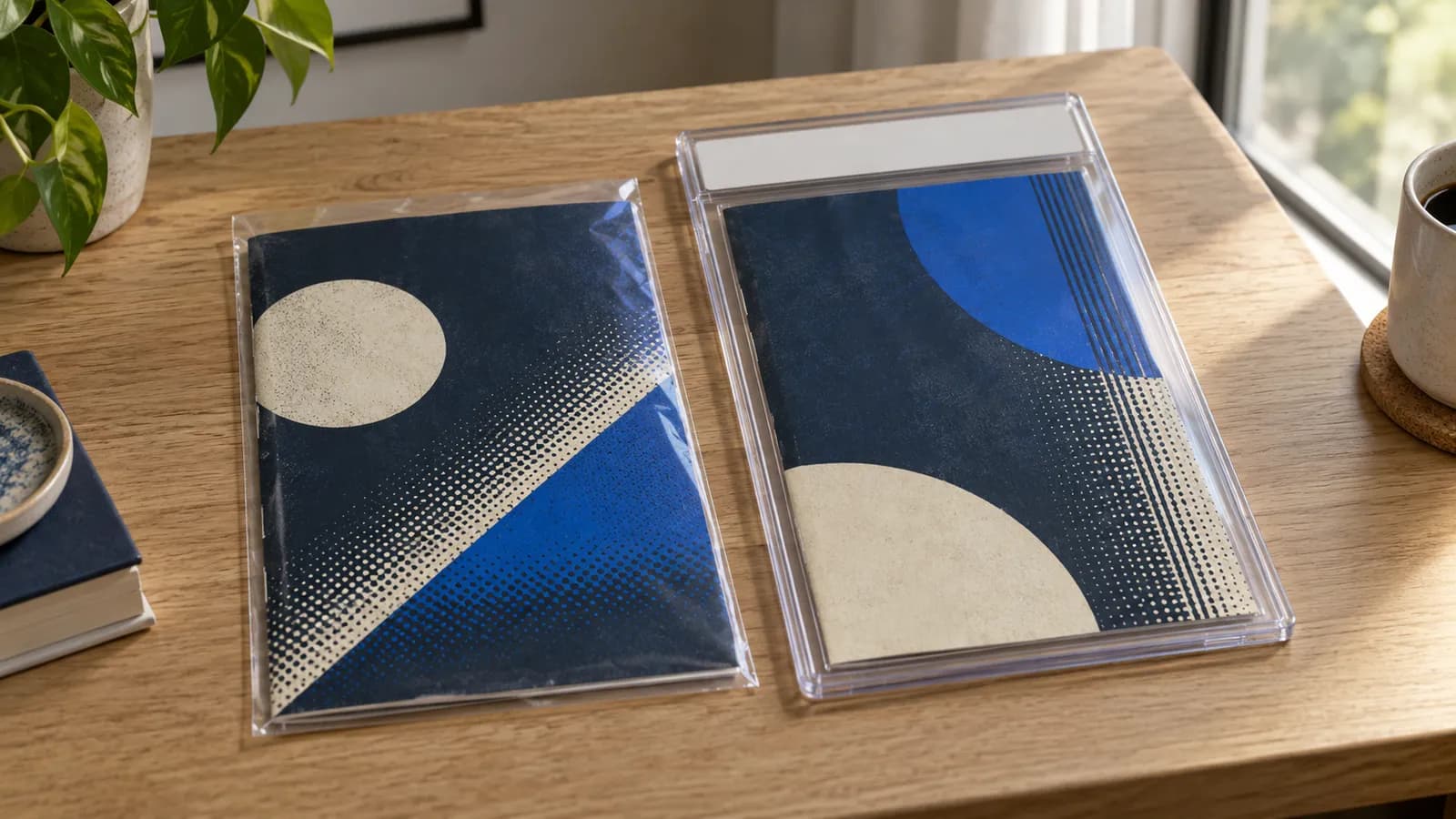
A pre-grade estimates how a professional grader will see your book before you spend money to find out. Professional grading companies such as CGC and PSA grade the book in hand and seal it in a holder. A pre-grade does neither. It tells you whether that step is worth paying for.
It comes in three forms, and each one sees different things.
- You, with the book in hand. It is free, and you can feel the paper, smell it, measure it and tilt it under a lamp. The weak point is bias: it is easy to be generous with your own book, and restoration is hard to spot without practice. The at-home grading checklist gives you an order to work in.
- A dealer, in hand. An experienced dealer can judge paper feel, edge cut and proportions with a trained eye. Ask what the opinion rests on, and whether the dealer has an interest in buying or selling the book.
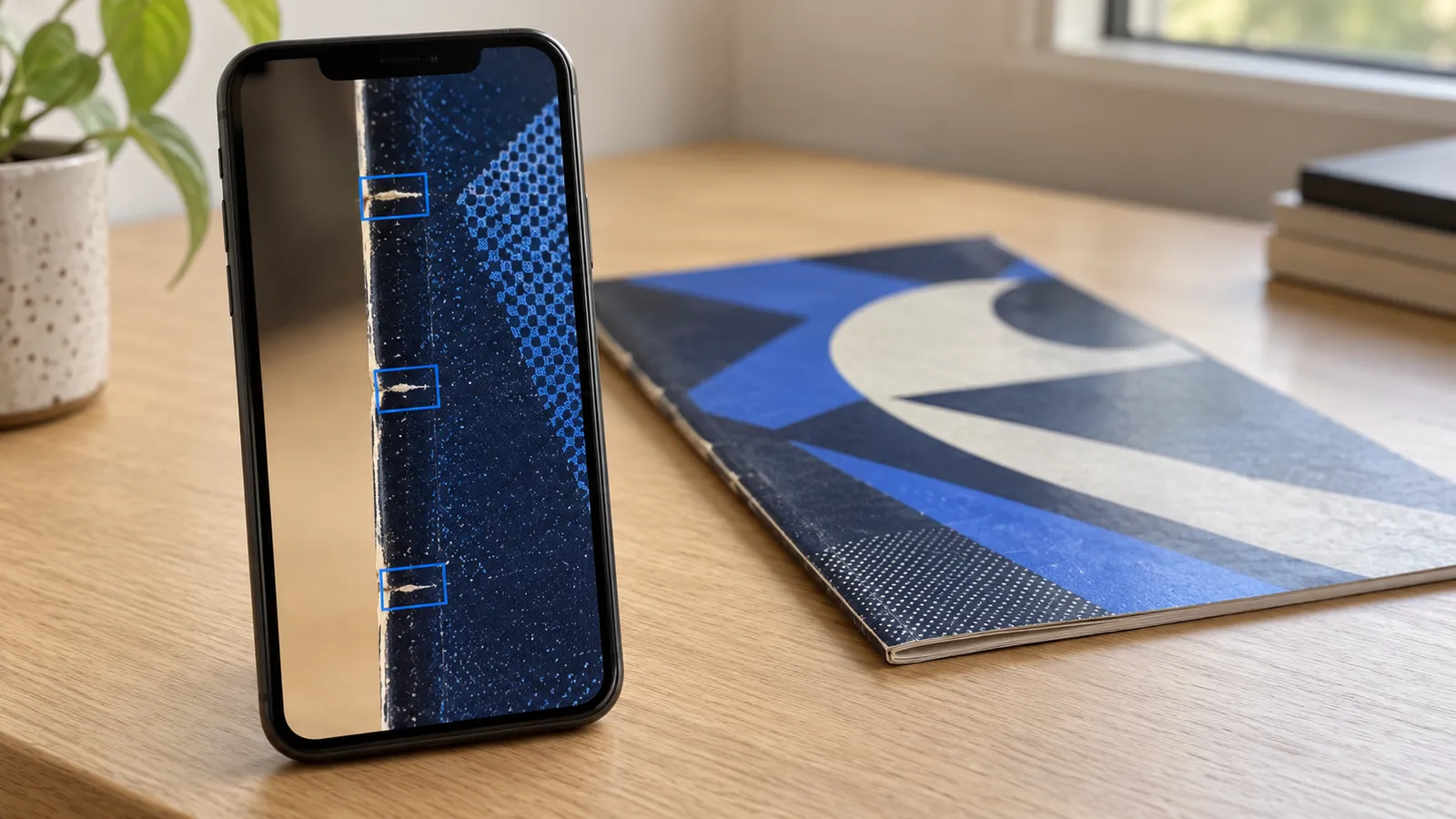
- A photo-based app such as NuGrade. NuGrade grades the book from seven photos and two short videos taken on your phone. A short survey covers what the camera cannot see, such as a signature, past pressing, odor or brittleness. Every finding cites the photo or video frame it came from, and the book never leaves your hands. The app cannot feel, smell or measure the book, so those answers come from you.
What a pre-grade can tell you
A good pre-grade answers four questions.
- The likely band. A range, such as 7.0 to 8.0, with a point grade inside it. The band matters more than the point, because it shows how far the result could move if a borderline defect is read differently.
- The limiting defect. The single worst flaw sets the ceiling, however clean the rest of the book is. Naming it tells you where the upside stops. A book held at 7.5 by a color-breaking spine tick will not reach 9.0 because its corners are sharp.
- Press candidates. Pressing can often reduce bends, dents, ripples, warping and spine roll that do not break the color. It cannot fix color breaks, tears, missing pieces, tape residue or brittle paper. If the limiting defect is in the first group, a press may move the band. What pressing can and cannot fix goes through each case.
- Red flags. Signs of restoration, missing pages or brittle paper change whether you should submit at all. The checklist below covers them.
What a pre-grade cannot tell you
Be just as clear about the limits.
- An exact grade. Graders make judgment calls, and a borderline defect can land a step either way. Only the grading company's grade goes on the label.
- Certainty about restoration. Competent color touch and piece fill are done to be invisible, and in ordinary photos they can be. A clean pre-grade is not a clearance. NuGrade marks restoration as Unverified when the photos cannot establish it either way.
- Certainty about trimming. Photos can show suspicious edges, but a trim call needs the book measured and its edges checked in hand.
- Subtle page quality. Room light and phone white balance shift how page color looks, so a call such as Cream to Off-White may read differently in hand. Brittleness and odor do not show in photos at all; that information comes from the owner.
- Defects too small for the photos. NuGrade's own disclosure says it plainly: defects below the resolving power of the submitted media may exist and would lower the grade if confirmed in hand.
Red flags to check before you pay to submit
Work on a dark, non-glossy surface under one lamp, with clean, dry hands and no flash. Go from the front cover to the back cover, then turn every page. Photograph anything you find, close up and with the whole book in frame, so you can compare notes with a dealer or grader later. How to photograph comics so the flaws show covers the setup.
- Color touch. Look for a flat, smooth patch where the printed art around it has a fine, even grain. Other signs are a color slightly off from the ink beside it, or a hard edge of color that crosses a printed line instead of following it. Tilt the cover under the lamp and watch for a patch with a different shine from the cover around it. Look hardest at spine ticks, creases and corners, where touch-up usually sits.
- Trimming. Watch for edges that are razor sharp and perfectly square on a book worn everywhere else. Other signs are a cover flush with the pages or smaller than them, one edge cut straighter than the opposite edge, or a book measurably smaller than other copies of the same issue.
- Married cover or pages. Look for a cover whose wear and paper tone do not match the interior, such as a crisp, bright cover on tanned, soft pages. Check that the staple holes in the cover line up with the staples at the centerfold, and look for extra holes.
- Detached centerfold or missing pages. Check that the centerfold is attached at both staples, then turn every page. Look for missing leaves, cut-out coupons and clipped panels. If you know the issue's page count, count the pages.
- Brittle or tanning paper. Look for page edges going tan or brown, small flakes at page corners, and short splits at the top or bottom of the spine on interior pages. Brittleness limits the grade hard: as of October 2026, CGC's page quality scale allows at most 6.5 for slightly brittle pages and 3.5 for brittle pages. Do not bend a page to test it.
- Tape or residue. Look for tape on the cover, spine or pages, a shiny strip, or a stained band where tape used to be. As of October 2026, CGC's restoration page says it treats tape as a defect that lowers the grade, not as restoration. Pressing does not fix tape residue.
- A signature with no witness. As of October 2026, CGC's label guide says its Signature Series label needs a signature signed in front of an authorized witness. A signature without a witness needs CGC's separate authentication service to be certified. Without it, the signature is noted on the label, not certified. Other companies set their own rules, so check before you pay.
How to read a predicted band next to its uncertain items
A predicted grade is only useful with its uncertain items beside it. Our Marvel Presents: Guardians of the Galaxy #4 sample report shows how to read one.
The report gives 7.5 VF- with a plausible range of 7.0 FN/VF to 8.0 VF. The limiting area is the spine: a run of small stress ticks along the spine edge through the upper and middle spine, several breaking color white against the black cover, and the ticks persist across adjacent frames of the spine pass. It also finds more stress lines near the lower staple, and light edge wear with small white flecks along the top edge near the top-left corner. There are seven findings in all, each tied to the photo or video frame it came from.
Read it in this order:
- Start with the limiting defect. Several ticks break color, and pressing cannot remove color breaks, so a press would not remove the defect that sets the grade. Treat 8.0, the top of the range, as the realistic best case.
- Plan around the point grade and the low end. For submission math, 7.5 is the target and 7.0 is the downside. Run those numbers before you pay.
- Treat Unverified as open, not clean. Restoration on this report reads Unverified: the photos could not establish it either way. The Standard label line describes what the photos showed, and it is not a clearance. If restoration would change your decision, only an in-hand check settles it.
- Note what the photos did establish. Page quality reads Cream to Off-White from the page-flip video, and the flip accounted for all 36 pages. Those findings speak to two red flags, tanning and missing pages, but they say nothing about odor or brittleness, which only you can report.
Anyone can open a NuGrade report by its ID on the report lookup page, with no app or account.
The downside of a submission that goes wrong
A submission costs the same whatever grade comes back. Three outcomes turn that cost into a loss.
- A grade or two lower than you hoped. You pay the same fees and shipping for a 7.0 as for an 8.0. If copies one or two steps down sell near the raw price, the costs are simply gone.
- A restored label. If the grader finds color touch, piece fill, trimming or a married cover that you missed, the label says so. Restored copies usually sell for less than unrestored copies at the same apparent grade.
- A qualified or noted label. As of October 2026, CGC uses a Qualified label for a significant defect that needs its own description, such as a missing coupon. An unwitnessed signature that you did not have authenticated is noted on the label rather than certified. Either way, the label carries a note that buyers will read.
The wait is a cost too. The book is away, and you cannot sell it, while it sits in the queue. Current fees by company are in the grading company comparison.
A short decision checklist
Before you pay to submit, check every line:

[ ] I have a pre-grade band, not a single number
[ ] I know the limiting defect, and whether pressing can reduce it
[ ] No signs of color touch, piece fill, trimming or a married cover
[ ] The centerfold is attached and every page is present
[ ] No flaking, spine splits or heavy tanning on the pages
[ ] No tape, tape residue or past work I cannot account for
[ ] Any signature was witnessed, or I accept it stays uncertified
[ ] The math still works at the low end of the band
[ ] I checked current fees and turnaround on the service's own site

If a line stays unchecked, resolve it, get an in-hand opinion,
or keep the book raw.
NuGrade is independent of, and not endorsed by, CGC or PSA. These names are trademarks of their respective owners, used here only to identify their services.
Frequently asked questions
How accurate is a comic pre-grade?
A pre-grade is an estimate, so read it as a band, not an exact number. How close it lands depends on who made it, what they could see, and whether they had the book in hand.
Can a pre-grade detect restoration or trimming?
It can catch obvious work, such as a mismatched color patch or a cover cut smaller than its pages. Competent restoration can be invisible in photos, and a trim call needs the book measured in hand, so a clean pre-grade is not a clearance.
Should I press a comic before I submit it?
Only if the limiting defect is one that pressing can reduce, such as a bend, dent or ripple that does not break the color. As of October 2026, CGC does not consider pressing to be restoration, but pressing cannot remove color breaks, tears or missing pieces.
Is a NuGrade report the same as a CGC grade?
No. A NuGrade report is an evidence-bounded opinion from your photos and video, not a professional grade, and the book is not sealed in a holder. For an investment-grade book, where the sealed holder is part of the resale value, professional grading is still the right call.