If you want a free comic grading app, check what the free part gives you back. NuGrade, an AI-assisted grading app for raw comics, gives new accounts complimentary credits after email verification, with no credit card, and each credit makes one full report. Grading the book yourself and asking other collectors cost nothing in money. Only paid professional grading returns a certified grade in a sealed holder.
What each free and cheap option gives you back
The four options differ less in price than in what comes back. Here is what each one returns, and what you pay when the price is zero.
| Option | Money | What you get back | Can a buyer check it? | The hidden cost |
|---|---|---|---|---|
| Grade it yourself | None | Your own grade, plus the notes and photos you keep | Only your photos and your word | Time to learn the scale, and the pull to grade your own book kindly |
| Ask collectors online or at a shop | None | An opinion, often a tier or a number | Only if you save the replies | Certainty: you may not know what they checked |
| An app's free start (NuGrade's complimentary credits) | None at first, then one credit per report | A grade, a range and findings tied to photos or video frames | Yes, by report ID or QR code | A few minutes of capture, and the limits of photos |
| Paid professional grading | A fee per book, plus shipping and insurance | A certified grade in a sealed holder, after in-hand restoration screening | Yes, by the holder and its label | Money, and weeks without the book |
Only the last row returns a certified grade. The other three return estimates, and an estimate is worth what someone else can check in it.
Three kinds of output: a number, cited findings or a certified grade
Every option returns one of three outputs, and the output, not the price, decides what you can do with the result.
A number-only grade is a grade or tier with no reason attached, such as "looks like a VF". Nobody can check it, including you a year later.
A cited finding is a defect described by its type, size and place, and tied to the photo or video frame that shows it.
A certified grade is a grade that a professional grading service assigns after an in-hand inspection and seals with the book in a tamper-evident holder.
| Output | Who can produce it | Good enough for | Not enough for |
|---|---|---|---|
| A number only | Anyone: you, a friend, a forum reply, a shop, an app | Sorting readers from keepers | A raw sale to a stranger, or a decision to pay a grading fee |
| A number with cited findings and photos | You, if you photograph each finding, or a photo report such as NuGrade's | Raw listings, submission decisions, condition records | Selling as a graded book, or ruling out hidden restoration |
| A certified grade in a sealed holder | A professional grading service only | Books whose exact grade sets the price | Reading the book, since opening the holder ends the certified grade |
A number hides its reason. The published grade descriptions allow an unnoticeable 1/4-inch crease at 8.0 VF only if it does not break the color, so "8.0" and "8.0 with a color-breaking 1/4-inch crease at the top-right corner" are different claims. Only the second can be checked, and it does not fit the 8.0 description.
Grading it yourself: free, if you do not count your time
A self-grade costs no money, and it returns the middle output, a number with cited findings, if you photograph each finding as you go. You pay in time and certainty.
The published grade descriptions for the 10-point scale are free to read online. Inspect in a fixed order, from identity and page count to restoration signs, and let the worst defect limit the grade. How to grade a raw comic at home walks through each step, with the thresholds that matter and a blank condition record.
Your first books take longer than later ones, because you learn the scale as you go. It is also easy to grade your own book kindly, and a buyer has only your photos and your word. So treat a self-grade as evidence, not a verdict: one photo per finding with a ruler beside the book, the limiting flaw named, and a band such as 7.0 to 8.0.
Asking collectors online or at a local shop
Asking other collectors costs nothing in money, but what comes back is an opinion without a record. It is only as good as what you show and what you ask.
In an online collector forum or group
People grade from your photos, so they see only what you shoot: post both covers, the four corners close up, the spine with the light low to one side, the centerfold and a few interior spreads. Say what no photo shows, such as a musty smell or a past pressing, and ask for the worst defect and its place, not only a number. For light and framing, see how to photograph comics so the flaws actually show.
Weigh each reply by its reason. "8.0" tells you little, while "the color-breaking tick at the top of the spine keeps it under 8.0" is something you can find in your own photo. When replies differ by a step, look for the finding behind each number; AI vs people: compare the findings before the number applies the same method to an app grade and a person's opinion.
At a local shop
Someone with the book in hand can notice what a photo cannot, such as a brittle page edge or an odor. But a look at the counter is not a full inspection, and nothing is written down unless you write it. Ask for the limiting flaw, note it with the date, and photograph it. If the person who grades the book also offers to buy it, get a second opinion.
What NuGrade's complimentary credits return
NuGrade gives each new account complimentary credits once its email address is verified, with no credit card, and a complimentary credit makes the same full report as a paid one. We make NuGrade, so check each claim here against a sample report.
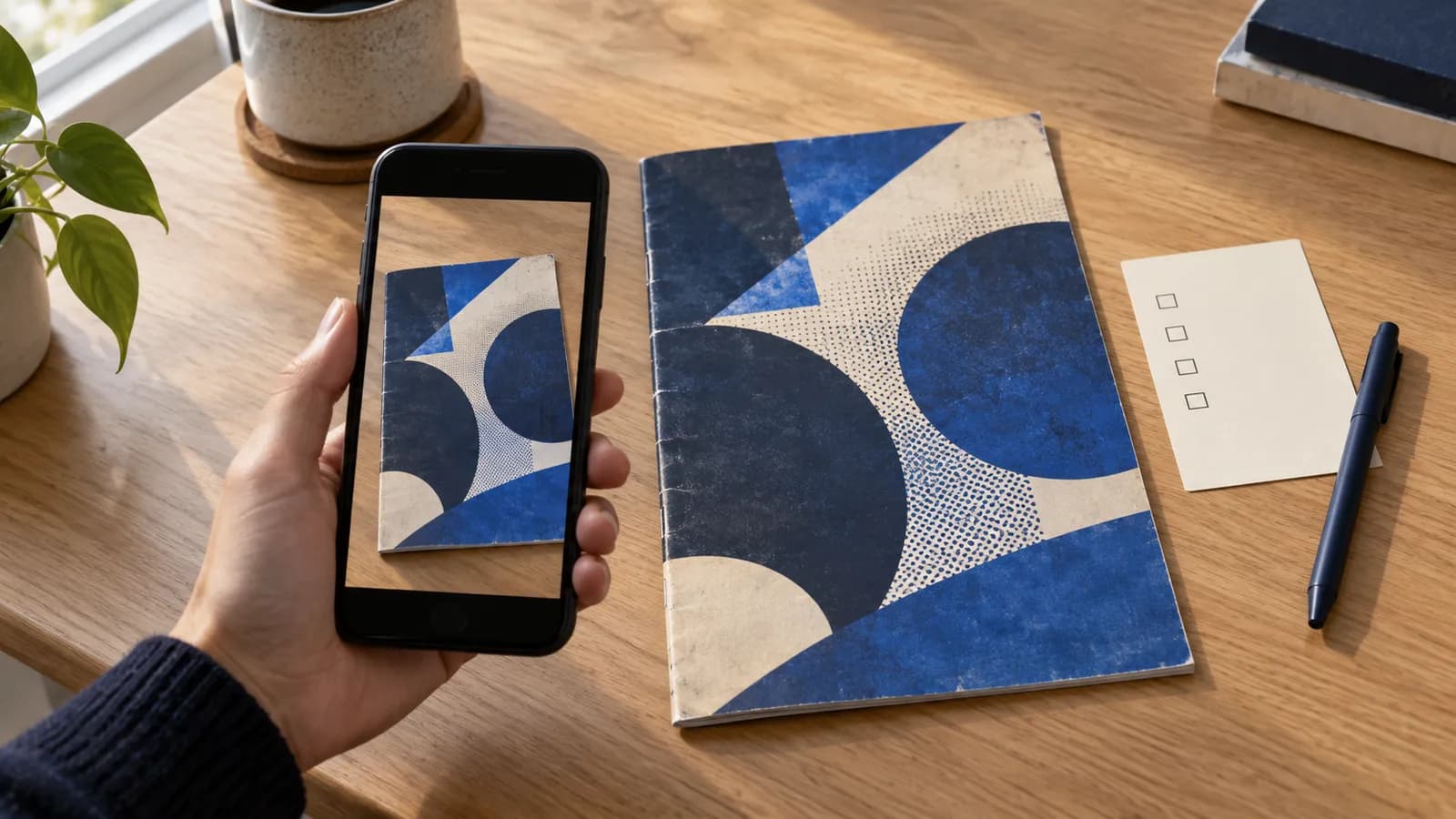
What you do. The guided capture takes under three minutes for a prepared book: seven stills (front cover, back cover, the centerfold staple seam and four corner close-ups) and two short videos, a slow spine pass and a page flip-through. A short survey asks only what the camera cannot see, such as pressing, cleaning, trimming, odor and brittleness, and "Nothing that I know of" is an answer you must select. The app checks the capture for common problems, and each report includes one free re-shoot retry.
What comes back. A grade on the 10-point scale with its tier, a plausible range, findings grouped by area with the photo or video frame for each one, and a "why not higher" explanation. The report also gives a page-quality call, a completeness check when the page flip lets the app count the pages, and restoration marked "Unverified" when the photos cannot establish it. Each report has a public URL, a short report ID, a QR code and a PDF, and a buyer can open it at the lookup page with no app and no account.
An example. The E-Man #1 sample report (Charlton, 1973) came back 9.2 NM-, with a range of 8.5 VF+ to 9.4 NM. Its "why not higher" section names two production findings: a slight miswrap that leaves a narrow unprinted strip along the front spine edge, and a small dark mark at the left edge of the back cover, likely a bindery or printing artifact. A bare "9.2" would not tell a buyer that the flaws holding the book back are production flaws, not handling wear. Restoration reads None detected, with the note that photos can miss skilled work.
After the complimentary credits. One credit makes one report: at the time of writing, $3 for one credit, $12 for 5 or $40 for 20 (current pricing). Credits never expire, and there is no subscription.
What the free start does not change. A NuGrade grade is an opinion limited to the evidence in your photos and video. It does not replace professional grading, which is still the right choice for a book with a high value. Competent restoration can be invisible in photos taken in normal light, odor and brittleness come only from your survey answers, and defects smaller than the photos can show may exist. To test any app's free output, use the checklist for picking a comic grading app.
Paid professional grading: the only certified grade
Paid professional grading is the only option that returns a certified grade. A grader inspects the book in hand and screens it for restoration, and the service seals it in a tamper-evident holder with a label.
What it costs. Fees are per book and rise with the book's declared value and the speed you pay for. Shipping both ways and insurance add to the bill, and turnaround times are estimates, not promises. For current fees and turnaround, see the grading companies compared.
What it returns that free options cannot. An in-hand inspection, restoration screening with a separate restored label when work is found, and a holder that lets a buyer trust the grade without handling the book. The trade-off is the holder: you cannot read the book without opening it, and opening it ends the certified grade.
How to tell if a free grade is usable
A usable grade is one that someone other than the grader can check. Run any free grade through this checklist before you list, buy or submit a book on the strength of it.
IS THIS FREE GRADE USABLE?
[ ] It names the limiting flaw, with its size and place
    (such as a 1/8 inch color-breaking spine tick)
[ ] A photo or video frame shows each finding
[ ] It covers both covers, all four corners, the spine
    and the interior
[ ] It gives a band, such as 7.0 to 8.0
[ ] It says what it did not check: restoration, odor,
    brittleness, pressing
[ ] It carries a date you can show a buyer
[ ] Nobody who graded it has a stake in the price
Each empty box pushes the result toward a number only. A self-grade of a book you plan to sell fails the last box by design, so its photos have to carry it.
Which option is cheapest for the job
The cheapest option is the one that returns the output the job needs at the lowest total cost, counting your time.
| Your job | Output you need | Cheapest option that returns it |
|---|---|---|
| Sort a box of readers | A number only | Grade it yourself |
| Sell a book raw online | Cited findings a buyer can check | A self-grade with a photo per finding, or a photo report |
| Decide whether to pay a grading fee | The limiting flaw, named | A self-grade or a photo report, then the break-even math |
| Sell a key whose exact grade sets the price | A certified grade | Professional grading |
Example numbers, not a quote: of 12 raw books, you keep 8 as readers, sell 3 raw, and think 1 might be a key in high grade. Grade all 12 yourself. Spend credits on the 3 you sell, the complimentary ones first, so buyers can check each finding. Send only the possible key to professional grading, and only if the break-even math says the fee pays for itself.
Frequently asked questions
Is there a free comic grading app?
NuGrade, an AI-assisted grading app for raw comics, gives new accounts complimentary credits after email verification, with no credit card. Each credit makes one full report, and credits never expire.
Can you get a comic professionally graded for free?
Professional grading services charge a fee for each book, plus shipping and insurance. A self-grade or a collector's opinion costs nothing, but it is an estimate of a raw book, not a certified grade.
Is a free grade from a forum or a shop reliable?
A free grade is reliable only as far as you can check it. Trust an opinion that names the limiting flaw and its place, from someone who saw the back cover, the spine and the interior, and treat a bare number as a first guess.
What does a NuGrade complimentary credit include?
It makes the same full report as a paid credit: a 10-point grade with its tier, a plausible range, findings tied to photos or video frames, and a public report with an ID, a QR code and a PDF.
Is a self-grade or an app grade the same as a certified grade?
No. Only a professional grading service issues a certified grade, after an in-hand inspection, and seals the book in a tamper-evident holder. A self-grade, a collector's opinion or a NuGrade report is an estimate of a raw book.