To insure a comic book collection, start with your homeowners or renters policy: find its limits for collectibles, the perils it covers, and whether it pays actual cash value. If that falls short, add the valuable books to the policy as scheduled items or buy a separate collectibles policy. Then keep an inventory with values, receipts, photos and dated condition records.
Insurance can pay for a lost book, but it cannot bring the book back. The records below make a claim easier to support, and the storage steps near the end make one less likely.
Read what your home or renters policy says about collectibles
Read the personal property section and the declarations page of your current policy, and find three things: the limits, the covered perils and the way a loss is valued. Then ask your agent to confirm each answer. The National Association of Insurance Commissioners (NAIC), the association of state insurance regulators, tells buyers in its consumer guide to home insurance to get key information in writing.
Limits for collectibles
As of October 2026, the Texas Department of Insurance warns that some home or renters policies will not cover collectibles at all, and that others cap what they pay for certain items, such as valuable papers, coins and jewelry. Find every limit that could apply to comics and ask your agent which one does: a category limit can sit well below the value of one good box.
If you rent, check one more point. As of October 2026, the NAIC's renters insurance guide says your landlord's insurance does not cover the things you own, and that unusually expensive items, such as an art collection, may need additional coverage.
Covered perils
A peril is a cause of loss, such as fire, theft or a burst pipe. A named-perils policy covers only the causes it lists; an open-perils policy covers every cause it does not exclude.
As of October 2026, the NAIC's introduction to the insurance industry, written for regulators, explains that the special form (HO-3) extends open-perils coverage to the house, that the comprehensive form (HO-5) covers both the home and its contents that way, and that the renters form (HO-4) covers belongings against named perils. So check which form your declarations page names.
Ask about water by source. The NAIC consumer guide says homeowners policies do not cover flood damage, and that most offer limited or no coverage for sewer or drain backups and sump pump overflow, which you may be able to add by endorsement.
Actual cash value, replacement cost and agreed value
How a policy values a loss decides the size of the check. As of October 2026, the two NAIC documents above describe the terms this way:
- Actual cash value is the value of property at the time of the loss, which equals its replacement cost minus depreciation. The consumer guide warns that it often does not pay enough to fully repair or replace the damage, and the regulators' text says HO-3 policies generally pay actual cash value on contents.
- Replacement cost pays the cost of replacing the property with no deduction for depreciation. The regulators' text says you can add it for contents to an HO-3 policy by endorsement, and that HO-5 policies often include it.
- Agreed value fixes the amount before any loss. The regulators' glossary calls a contract that pays its face amount after a total loss, regardless of actual cash value, a valued policy, and notes that valued policies are sometimes used for items whose value is hard to determine, such as rare antiques.
The Texas page puts the risk plainly: a home or renters policy "will only pay to replace a damaged or stolen item with something similar." For a comic, ask what similar means: the same issue, the same printing, the same grade?
Your two options: scheduled items or a collectibles policy
If the base policy falls short, there are two usual ways to add coverage. The NAIC consumer guide notes that sometimes you add coverage with an endorsement, and other times you must buy another policy for a specific item of property.
Scheduled items, or a rider, on your home or renters policy. The NAIC guide describes a scheduled personal property endorsement, or personal article floater, as coverage for items such as stamps, coins and antiques "whose value might be greater than the normal limits in your homeowners policy." Scheduling usually means listing each book with its own value, so expect to show how you set it.
A separate collectibles policy. The Texas page says that if your home or renters insurer does not sell coverage for collectibles, you can look for a company that specializes in it. It adds that extra coverage might pay for losses a typical policy will not, such as breakage or flood damage.
Put the same questions to each agent and compare the written answers:
QUESTIONS FOR YOUR AGENT (answers in writing)
1. Does my policy cover comics? Which limit applies?
2. Named perils or open perils for my belongings?
3. Is water covered from every source: flood, burst pipe,
   sewer backup?
4. Does a loss pay actual cash value, replacement cost
   or an agreed value?
5. What does a partial loss pay, such as a stain on one book?
6. How is the loss of one issue from a complete run settled?
7. Are books covered away from home: at a show, in a car?
8. What records do you need now, and for a claim?
9. Do you want appraisals? For which books, how often?
10. What is the deductible, and does it apply per item?
A book in the mail is a separate case with its own rules. For a sale, the shipping steps in the selling guide cover tracking and insurance.
What an insurer usually asks for
Expect to show what you own, what each book is worth and why, and what condition it was in. Your insurer decides the exact list, so ask before you need to file. As of October 2026, the NAIC guide and the Texas page point to these records:
| Record | What it shows | Notes |
|---|---|---|
| Inventory | What you own | The NAIC guide says to inventory everything, collectibles included, review it every year and update it when you buy |
| Photos and video | That you own each book, and its condition | The NAIC guide says to take pictures or videos of everything, room by room |
| Receipts | What you paid, and when | The NAIC guide says to keep receipts with the inventory as proof for a claim |
| Values with evidence | What each book is worth, and why | Dated sold listings of matching copies, a receipt or an appraisal |
| Appraisals | A formal value for a valuable book | The Texas page says to set coverage from receipts or a professional appraisal, and to get regular appraisals as values change |
For the formal side, the companion guide on comic book appraisal explains when you need one and what an appraiser does.
If you already keep a collection spreadsheet, add four columns for insurance: value, value date, value basis (receipt, sold listings or appraisal) and scheduled (yes or no). Keep a copy away from the books. The NAIC guide suggests a workplace, a safe deposit box, a relative's house or online storage.
Values move, so set a date to review them. A schedule that has not kept up with the market can leave a book underinsured.
How condition evidence made before a loss supports a claim
After a loss, you may need to show what each book was and what condition it was in, because condition sets much of a comic's value. A record made before the loss shows the condition; a description written afterwards asks the adjuster to trust your memory.
Build the record book by book, starting with the most valuable:
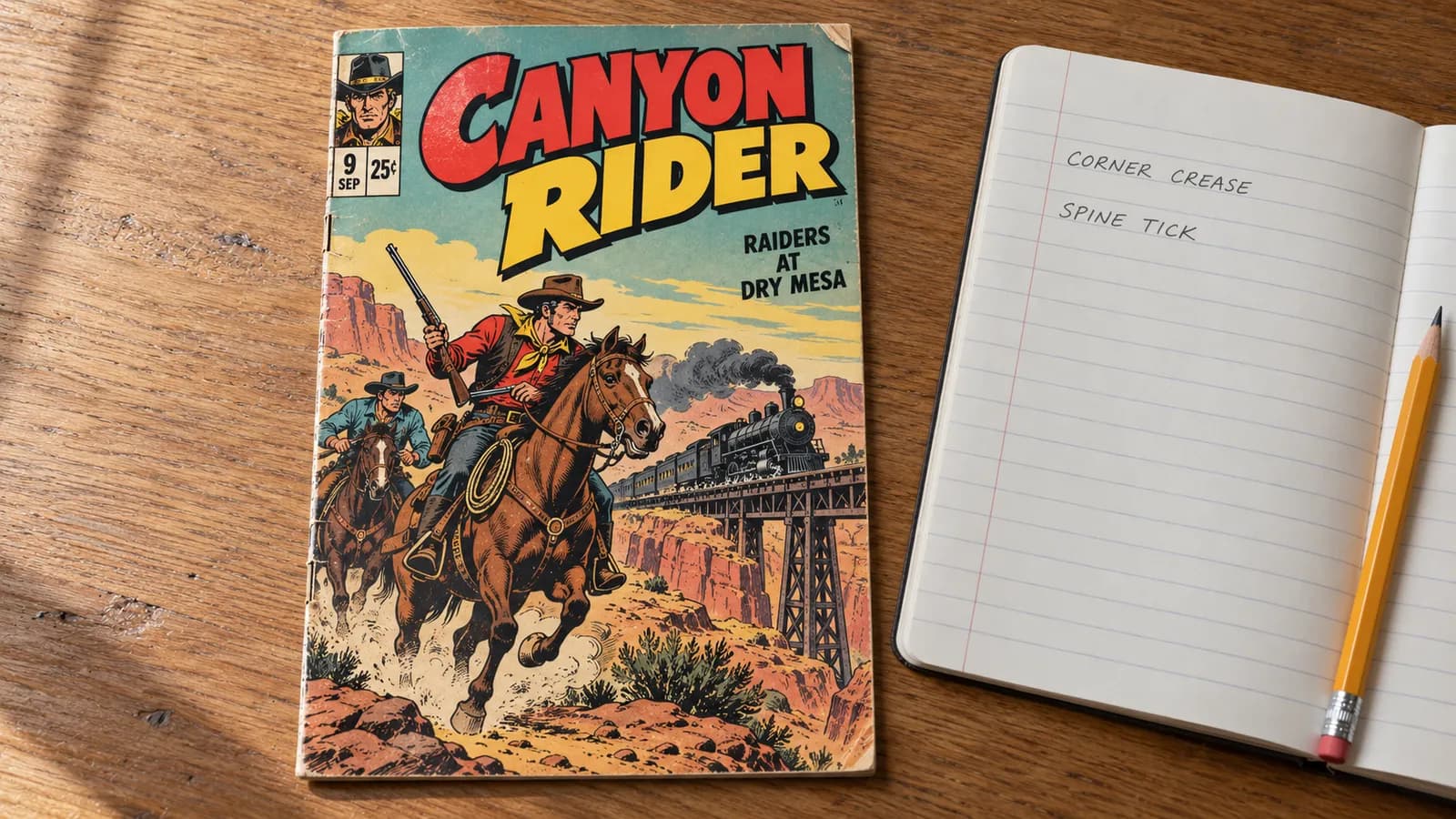
- Dated photos. Photograph each book out of its sleeve: both covers, the four corners, the spine and any defect, with a ruler beside the book for scale. Keep the original files, which carry the date the phone recorded. How to photograph comics so the flaws show covers light and angles.
- Written findings. Note each defect's size and place, and whether it breaks the color; the comic grading glossary defines the terms. How to describe comic book condition gives a format.
- A fixed report. We make NuGrade, an AI-assisted grading app for raw comics. Its report grades the book on the 10-point scale with a range, shows the photo or video frame behind each finding, and never changes: it carries its graded date, methodology version, public URL, short report ID, QR code and PDF. A regrade makes a new report and leaves the old one at its URL, and an adjuster can open any report by its ID at the report lookup with no app or account.
Evidence works both ways. The Marvel Presents: Guardians of the Galaxy #4 sample report, graded September 30, 2026, records a short crease with color break at the top-right corner tip. If that corner were damaged later, the report would show which part of the damage was already there. A record that is honest about old defects is easier to trust on new ones.
Know the limits. A report records condition, not value, and it is not an appraisal or proof of ownership. It is an opinion limited to what the photos and video show, so it can miss skilled restoration and defects too small for the photos to show. Only your insurer can say which records it accepts, so ask now.
Reduce the risks that a policy may not cover
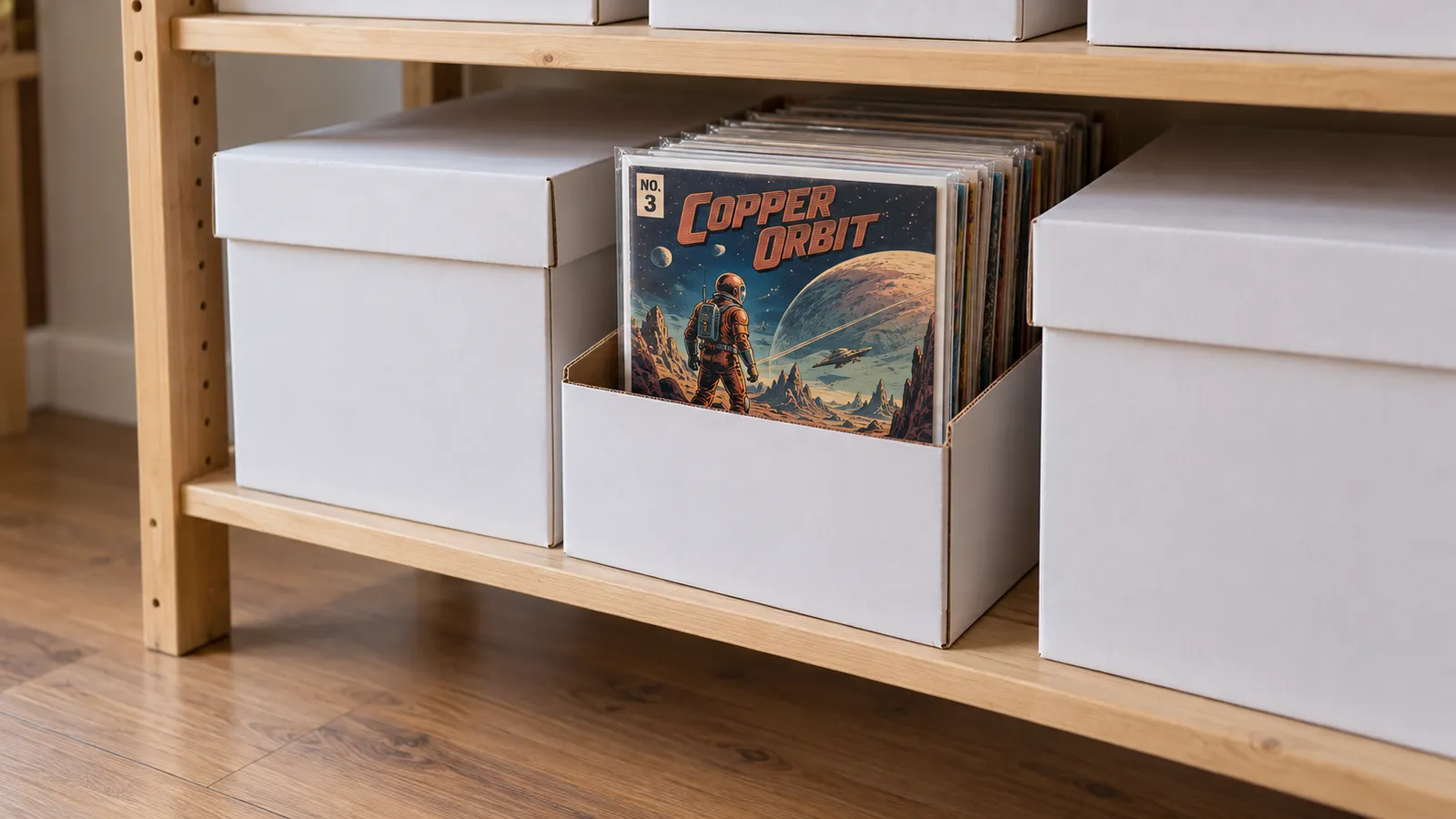
Water, heat and light cause damage that a policy may exclude or limit, so storage is part of insuring a collection.
Water. As of October 2026, the federal flood insurance program's consumer site says most homeowners and renters insurance does not cover flood damage, and that flood policies do not cover personal property kept in basements. Its dwelling policy form also puts collectibles, memorabilia and rare books under a special limit. Keep comics out of the basement, off the floor and away from pipes and water heaters.
Heat and damp. The Library of Congress care guide for comic books asks for a cool, relatively dry place with stable conditions, away from radiators and vents. It says to avoid attics, basements and other spots with a high risk of leaks and extremes.
Light. The same guide asks for minimal exposure to all light and none that is direct or intense. Fading costs grade, because the published grade descriptions allow only minimal fading at the top of the scale.
If a loss happens: the first steps
As of October 2026, the NAIC consumer guide says to contact your agent or insurer as soon as possible, to ask which forms and documents you need, and to protect your property from further damage, which policyholders are required to do. For a collection, that means:
- Call your agent or insurer and ask what they need from you.
- Photograph the scene: the room, the boxes, then each damaged book.
- Move the undamaged books away from the water or heat.
- Keep every damaged book. The NAIC guide says the adjuster will probably want to inspect the damage. Ask the insurer before any repair or conservation work, and ask at once if books are wet, because water damage worsens with time.
- Note each call: the date, the person and what was agreed.
- If you and the insurer disagree about the value, the NAIC guide says to check your policy for an appraisal clause. Your state insurance department can also help.
Frequently asked questions
Does homeowners insurance cover comic books?
It depends on the policy. As of October 2026, the Texas Department of Insurance says some home or renters policies do not cover collectibles at all, and others cap what they pay for certain items. Read the personal property section and ask your agent how it treats comics.
What is the difference between actual cash value and agreed value?
Actual cash value is replacement cost minus depreciation, worked out after a loss. Agreed value is fixed before any loss, and a total loss pays that amount.
Do I need an appraisal to insure a comic collection?
Your insurer decides. As of October 2026, the Texas Department of Insurance tells collectors to use receipts or a professional appraisal to decide how much coverage to buy, and the comic book appraisal guide explains what an appraisal involves.
Does flood insurance cover comics stored in a basement?
As of October 2026, the federal flood insurance program says its policies do not cover personal property kept in basements. Its dwelling policy form also puts collectibles and rare books under a special limit, so keep valuable books above the basement.
Can a NuGrade report support an insurance claim?
It records a book's condition on the date it was graded, with a photo or video frame behind each finding, and it never changes. Whether it supports a claim is your insurer's decision, so ask before you need to file.